
MARK TO MARKET

Lian Beng’s lowball privatisation offer raises urgency of addressing low market valuations

Japan’s bourse operator says it will ask companies trading below book value to come up with plans to lift their valuations

Ben Paul
Published Mon, Apr 17, 2023 · 05:50 AM
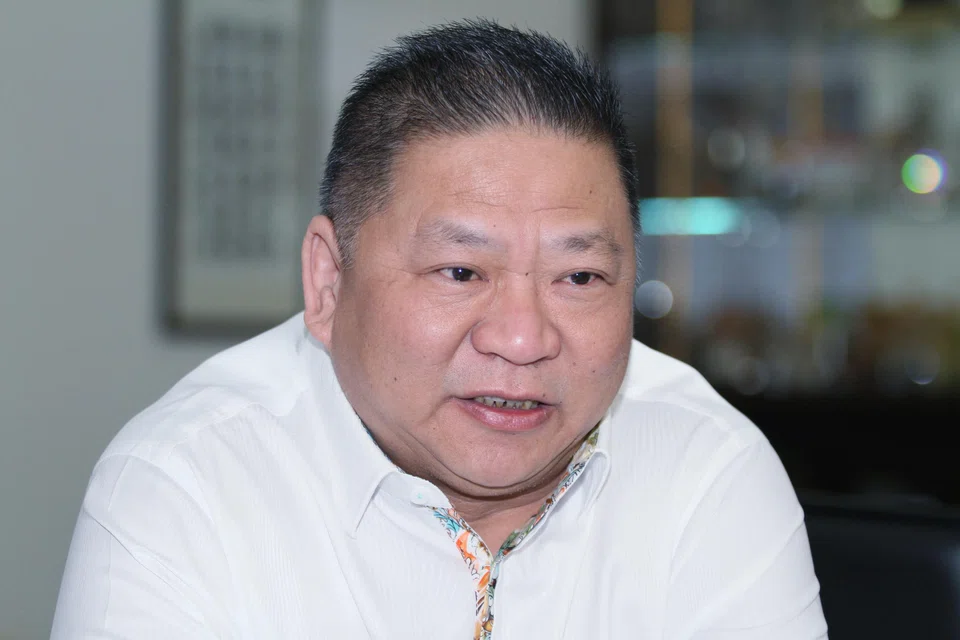
    • Lian Beng's chairman Ong Pang Aik and his family are making an offer for the company at S$0.62 per share, which is nearly 60 per cent below book value
    • Lian Beng's chairman Ong Pang Aik and his family are making an offer for the company at S$0.62 per share, which is nearly 60 per cent below book value PHOTO: BT FILE

    THE controlling shareholders of Lian Beng Group unveiled plans this past week to take the construction and property development company private at less than half its book value – using a well-known loophole related to compulsory acquisitions that the government has already decided to plug.

    The independent directors (IDs) of Lian Beng should ensure minority shareholders of the company are properly informed about the imminent changes in the law, of course.

    Yet, unless the IDs can also promise that Lian Beng will pursue a credible programme to improve the long-term market value of its shares if the company remains listed, many minority investors may well decide to just accept the lowball offer and move on.

    On Apr 11, it was announced that Lian Beng’s chairman Ong Pang Aik and his family intend to make an offer for the company at S$0.62 per share. The offer price is 8.8 per cent more than Lian Beng’s last closing price before the offer was announced, but nearly 60 per cent below its net asset value as at Nov 30, 2022, of S$1.54 per share.

    The Singapore Exchange (SGX) tightened its delisting rules back in 2019. In particular, it now requires shareholders of companies that exit to be provided with an offer that is “fair and reasonable”.

    But offerors are still able to take companies private through offers that are less than “fair and reasonable”. Under Section 215 of the Companies Act, an offeror can exercise the right of compulsory acquisition once it obtains 90 per cent of a target company’s shares that it and its related companies did not already own.

    Also, the wording of the law has enabled individuals who are controlling shareholders of listed companies to have shares they own count towards the 90 per cent acceptance threshold by setting up a special purpose vehicle to make the offer.

    The Ministry of Finance and the Accounting and Corporate Regulatory Authority earlier this year accepted proposed amendments to the Companies Act that will close this loophole. But the proposed changes are yet to be tabled in Parliament.

    The offeror in the Lian Beng deal is a privately held company owned by the Ong family called OSC Capital, which was incorporated only on Apr 4 with a paid-up share capital of S$100. OSC Capital has received irrevocable undertakings from the Ongs to accept the offer with respect to nearly 69.6 per cent of Lian Beng’s outstanding shares.

    The Ongs – through OSC Capital – need a further 20.4 per cent of Lian Beng’s shares in order to compulsorily acquire the rest of its shares.

    Shares in Lian Beng closed Friday (Apr 14) at S$0.66, suggesting investors are betting the unconditional offer will be revised upwards. Even if there is a revision, however, the offer price is still likely to be a steep discount to Lian Beng’s book value.

    Japan tackles low valuations

    Almost exactly two years ago, this column said ensuring minority investors are treated fairly in privatisation deals is not just about tightening the rules governing such transactions, but also about addressing the widespread undervaluation of stocks in the local market.

    The reason companies such as Lian Beng often end up going private at big discounts to their book values is because a broad swathe of the market trades at very low valuations. Offerors lowball investors simply because they can.

    The obvious solution is for investors to actively push companies to unlock value and grow their most promising businesses.

    Earlier this year, the Japanese market made headlines following the release of a notice related to the restructuring of the Tokyo Stock Exchange that indicated companies trading below book value “should be required to disclose their policies and specific initiatives for improvement”.

    The Japanese bourse operator added that “disclosure of progress should also be encouraged from the viewpoint of further strengthening awareness of evaluation by investors”.

    Another statement in the notice that might resonate with investors in Singapore: “While CEOs and other members of management are expected to play a central role in dialogue with investors, independent directors are also expected to actively respond to requests from investors for dialogue, as they are in a position to supervise management in response to shareholder requests.”

    The Japanese bourse operator noted, however, that it does not want to “micromanage” individual companies. Instead, it is aiming to create a “framework for autonomy” in which corporate management can function.

    Value unlocking, repositioning

    Should SGX adopt a similar approach in Singapore? The way I see it, the key to many local companies delivering better performance involves unlocking value and positioning themselves to ride new growth drivers. Simply standing still is not going to cut it.

    Consider the restructuring of the CapitaLand group over the last few years: In 2019, the group acquired Ascendas Singbridge from Temasek for S$6 billion. The deal immediately gave it exposure to logistics properties and business parks that were benefiting from the growth of e-commerce and the knowledge economy.

    In 2021, CapitaLand’s property development business was taken private by its controlling shareholder while its real estate investment management activities and its lodging business remained in the public market under an entity called CapitaLand Investment – or CLI.

    Unlike many other SGX-listed property groups, CLI now trades at a premium to its book value.

    In another case, Sembcorp Industries has been on a tear since it demerged itself from the beleaguered Sembcorp Marine in 2020.

    Meanwhile, Keppel Corp also recently offloaded its own offshore and marine unit in a controversial merger with Sembcorp Marine. Keppel is pursuing a multibillion-dollar asset monetisation programme as part of a broad restructuring. Last year, the group bought back S$500 million worth of its own shares.

    Keppel has returned 44.4 per cent over the past year, while Sembcorp Industries has returned 53.5 per cent.

    If other companies emulated the value unlocking and repositioning that CapitaLand Investment, Keppel and Sembcorp Industries have pursued, the local market would probably be a much stronger draw for investors.

    While the boards and management of these companies ought to take the lead in these efforts, SGX can set the tone by pressing companies trading below book value to explain how they plan to improve their stock valuations.



