Link Reit’s entry into Singapore via Mercatus deal looks to be well-judged

A YIELD of 5 per cent on commercial properties that require active management sounds unexciting when the cut-off yield of the last six-month Singapore Treasury bill issuance of 2022 was 4.28 per cent. Still, Hong Kong-listed Link Real Estate Investment Trust (Link Reit) scored a good deal with its purchase of malls from Mercatus Co-operative for S$2.16 billion.
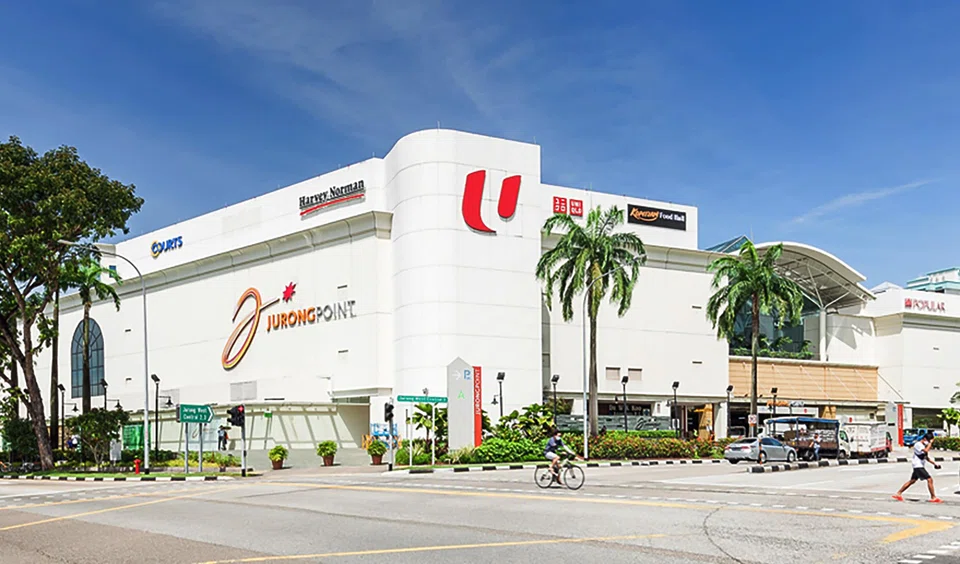
On Dec 28, 2022, Link Reit said it had agreed to buy the entire interest held by NTUC Enterprise’s real estate arm Mercatus in suburban malls Jurong Point and Swing By @ Thomson Plaza, which occupies Levels 1 and 3 of Thomson Plaza.
Located at the Boon Lay Bus Interchange and Boon Lay MRT station, Jurong Point has a net lettable area (NLA) of 720,000 square feet (sq ft).
Swing By @ Thomson Plaza, situated in the Upper Thomson residential area, has an NLA of 110,000 sq ft. Both properties have an occupancy rate of nearly 100 per cent.
Good pricing
The deal pricing looks attractive. Link Reit is buying the two properties at a discount of 6.1 per cent to total appraised value by Cushman & Wakefield of S$2.3 billion as at Dec 28, 2022. The trust’s purchase price for Jurong Point of S$1.99 billion is close to 10 per cent below the S$2.2 billion paid by Mercatus to buy Jurong Point from Lee Kim Tah Holdings and Guthrie GTS in 2017.
With strong demand for high-quality buildings here, deals are often done at prices above valuation. Moreover, sizeable suburban malls are usually tightly held and seldom come to market.
.Jurong Point and Swing By @ Thomson Plaza generated a combined annualised net property income (NPI) of S$106 million as at October 2022, which translates to an NPI yield of 4.9 per cent.
This compares well with the NPI yield of 4.4 per cent on the purchase of the remaining interest in Jem in 2022 by Lendlease Global Commercial Reit. (The NPI was adjusted for the effects of Covid-19-related one-off rental abatements and expected credit loss.) Located in Jurong, Jem is one of Singapore’s largest suburban malls. It also has a large office component.
Good timing
The deal could be accretive to Link Reit’s distribution per unit (DPU) and is being struck when it is difficult for leading Singapore commercial Reits to digest a deal of over S$2 billion.
Link Reit is funding the transaction with cash resources and debt. It does not need to raise equity. Upon completion, its ratio of debt to total assets will rise from 23.2 per cent to 27.1 per cent, based on its consolidated financial position as at end-September 2022.
If Link Reit borrows at 4.5 per cent per annum or less, the spread from the NPI yield over the debt cost is positive and will boost DPU. In mid-December 2022, Link Reit completed an issue of HK$3.3 billion (S$568 million) of convertible bonds due 2027 that pay an annual interest rate of 4.5 per cent.
Typically, Singapore Reits keep total borrowings at up to just over 40 per cent of the fund’s deposited property. Leading commercial Reits such as CapitaLand Integrated Commercial Trust (CICT) and Mapletree Pan Asia Commercial Trust (MPACT) had aggregate leverage of 41.2 per cent and 40.1 per cent respectively, as at end-September 2022. CICT and MPACT would likely have had to raise equity to fund a purchase of over S$2 billion. With volatile equity markets, raising equity is challenging and costly.
Should interest rates peak soon and subsequently soften, Link Reit’s timing in entering the Singapore market could be prescient.
Strategic value
Diversifying into Singapore is also highly strategic for Link Reit, as longer-term economic prospects in the trust’s core market of Hong Kong look challenging. Suburban retail occupancy rates in Singapore were stable throughout the Covid-19 period, and supply of suburban retail space is tightly controlled by the Urban Redevelopment Authority.
From a currency translation perspective, owning Singapore assets could beat owning assets in Australia and the United Kingdom (UK), where Link Reit has exposure. Over 2022, the Hong Kong dollar appreciated by about 7 per cent and 12 per cent over the Australian and UK currencies, respectively, while weakening marginally versus the Singapore dollar.
Interestingly, Link Reit’s Singapore foray may mark a concerted push to grow fee income. The trust is entering a 10-year asset and property management service agreement for AMK Hub – a suburban mall in Ang Mo Kio – which remains under Mercatus’ ownership. Fees earned from managing AMK Hub accrue to Link Reit’s unit holders, and not an external manager.
This means that if Link Reit wanted to build a relationship with capital partners or free up some of its balance sheet for other deals, it could bring in a partner to partially own the Mercatus assets while still earning revenue for unit holders from the management of the assets.
Asia’s largest Reit, Link Reit is widely held by public and institutional investors and has no controlling unit holder. Link Reit owned properties were worth about HK$234 billion at end-September 2022, of which the contribution from Hong Kong was over 78 per cent.
Link Reit’s entry into the suburban mall scene here ups the ante for existing players. It hopes to introduce new tenants for broader price points and better shopping experiences, similar to its track record in Hong Kong for mass-market community retail facilities.
If it can do this well, Link Reit will grow the NPI and capital values of the Singapore assets.
The writer owns units in Link Reit