Thinking Aloud

Living to 120 and beyond? 

It is reasonable to expect that the numbers of healthier and functioning elderly will grow, and this has implications for the future of work and finances, among other aspects

Summarise
Lee Su Shyan
Published Thu, Aug 21, 2025 · 05:00 AM
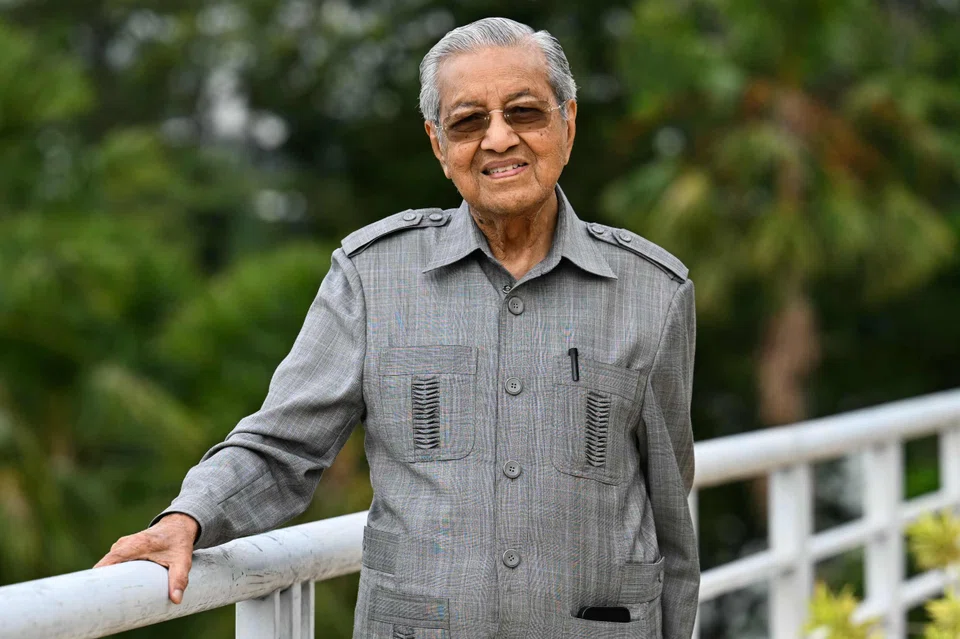
    • Mahathir Mohamad, the former prime minister of Malaysia, turned 100 recently and is still in fine form.
    • Mahathir Mohamad, the former prime minister of Malaysia, turned 100 recently and is still in fine form. PHOTO: AFP

    LIVING to the age of 120 is not beyond the realms of possibility. The Economist newspaper discussed it a few years back and said it was an “imaginable prospect”. 

    Surpassing the age of 100 is more than feasible these days. The former prime minister of Malaysia, Mahathir Mohamad, turned 100 recently and is still in fine form. Other well-known figures who have hit that magic number include Malaysia’s wealthiest man Robert Kuok, who is turning 102 soon.

    But if the number of nonagenarians and centenarians grow, a significant mindset and planning shift must happen across the board – for individuals, businesses and policymakers. 

    For many individuals, the aim is to age well. They exercise zealously and practise disciplined eating habits. They pay attention to scientific developments about how the advance of time can be held at bay. 

    Even as they aim to keep themselves healthy, there is increasingly an expectation that they will retain a certain amount of youthful vigour too. I’m sure Amazon’s Jeff Bezos doesn’t want to live till 100 if it means looking like an elderly grandfather. He probably wants to still be toned and buff enough to lounge on his super yacht. 

    As some people say, 50 is the new 40. Not inconceivably, at some point, 80 could be the new 60. Whether a centenarian will be able to have the body and brain that functions like that of a 50-year-old is probably still some distant way in the future. 

    Even as a scenario of centenarians in the workforce is a far-fetched possibility, it is reasonable to expect that the numbers of healthier and functioning elderly will grow. This has implications for the future of work and finances, among other aspects. 

    Currently, much of the discussion as an individual heads close to retirement age centres on the transition to an active retirement. This usually involves spending more time with family, travelling far and wide while working part-time or occupying oneself with volunteer work or charitable pursuits. 

    However, with a longer life expectancy and a better quality of life, having a second or even a third career becomes a distinct possibility.

    The options are limited now. There is a focus on job redesign for example, by making jobs less physically demanding for older workers. Other senior workers may be re-employed because they have technical skills that are still relevant. For example, an engineer with his institutional knowledge may stay on in an organisation as a consultant. But this is more the exception rather than the rule.

    There are a variety of part-time jobs, but organisations do not devote much time or attention to creating meaningful roles.

    But if more jobs are not made available, a retirement phase could easily span two decades or more. This has implications for an individual’s retirement planning as well as the state and insurers who fund the pensions and benefits schemes. 

    Businesses need to take a long-term view and think about how best they can offer a proper second or indeed a third career option, where a person could join at, say, age 50 and have a fulfilling career journey that takes them to 70 and beyond.

    If such options become available, that would go a long way to solving the labour shortage posed by demographic challenges as well as relieving the hefty burden on the state coffers.