A living laboratory for future urban solutions
Singapore should strive to be where cutting-edge technologies and human-centric solutions are co-created and scaled globally to address the world’s most pressing challenges
[SINGAPORE] The Republic made headlines earlier this year when it was named the world’s most innovative country by the Consumer Technology Association, the US trade body that annually organises the world’s largest consumer technology trade show. Leapfrogging from the 15th spot in 2023 to the top rank this year is no mean feat and has been the result of Singapore’s emphasis on strategic national planning and forward-thinking policies.
As global competition intensifies and urban challenges grow more complex, the city-state must also continuously evolve to maintain its edge as a premier hub for innovation and sustainability.
A living lab for urban solutions
Singapore’s journey from a resource-scarce island to a thriving metropolis offers essential lessons in urban innovation. Its Garden City vision, pioneered by founding prime minister Lee Kuan Yew, laid the groundwork for its reputation as a global leader in sustainable urban development.
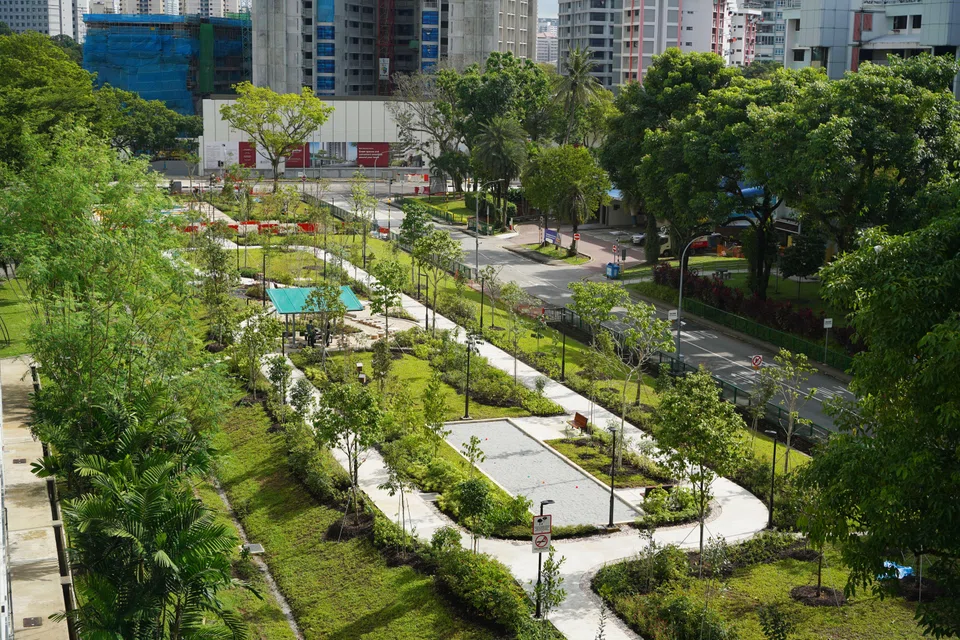
Today, Singapore is one of the world’s greenest cities, with 7,800 hectares of green space. Its green cover is over 40 per cent, earning it the moniker “City in a Garden”. The island is also among the world’s 20 most carbon-efficient countries, with natural gas generating 95 per cent of its electricity.
However, achieving the national target of net zero emissions by 2050 will still be a challenging journey. Scarce resources will always be a significant constraint in the planned transition towards increasing the renewables share in its energy mix. Meanwhile, difficulties such as logistics and high capital costs persist in greening Singapore’s built environment that accounts for around 20 per cent of national emissions.
Learning from global leaders
In view of these gaps, Singapore can still draw valuable lessons from cities worldwide in building sustainable urban ecosystems, especially those with a high quality of life, and that prioritise environmental sustainability, are culturally diverse, focus on innovation and technology, and more.
Copenhagen is a great example. The Danish capital, which has more bikes than inhabitants, has 382 kilometres of cycle tracks and traffic lights coordinated for cyclists during rush hour, which also has reduced emissions and improved public health. Likewise, Oslo’s car-free city centre and electric vehicle infrastructure showcase a commitment to green mobility. Amsterdam’s long-standing commitment to its circular economy highlights how scaling resource optimisation can engage communities and drive long-term sustainability.
By learning from the global leaders, Singapore can continue to adapt and scale these best practices through a combination of strong regulatory frameworks, technological expertise, and an innovation-driven mindset.
Cross-border collaborations as innovation catalysts
Given Singapore’s small domestic market, cross-border collaborations are crucial for driving innovation. Global connectivity amplifies the impact by opening doors to new markets, resources, and expertise.
Academic institutions can play a key role as an enabler of innovation and pave the way for public-private collaborations while fostering entrepreneurship, which is not the path most taken by our graduates. Hence, we must intentionally cultivate entrepreneurship by inspiring student founders and opening their eyes to global perspectives. In particular, institutes of higher learning can play active roles in fostering meaningful connections between Singapore’s innovation ecosystem and the global stage.
For instance, Iterative Health, founded by a Singaporean during his academic journey at the Massachusetts Institute of Technology, exemplifies the value of international exposure for startups.
In another case, Zhiyin, a China-based assistive technology startup, has worked closely with Singapore Management University undergraduates through overseas internships. The competencies and drive displayed by the students has led to their being offered the opportunity to spearhead Zhiyin’s expansion into Singapore.
Power of tri-sector partnerships
Ultimately however, collaboration among corporations, government, and universities is key to growing the nation’s innovation ecosystem. The government provides regulatory support and funding, while the private sector brings agility, domain expertise, and the ability to scale innovations globally. This can lead to the emergence of a tri-sector partnership (TSP) that is a collaboration between the public, private, and civil society sectors. The goal of a TSP is to combine the resources and skills of these sectors to achieve more than any one sector could on its own.
Universities in turn contribute fresh talent and creative ideas, while youth entrepreneurship drives economic growth by creating jobs and fostering innovation.
Such tri-sector partnerships can drive breakthroughs in critical areas such as sustainability, deep tech, and urban solutions, and accelerate the deployment of solutions addressing urgent challenges.
Next frontier: Water solutions and sustainable materials
For a resource-scarce, high-density urban hub such as Singapore, two areas stand out as game changers for the future of cities: water solutions and sustainable materials. Singapore has transformed water scarcity into a strength, building one of the world’s most sophisticated urban water management systems through its Four National Taps strategy. As water stress intensifies worldwide, Singapore’s expertise in circular water solutions and smart water infrastructure will become increasingly valuable.
Similarly, sustainable materials are emerging as a critical component in addressing mounting environmental challenges. Singapore is making significant strides in this space, with institutions such as A*Star’s Institute of Materials Research and Engineering pioneering next-generation materials that reduce waste and carbon footprints. The government has also been stepping up support and driving demand for sustainable materials in construction and manufacturing.
Empowering the next generation
Institutions aside, it is the young innovators, especially students, who are key drivers in shaping Singapore’s future as an urban sustainability hub. With fresh perspectives and a readiness to challenge norms, they are uniquely positioned to co-create solutions for climate resilience, resource efficiency, and urban liveability.
A recent survey of over 6,000 SMU undergraduates found that 40 per cent are open to exploring entrepreneurship, and this interest grows with access to mentorship and startup internships. Universities can empower students to experiment, learn, and create change by providing the right networks, resources, and exposure. Platforms such as startup and case study competitions, that connect students with the right mentorship and resources, can also be a springboard for their ideas to move the needle on addressing tomorrow’s urban sustainability challenges. Participation and immersion in these initiatives can provide young entrepreneurs the opportunities to broaden their networks and sharpen their value propositions.
The road ahead
Singapore should therefore strive to be more than a hub – it must be a living laboratory where cutting-edge technologies and human-centric solutions are co-created and scaled globally to address the world’s most pressing challenges. This ecosystem must be rooted in deep partnerships that transcend sectors and borders, allowing Singapore to pioneer advancements in urban solutions, green technologies, and digital health while setting new global standards for liveability and resilience.
By focusing on talent development, cross-sector collaboration, digital transformation, and global market access, Singapore is well-positioned to remain a leading global innovation magnet, attracting talent, investments, and breakthrough technologies to secure its future in the global economy.
The writer is vice-president (partnerships and engagement), and Lee Kong Chian professor of communication and technology, Singapore Management University
TRENDING NOW
Three ex-employees of Envy group join Ng Yu Zhi in bankruptcy
He built the Vingroup empire. Now South-east Asia’s richest man is handing some key roles to his sons
Grab CEO’s wife Chloe Tong on life with Anthony Tan and finding her purpose
Incidence of civil servants buying property near unannounced MRT stations ‘a concern’, but may not establish misconduct: PSD