Looking beyond China’s Covid Wall
THE new year began with any number of political factors that can impact business. But perhaps the most immediate is China, exiting from its zero-Covid policy. Many had urged this change.
Like its Great Wall, China’s zero-Covid policy attracted attention with its dimensions. Border controls and travel restrictions lasted more than 1,000 days – longer than any other major country. Extraordinary lengths were taken to strictly police the policy, closely associated with President Xi Jinping personally.
The suddenness and completeness of the decision to end Covid Zero therefore surprised. As the volte-face followed waves of citizen protests, soon after President Xi was installed for a record third term, speculation swirls about its implications on governance.
Polarisation of views
Polarised images and narratives have emerged. On one hand, scenes of overcrowded hospitals and empty streets, and suggestions that many millions of Chinese are dying or in critical condition. Reports, especially in the Western media, are that Chinese authorities are overwhelmed and there is chaos.
On the other extreme, China’s official death counts are in the single digits, and officials maintain that the situation is under control. Infections are said to be peaking in major cities and there are signs of life returning to malls and restaurants, with resulting traffic jams, rather than ghostly streets.
The situation is another front in the West versus China contest. Unsurprisingly so. Remember the days when Western democracies were stumbling through Covid-19 surges, while Beijing played at “vaccine diplomacy” to dole out help to friends. Read much of the current Western narrative as political revenge.
This does not mean, however, that Beijing is without fault. The completeness of China’s information and degree of transparency are being queried, not least by the World Health Organization.
But what it means is that an accurate reading of the situation by outsiders is very difficult, perhaps impossible. This is especially when we consider the scale and diversity of China, with so many provinces, villages as well as cities.
Likely outcomes
No country – especially larger ones – emerged unscathed from Covid-19. Remember the situation in the US under Donald Trump and the UK under Boris Johnson; or recall how India struggled during the surge of mid-2021.
Studies have modelled how infections will rise and how many deaths to expect. One by the Hong Kong University suggests that one million Covid deaths could result in China. This is not trivial.
India – another developing country with a huge population – may offer the closest comparison. As of Jan 7, 2023, India reported 44,680,985 cases and 530,718 deaths; only the US had more cases and only the US and Brazil, more deaths.
Yet today, that largely seems past, almost forgotten. Growth projections for India are now running high. The authority of Indian Prime Minister Narendra Modi has not been eroded even after much hand-wringing during the worst of the surge.
One difference may be that India was open to receive international donations and assistance, such as for vaccines and, during the worst of the surge, oxygen concentrators, ventilators and other equipment. Authorities in Beijing in contrast have, given the politics, rejected offers from the US.
Lower-key assistance may be acceptable, perhaps from countries that earlier received help from China. Otherwise, China will emphasise home-grown efforts, speeding up its own mRNA vaccine production.
Private efforts can also play a role. Some companies abroad seem to be helping their employees and partners. Better-off Chinese who are now travelling are also buying up pharmaceuticals and seeking vaccinations abroad.
While there will be immediate stresses, the overall resilience of China – its people and also the institutions of the state – cannot be underestimated.
Preparing for China’s return
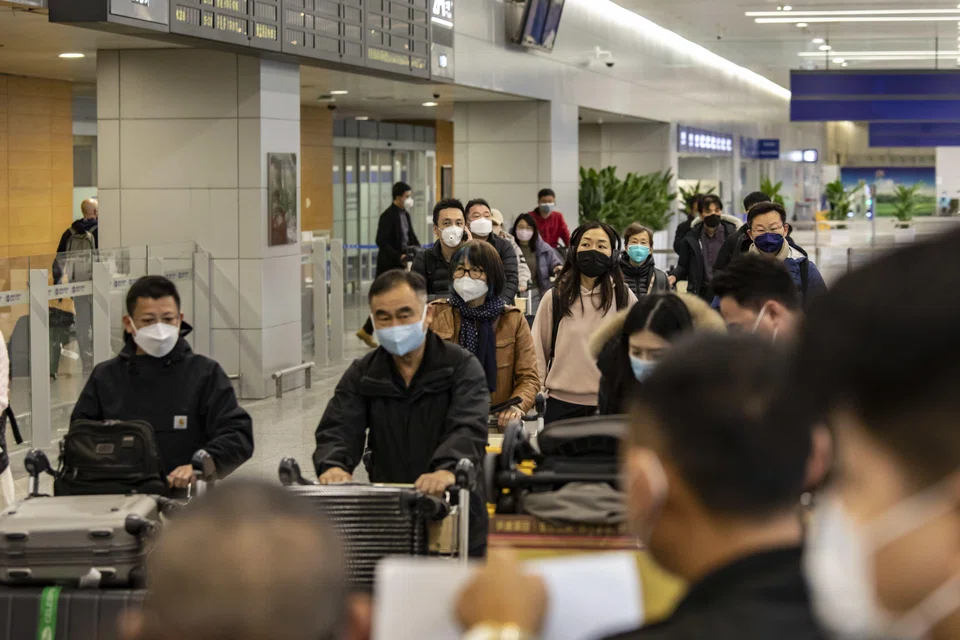
The next weeks will bring more mixed stories, especially with the resumption of travel and the upcoming Chinese New Year holiday. As Chinese citizens head overseas, there will also be controversy among some countries about whether to accept them, with or without testing.
Within China, the pandemic will spread out to the provinces and smaller cities in this period. Spikes in cases can disrupt supply chains and cause uncertainties. But the seasoned China hand will tell you, this was also the case during the zero-Covid policy days.
While ending that policy will bring many challenges, positive outcomes should also be anticipated. During the long years of Covid Zero, lockdowns and border restrictions contributed to sluggish growth rates. This negatively impacted not only China but also the region and global economy.
Given this, there is a potential economic upside as China returns to engage the outside world in trade, tourism and its demand for goods – from basic commodities to the luxury market. This will have positive demand effects, especially for the tourism sector in Asean countries such as Thailand. Airports and tourist and service-industry establishments will need to rapidly gear up.
We must expect higher prices too. In commodities and energy, post-lockdown demand and shocks from the Ukraine war have already led to spikes, driving overall inflation. Stronger growth in China – while good overall – will be another driver.
This goes beyond the froth of revenge spending and pent-up consumption. There will be an underlying and permanent push ahead. China’s decision to end its zero-Covid policy was not just a reaction to public protests. There is consensus about the need to stimulate growth by reopening. Reforms in other sectors such as property will follow.
As such, many expect China’s spending to grow in the coming year – not just from consumers and corporations but also from the state. Outsiders – especially those who deal with the China market and supply chains – should prepare for this return of China, for both the positive effects and the knock-on impacts.
In a world beset with many problems, more should be supporting China to cope with the end of Covid Zero and to emerge quickly and strongly. Some, however, do not seem to want China to succeed, and instead wish for its economy to emerge scarred. Some hope that the political support for President Xi will be weakened.
Perhaps the country’s iconic Great Wall offers a lesson. There is a view among some historians that the Wall was a mistake and policy failure, costing much money and many lives, while failing ultimately to keep out invaders. Another interpretation is that the Wall signifies the country’s oscillation between international engagement and isolationism. As China ends the policy of a Great Zero-Covid Wall and prepares to re-engage the world, such debates will take on new currency.
The writer is chairman of the Singapore Institute of International Affairs (SIIA). This is an occasional SIIA column on The Politics that Matter to Business.