

Looking for a legacy in Asia-Pacific
US PRESIDENT Joe Biden saw the Asia-Pacific as key for his foreign policy, upon taking office in 2021. However, the crisis in Israel since late 2023, and Russia’s 2022 invasion of Ukraine, have shifted the emphasis of the administration’s focus in consequential, unexpected ways.
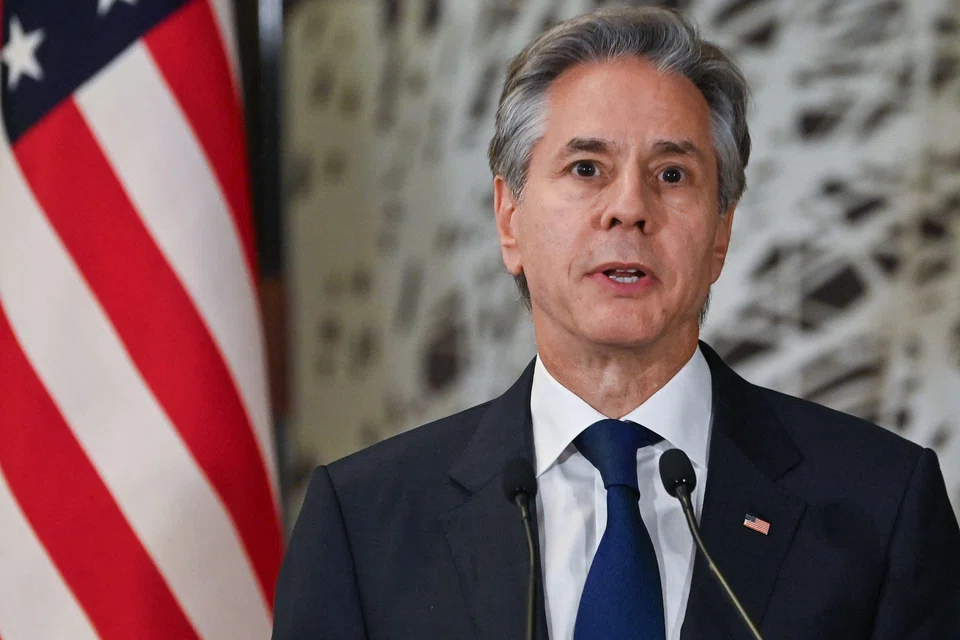
The fact that the Middle East and Eastern Europe remain uppermost on the Biden team’s mind was illustrated again last week when US Secretary of State Antony Blinken shortened his Asia trip itinerary by a day to be present for the White House meeting between Biden and Israeli Prime Minister Benjamin Netanyahu on Jul 25. However, with around half a year left in office, Biden and Blinken are nonetheless seeking to craft a legacy in the vast Asia-Pacific geography.
It is this, and the reassurance about US commitment to the region, that Blinken is engaging allies about during his current trip to the region. His and the wider Biden team’s achievements include developing deeper partnerships across the region since 2021, including with Asean, India, Japan, Australia, and South Korea.
Moreover, in October 2021, Biden also said that the United States under his watch would defend Taiwan if China attacked, an apparent departure from a long-held US foreign policy position of “strategic ambiguity”. While the White House asserts this is “no change in our policy”, Chinese President Xi Jinping has complained that Washington is seeking “all-around containment, encirclement, and suppression against us”.
It is this context which is shaping Blinken’s trip, his 18th to the region since taking office in 2021, which comes only days after Biden’s withdrawal from the 2024 presidential race. The overall goal of the tour, which may be his last as secretary of state, is “advancing a free and open” Asia-Pacific given the concerns of regional allies about China.
There is also a need to reassure about US policy under the next presidency. US allies in Asia have significant concerns over what a second Trump term might bring, not least as from 2017 to 2021 he indicated that the six-decade-long US military footprint in Japan and South Korea might be reduced or eliminated. This despite US plans under the Biden team to establish in Japan a new Joint Force Headquarters for the almost 55,000 US military personnel stationed there.
Blinken’s longest-ever tour to the region as secretary of state encompasses visits to six countries starting with Laos on Saturday (Jul 27), where he attended the annual Asean Regional Forum which comprises the foreign ministers of Asean and regional powers such as China, Australia, Japan, Russia, South Korea and India. He then headed to Vietnam to offer condolences following the death of communist leader Nguyen Phu Trong.
Last year, Washington and Hanoi had upgraded ties to a comprehensive strategic partnership. Moreover, US Treasury Secretary Janet Yellen has proposed Vietnam as a “friend-shoring” destination to diversify US supply chains from China in advance of a pending US decision to potentially upgrade Vietnam to so-called “market-economy status”.
Blinken’s next stops included Tokyo on Sunday for “2+2” talks between him, US Defence Secretary Lloyd Austin and their Japanese counterparts, which concluded that China’s “foreign policy seeks to reshape the international order for its own benefit at the expense of others”. There was also on Monday a meeting of Quad foreign ministers with Japanese, Australian and Indian counterparts.
The main goal of the Quad meeting was to advance a shared vision for a free and open Asia-Pacific. The emerging fault lines in this growing challenge are often cited as being Taiwan, or the continuing tensions in the South China Sea where it is not just the US, but also other countries such as the Philippines, Malaysia, Vietnam and Brunei, that are in dispute with China in the waters through which trillions of US dollars of ship-borne trade passes each year.
Austin is also joining Blinken on the next leg of the tour to the Philippines on Tuesday for “2+2” talks with their counterparts given that, like Tokyo, Manila has a mutual defence treaty with the US. The final two important stop-off points will be Singapore and Mongolia.
What this agenda reinforces is that Biden and Blinken have not lost sight of a longer-term ambition to intensify the US “pivot” to the Asia-Pacific. This despite the fact that the biggest international legacy that Biden may leave as president may be his determined defence of Ukraine, plus his wider statecraft which has seen the rebuilding of a fragile Western alliance.
While Russia remains the major immediate threat to Washington’s security interests, this has done little to alter the administration’s view that Beijing remains the paramount longer-term challenge. On Saturday, Blinken reinforced this point to his Chinese counterpart Wang Yi, expressing specific concern about “destabilising actions” in the South China Sea, including towards the Philippines which has, since the election of President Ferdinand Marcos, moved closer to the US.
This tension between Manila and Beijing stems, in part, from resupply trips to Filipino troops stationed on a navy ship grounded at the disputed Second Thomas Shoal. Such resupply missions have sparked anger on both sides.
Blinken also criticised Beijing’s extensive support for Russia’s defence industrial base, which Nato leaders said in a joint declaration recently is a “decisive enabler” of Russia’s war against Ukraine. The US and Europe have, in recent months, accused Beijing of sending many dual-use goods to Moscow, and have sanctioned firms in Hong Kong and mainland China.
Wang, for his part, recently met Ukrainian Foreign Minister Dmytro Kuleba for the first time and asserted that Beijing “supports all efforts that contribute to peace”. Kuleba also visited Hong Kong and urged the city’s government to help prevent Russia from bypassing Western sanctions.
Blinken’s meeting with his Chinese counterpart also follows the North American Aerospace Defense Command’s interception of two Russian and two Chinese bombers flying near Alaska. This is the first time that aircraft from these nations have been caught in this geography while operating in a combined fashion.
Taken together, the next half-year may therefore be one of the most important in the Asia-Pacific’s recent history as Biden and Blinken seek to nail down a legacy in the region.
While the uncertainties of a potential second Trump term grow, there will be a determined effort to double down US attention on the region, re-emphasising the US pivot which is primarily focused on balancing China’s rise to power.
The writer is an associate at LSE IDEAS at the London School of Economics
TRENDING NOW
Singapore identifies 7 firms responsible for haze fires, notices issued urging action: Grace Fu

Could stablecoins be the future of money?

Singapore should prepare for prolonged haze until November, says Grace Fu
High Court rules against Julius Baer’s Singapore trust arm in US$50 million family trust dispute

