A lot of Brics but no mortar
Anti-Americanism by itself can’t drive collective action
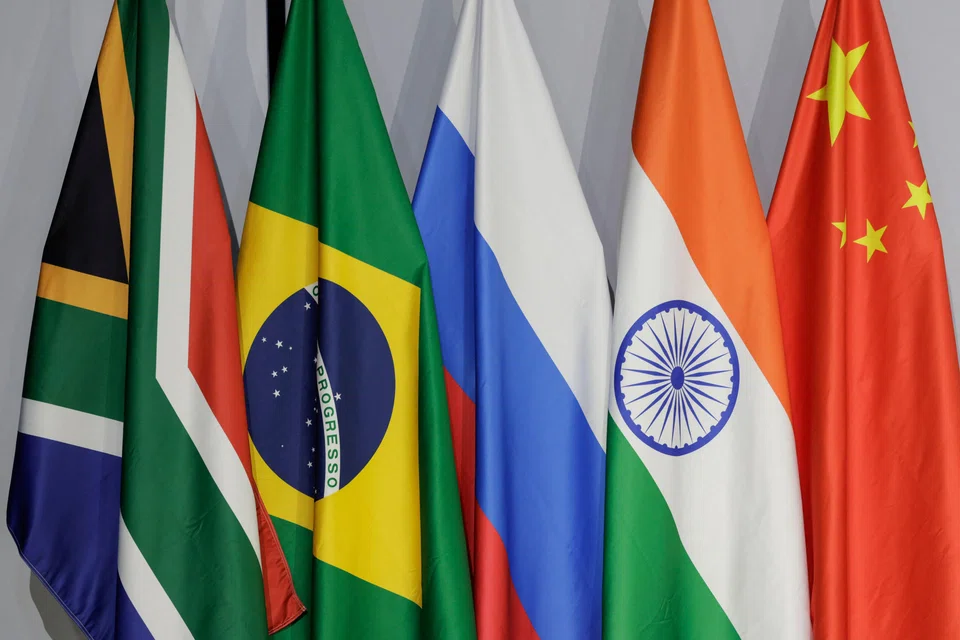
BRICS – the acronym for Brazil, Russia, India, China and South Africa – is all the rage on the international scene these days. With six new countries – Iran, Saudi Arabia, the United Arab Emirates, Egypt, Ethiopia and Argentina – slated to join the group, some predict that, especially with Beijing leading the way, the bloc will soon rival the industrialised West and transform the international system.
The current hype about Brics recalls the Cold War era, when many expected the Non-Aligned Movement (NAM), consisting of members that were not allied with either the United States or the Soviet Union, to become a major force in international relations.
It was said that the elites that ruled the European powers were trying to perpetuate a global status quo that benefitted their interests and not those of the developing nations. These nations were going to press these industrialised economies to provide them with more access to the world’s economic resources.
Similar slogans are being promoted these days by the governments of the so-called Global South that Brics purports to represent in the name of 47 per cent of the world’s population, and 37 per cent of its gross domestic product calculated by purchasing power parity.
Brics challenges the Western industrialised countries, as represented by the Group of Seven (G7) and the international order it controls through various institutions.
Indeed, since the first Brics summit in 2009, the grouping seems to have gained momentum. Some now forecast that Brics could one day rival the G7 and erode the pre-eminent global power of the United States and the West.
Similar predictions were made about the NAM in the 1960s. But contrary to its expressed goal of non-alignment, the NAM ended up advancing a mostly anti-Western agenda. And apart from its anti-American positions, the NAM lacked a coherent agenda, consisting of governments that shared nothing much else in common and, in some cases, were long-time adversaries.
It remains to be seen if the Brics will ever cohere into a true-blue “bloc” that could transform the international system. After 15 official summits, the Brics has yet to come up with an identifiable programme to replace the Washington Consensus and so-called neo-liberalism.
Fans of Brics should recall the gradual slide of the NAM into global irrelevancy, as some of its members, such as Cuba and Egypt, turned into Soviet protectorates, and discovered that playing one superpower against the other did very little to improve their international status and economic conditions.
Similarly, anti-American rhetoric isn’t going to turn Brics into an effective international bloc. Growing tensions between China and India, the continuing war in Ukraine, Iran’s nuclear military programme, not to mention disagreements over trade and investment policies, are only some of the myriad issues that are bound to make it difficult to employ Brics to pursue any form of collective action.
The United States, at the same time, could counter the Brics’ designs by offering developing countries access to its markets and strengthening the global trading system, while reforming the international economic organisations it leads.