
‘Made in Europe’ plan’s sting in tail for Asia and the wider world
The soon-to-be-finalised initiative will impact industries from cars to manufacturing, steel and defence
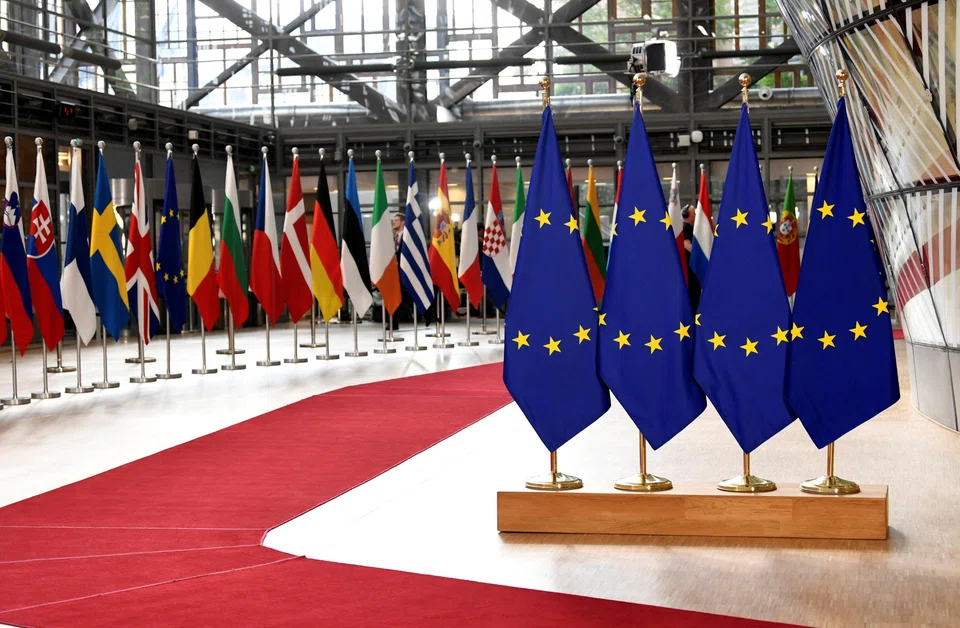
GLOBAL business is increasingly alarmed by the pending “Made in Europe” package – the latest example of protectionist drift among key world powers.
Former US Senate majority leader James Watson is believed to have coined the phrase, “If you can’t beat them, join them.” A century later, this rationale guides the European Union (EU) as it seeks to finalise its “Made in Europe”, a move sparking international concern from Asia to the Americas.
EU leaders have closely watched international developments that have moved much public policy in a protectionist direction. This includes US President Donald Trump’s tariffs, which were given a new legal rationale on Feb 21, after the Supreme Court struck down his original reciprocal and fentanyl tariffs.
However, it is not only Trump following this course. Europe was struck forcefully too by former US president Joe Biden’s Inflation Reduction Act, aimed at encouraging a massive wave of investment in domestic renewable energy.
Influenced by these US measures, and other examples too, including from China, the EU is scheduled next week to launch the “Made in Europe” plan as part of a broader Industrial Accelerator Act.
This is the latest phase of the EU’s Clean Industrial Deal – which aims to boost the bloc’s global competitiveness and is perhaps the flagship policy of European Commission president Ursula von der Leyen’s second term.
This plan will link public subsidies and procurement to European-made content in strategic sectors such as renewables, batteries, vehicles and steel. With US and China competitors increasingly challenging EU businesses, France pioneered the idea, a few years ago, of steering major contracts towards European industrial and tech champions. While controversial, it has since gained traction.
European commissioner for prosperity and industrial strategy Stephane Sejourne this month asserted that “without an ambitious, effective and pragmatic industrial policy, the European economy is doomed to be just a playground for its competitors”. “We must establish, once and for all, a genuine European preference in our most strategic sectors.”
The article was co-signed by more than 1,100 chief executive officers spanning industries from steel (ArcelorMittal and Tata Steel) and pharma (Novo Nordisk and Sanofi) to tyre (Continental, Michelin and Pirelli), aviation (Air France KLM) and energy (Engie).
EU divisions on “Made in Europe” plan
However, the “Made in Europe” package has divided the 27 EU member states, resulting in multiple delays in finalising the package. Sceptical governments – including the Czech Republic, Estonia, Finland, Ireland, Latvia, Malta, Portugal, Sweden and Slovakia – have warned that the plan could trigger unintended “consequences for effective competition, price and quality levels, and effects on businesses”.
Moreover, a leak in December 2025 suggested that Germany has lobbied for a “Made with Europe” approach. This alternative, preferred by much of the global business community, would see EU preferences more limited in time, and defined broadly to include products made in countries with which Brussels has existing trade and/or economic deals, and/or “likeminded partners”.
While the overall package is due next week, the automotive plan announced in December 2025 offers a preview. That plan shifts the focus of incentives and financial support towards an increasingly “Made in Europe” emphasis.
As commercial pressure from foreign-made cars – especially from China – increases in Europe, Brussels has introduced special incentives, including tax breaks, to protect the automotive sector. This is founded on a 70 per cent domestic (EU) production requirement.
This and subsequent announcements, such as the Clean Industry Agreement, aim to strengthen local industrial capacity through compliance with EU environmental, social and technological standards.
The development of clean manufacturing is another pillar. Decarbonisation of the automotive industry through the EU Net-Zero Industry Act and the Industrial Acceleration Act requires carmakers to have a 40 per cent low-emission fleet by 2030 and 75 per cent by 2035. This also applies to automotive supply and automotive steel manufacturing industries.
Moreover, a new European Critical Raw Materials Centre is being established to ensure the supply of critical raw materials and reduce external dependence. The centre will perform joint purchasing and stocking to support not only the automotive industry, but also battery manufacturing, defence and artificial intelligence chips industries.
Concern outside of EU
The geographic scope of the “Made in Europe” scheme appears to be the last big stumbling block to finalising the package. Nations outside of the bloc are also worried.
Many businesses are lobbying for “Made in Europe” protections to be extended beyond the EU and European Free Trade Agreement nations (Iceland, Norway, Switzerland and Liechtenstein) to include other territories vital to their supply chains.
In the region, this includes the UK and Turkey. The EU remains the largest export market for UK cars, while several European manufacturers produce vehicles in the UK (the EU’s second-largest export destination in 2024).
In Turkey, firms such as Renault, Fiat, Ford, BYD and Cherry, are lobbying Brussels over concerns that their manufacturing and supply chains may be damaged.
Beyond cars, wider industries that could be affected include machine manufacturing, steel and defence.
Relocating this manufacturing back to the EU would take much time and cost. Consequently, these firms are backing government efforts to be included in the initiative’s geographic scope.
In Asia, Japan’s firms are also expressing concern. Automakers such as Honda and Toyota fear the scheme may distort the price and availability of Japanese vehicles within the EU.
The US is also pushing back. Andrew Puzder, Trump’s ambassador to the EU, has stated that Washington rejects any effort to incorporate European preferences into the bloc’s public procurement rules.
Despite these controversies, the package has too much momentum to be derailed. It remains the latest signal of the increasingly protectionist slant dominating economic policy in key world powers.
The writer is an associate at LSE Ideas at the London School of Economics
TRENDING NOW
Grab CEO’s wife Chloe Tong on life with Anthony Tan and finding her purpose
Income Insurance appoints former Manulife Singapore top man as new CEO
Incidence of civil servants buying property near unannounced MRT stations ‘a concern’, but may not establish misconduct: PSD
Three ex-employees of Envy group join Ng Yu Zhi in bankruptcy



