
Major shareholders are not helping by buying more cheap shares in deeply discounted listed groups

Leslie Yee
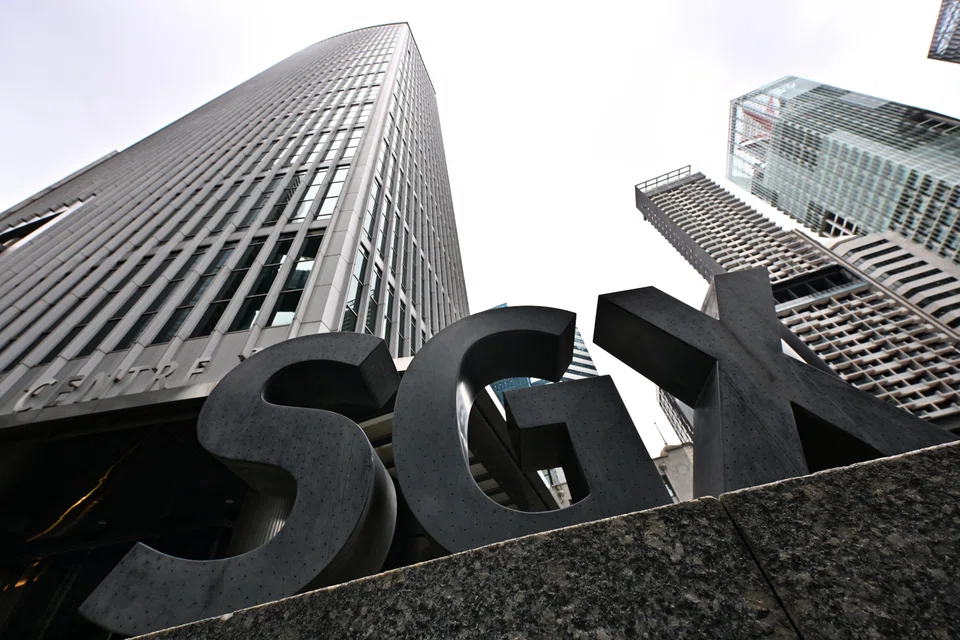
THAT a major shareholder is adding to its shares in a listed group ought to be seen in a positive light, in general.
For one, it should signal that all is well with the group’s business and that the shares are worth buying.
After all, major shareholders likely know the businesses they own and the markets in which these businesses operate intimately.
Some listed property-related groups have seen major shareholders raise their stake by buying shares recently possibly because the shares are trading at huge discounts to net asset value (NAV).
However, share buys by major shareholders may not be helping minority investors of groups such as Bonvests Holdings and Wing Tai Holdings .
Bonvests’ executive chairman Henry Ngo has been buying shares in the group. Between early May 2023 and end-October 2023, Ngo’s direct and deemed interest in Bonvests rose from 84.4 per cent to 84.7 per cent.
Bonvests’ core businesses are property development and investment, hotel ownership and management, and waste management and contract cleaning of buildings. The group owns assets such as Liat Towers along Orchard Road, Sheraton Towers Singapore Hotel in the Newton area, and hotels overseas.
As at Jan 2, Bonvests traded at a discount of 52 per cent to end-June 2023 NAV per share of S$2.10. The group’s NAV could be hugely understated as hotels are carried at cost less accumulated depreciation and impairment losses.
Over at Wing Tai, chairman and managing director Cheng Wai Keung has seen his deemed interest in the property group rise. His spouse, Helen Chow, has been busy acquiring shares in the group.
Between early September 2023 and late November 2023, Cheng’s direct and deemed interest in Wing Tai increased from 60.9 per cent to 61.4 per cent.
Wing Tai, which turned 60 last year, is involved in activities such as property development, investment in commercial and hospitality assets as well as operating a fashion retail business. As at Jan 2, Wing Tai traded at a discount of 69 per cent to end-June 2023 NAV per share of S$4.13.
Trading liquidity
Many listed groups with undervalued shares have poor trading liquidity. Illiquidity contributes to share price weakness as many investors shun buying shares in counters when they foresee difficulty exiting in future.
When a major shareholder raises his stake in a group, trading liquidity may worsen as its free float shrinks.
Crucially, a major shareholder buying up more shares in a listed group could harm minority shareholders unlike when a company buys back its own shares.
The number of shares available falls when a company does a share buyback, thereby hurting trading liquidity. However, the repurchased shares may be cancelled. This reduces the number of shares outstanding, which boosts metrics such as earnings per share (EPS) and possibly drives better share price.
In contrast, when a major shareholder raises his stake in a listed group, EPS does not rise as the number of shares outstanding remains the same.
Worse, a major shareholder who ups his stake in a group may be paving the way to privatise the entity with a lowball offer. As trading liquidity worsens, resistance from minorities to an underwhelming offer by a major shareholder might weaken.
Any major shareholder of a listed group justifiably feels aggrieved when the counter trades poorly.
A major shareholder may see little value in keeping a group’s listed status, especially as being listed entails compliance-related costs and following rules on disclosure, related party transactions and so on. Hence, a said shareholder may sensibly conclude that privatisation best resolves a said listed group’s undervaluation.
However, what’s best for minority shareholders is for the major shareholder to make an attractive privatisation offer immediately, instead of slowly buying up shares as a prelude to making a privatisation bid.
Unlocking value
On the other hand, if a major shareholder is keen for an undervalued group to remain listed, the said shareholder should avoid buying up more shares just because the shares are cheap.
Equally, it is unrealistic to expect the said shareholder to place out blocks of shares at low prices to boost free float and trading liquidity.
The way forward should involve value-unlocking moves that benefit all shareholders.
For a listed entity trading at a fraction of book value which sits on excess cash, returning cash to shareholders is valuable as the cash holding is marked down because a company’s shares trade at a large discount to book value.
Where a group is over-capitalised, reducing share capital can help unlock value for shareholders.
Corporate restructurings can also help create value. A group could list parts of a business separately if that is value accretive, or find more efficient vehicles to hold assets. For example, it could own investment properties through a real estate investment trust and not a company. It could also possibly turn shares in a property company into stapled securities.
Boards of listed entities must use the advice and services of Singapore’s ecosystem of bankers, lawyers, accountants, tax advisers and other professionals to draw up credible value-unlocking plans that treat all shareholders fairly.
Increasingly, many businesses globally are privately owned. Still, public markets matter. Having high-quality listed equities helps individuals save and invest for retirement needs amid rising life expectancy and high inflation.
May major shareholders of listed groups urgently act on value-creation moves that enrich minority investors. Entering 2024, animal spirits will return to the local bourse if more investors make money from buying domestic equities.
The writer owns shares in Wing Tai
TRENDING NOW
Grab CEO’s wife Chloe Tong on life with Anthony Tan and finding her purpose
HDB reviewing ‘jumbo’ flat scheme after Telok Blangah unit listed for sale at S$2.18m
He built the Vingroup empire. Now South-east Asia’s richest man is handing some key roles to his sons
Singapore judge raises doubts iron ore trader Radiant World is owed US$1 billion



