

Major tax hikes unlikely in upcoming Budget, but property tax rates may rise in future
Hiking property tax rates relatively palatable; consider concessions if rates rise

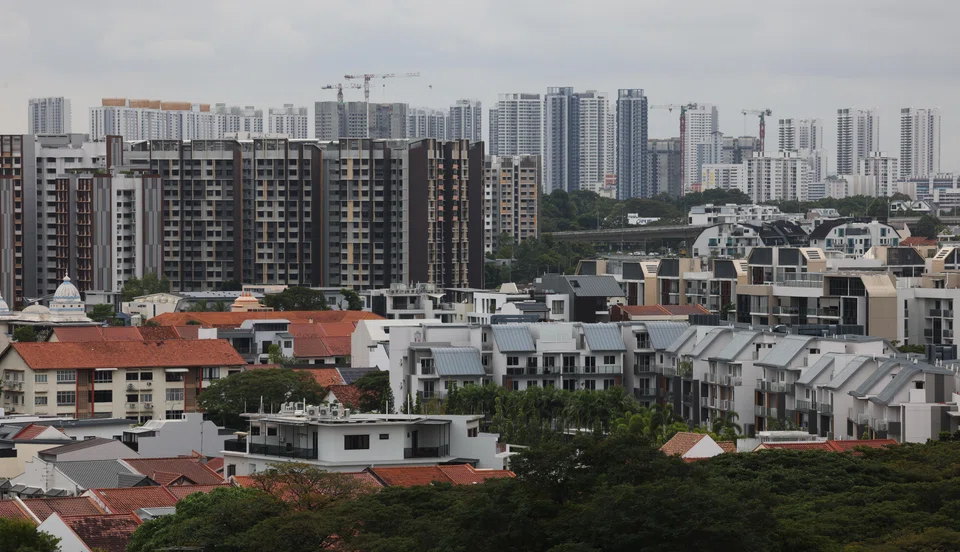
[SINGAPORE] With the goods and services tax rate of 9 per cent having taken effect in 2024 and a resilient economy, tax takings in Singapore are healthy.
For the nine months from April to December 2025, corporate income tax takings reached S$28.3 billion, representing 87 per cent of its full fiscal year S$32.7 billion projection, up almost 12 per cent year on year.
Therefore, there will hopefully be no major tax hikes in Budget 2026.
Hiking taxes can be politically unpopular. Typically, businesses and individuals like paying lower taxes as such expenses erode profitability and disposable income, respectively.
Nonetheless, looking out several years, a fiscally responsible government may have to raise tax rates.
As the population ages, healthcare spending could rise. Many investments may also be required to transition to a low-carbon economy.
Meanwhile, as big powers act more assertively and the threat of terrorism remains high, substantial spending is needed on defence and security.
The need to fund rising government expenditure comes amid fears that the working population who traditionally contribute much to tax coffers could shrink.
If tax rates are to rise, might property tax have to do much of the heavy lifting?
For the financial year April 2024 to March 2025, the Inland Revenue Authority of Singapore collected S$88.9 billion in tax revenue, which accounted for about 77 per cent of the government’s operating revenue.
The top contributors were corporate income tax, GST and individual income tax which contributed S$30.9 billion, S$20 billion and S$19.1 billion, respectively.
This was followed by property tax collection of S$6.6 billion, up nearly 12 per cent year on year.
Think about it – increasing property tax rates could be more palatable to businesses and individuals than hiking income tax or GST rates.
Unpalatable choices
Corporate tax rate is a flat rate of 17 per cent of chargeable income. This applies to local and foreign companies.
Chargeable income refers to a company’s taxable income, after deducting tax-allowable expenses, for a year of assessment.
The Republic wants to attract businesses to invest and create jobs here to build a dynamic economy. Might slapping higher corporate taxes undermine economic competitiveness?
Singapore’s personal income tax rates for tax resident individuals are progressive. Higher earners are taxed at a higher rate. The current top rate of 24 per cent for a tax resident applies to chargeable income over S$1 million.
For illustration, the gross tax payable by a tax resident on chargeable income of S$1 million in a year of assessment amounts to S$199,150.
Certainly, many people may back levying higher taxes on top earners. Still, might higher personal income tax rates make Singapore less attractive to top talent?
Indeed, high personal income taxes could blunt the drive of individuals in pursuing financial success with ensuing adverse economic consequences.
GST is a broad-based consumption tax levied on the import of goods, as well as supplies of nearly all goods and services in Singapore.
The government took the hard choice to increase the GST rate from 7 per cent to 8 per cent in 2023 and subsequently to 9 per cent in 2024. Households, in particular lower-income ones, received generous financial help to cope with the rise in GST expenses.
While higher GST rates cannot be ruled out, hiking the GST rate may carry much political risk. More pertinently, might a higher GST rate hurt domestic consumption?
Why property tax
Ultimately, raising property tax rates may be far more palatable to companies and individuals versus increasing income tax or GST rates. This is especially as residential property tax rates are progressive and owner-occupiers enjoy lower rates.
Property tax is a tax on property ownership, which applies whether a property is owner-occupied, rented out or left vacant.
Property tax is calculated by multiplying a property’s annual value (AV) with the relevant property tax rates. The AV is a property’s estimated annual rent excluding furniture, furnishings and maintenance fees.
Currently, the property tax rate for non-residential properties is 10 per cent. For homes, the owner-occupier tax rates range from 0 to 32 per cent while the non-owner-occupier rates range from 12 to 36 per cent. Higher tax rates apply to homes with higher AVs.
Property tax is effective as it is hard to avoid. Also, property tax recirculates a portion of the wealth stock into the economy thus helping mitigate social inequalities.
Crucially, property tax – which is the principal means of taxing wealth today – might be expected to contribute more to tax coffers in the future if Singapore does not levy a new tax on the net wealth of individuals.
Taxing the net wealth of individuals may be hard to implement. Estimating wealth accurately and fairly can be tricky. Add to that, many forms of wealth are mobile – such wealth may move when there are differences in wealth taxes across jurisdictions.
Singapore has fought hard to become a leading wealth management centre. Introducing a tax on the net wealth of individuals could hurt the city-state’s attractiveness for wealth management.
The government here has another vital source of revenue from the annual net investment returns contribution (NIRC), which allows it to spend up to 50 per cent of expected returns on reserves.
NIRC comprises up to 50 per cent of the net investment returns on the net assets invested by GIC, the Monetary Authority of Singapore and Temasek, as well as up to 50 per cent of the net investment income derived from past reserves from the remaining assets.
While there is possibly scope to use a larger share of investment returns for spending, it may be prudent to avoid doing so in order to help grow the reserves.
If residential and non-residential property tax rates rise in the not too distant future, perhaps concessions can be considered for large households who are owner-occupiers to support people having large families and multi-generation living.
Also, consider supporting businesses who use their owned premises for operations with concessions, as well as extending concessions to listed real estate investment trusts to support the democratisation of property ownership and growth of the local equity market.
Owning property in stable Singapore can be great for wealth preservation in an uncertain world. However, property owners may be called upon to contribute more in taxes to help fund rising fiscal needs.
TRENDING NOW

NEA identifies 7 firms responsible for haze fires, notices issued urging action: Grace Fu
DBS remains analysts’ pick ahead of Q3 earnings after Singapore banks’ share slump
High Court rules against Julius Baer’s Singapore trust arm in US$50 million family trust dispute

Could stablecoins be the future of money?

