Making Brexit work, two years on 

    • There is now growing support across the political spectrum, even within Rishi Sunak’s UK government, for a closer economic relationship with the EU.
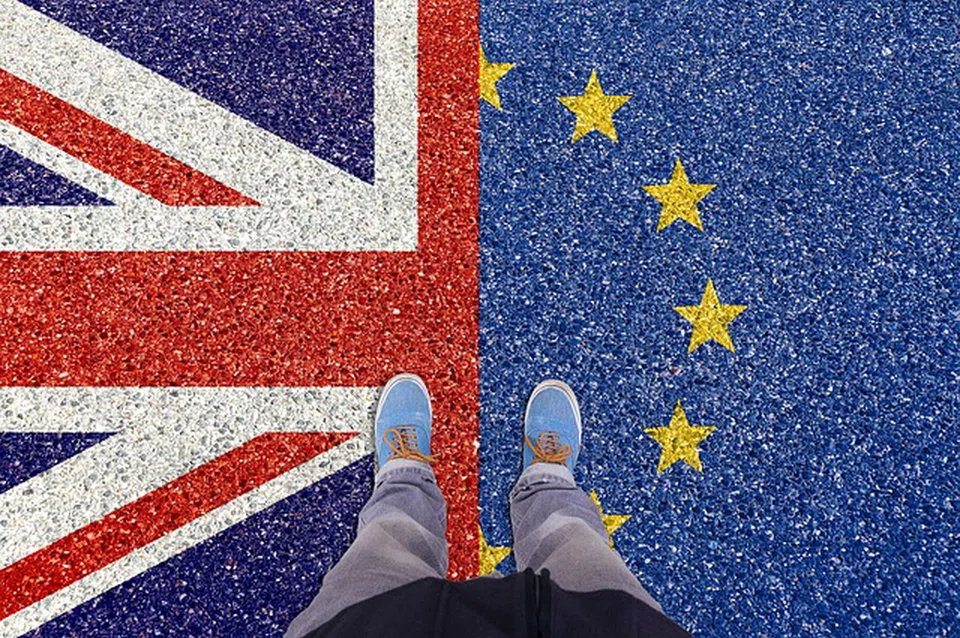
    • There is now growing support across the political spectrum, even within Rishi Sunak’s UK government, for a closer economic relationship with the EU. Pixabay
    Published Tue, Jan 3, 2023 · 06:00 AM

    TWO years after the post-Brexit UK-EU free trade agreement, a key shift is underway in British politics with the centre of debate increasingly turning away from “Brexit versus Remain”, towards how best to make Brexit work in practice.

    This change has largely been driven by the growing political momentum of the UK Labour Party under its leader Keir Starmer who is reshaping the debate over Brexit. Following the success of the Leave campaign in the 2016 referendum, plus also Boris Johnson’s election win in December 2019, Starmer has ruled out any government he leads after the next general election seeking to rejoin the European Union.

    A key, pragmatic reason for taking this stance is that the United Kingdom is in such turmoil, with no clear post-Brexit settlement emerging under the Conservatives, that all of the energies of a Starmer government would need to be focused on this issue. The UK economy is forecast to face the worst turndown in 2023 of any significant advanced economy, with a wider sense of political drift in recent years under successive governments of David Cameron, Theresa May, Johnson, Liz Truss and now Rishi Sunak.

    With Labour having ruled out re-joining the EU, and the Conservatives now have very few pro-European legislators in their midst following purges under Johnson’s premiership, it is unlikely that the UK will go back into the Brussels-based club during this political generation. So Labour’s focus is now much more on making Brexit work better for the UK given the mess the Conservatives are making.

    In a speech in the summer of 2021, Starmer pledged to “deliver on the opportunities the United Kingdom has to sort out the poor (Dec 31, 2020) EU withdrawal deal Johnson signed, and end the UK’s Brexit divisions once and for all”. He argues that making Brexit work is essential because the nation “cannot move forward or grow the country or deliver change or win back the trust of those who have lost faith in politics if we’re constantly focused on the arguments of the past”.

    Starmer’s forward-looking agenda therefore stresses that the nation must invest much more, post-Brexit, in the UK people and places to try to deliver on the potential the country has. Meanwhile, he wants the nation to take advantage of new freedoms such as the ability to cut tax on energy bills that the Conservatives have failed to deliver on so far.

    The shift in Labour’s position comes in a context whereby support for the UK re-joining the EU has been growing steadily over the past year with one recent poll suggesting 57 per cent would favour re-joining, with 43 per cent against. The 57 per cent figure is the highest since before the Brexit referendum in 2016.

    Part of the reason that public opinion is moving in this direction is the growing evidence that the “hard Brexit” deal (the EU-UK Trade and Cooperation Agreement) that Johnson negotiated in December 2020 is causing economic damage. One think tank, the Centre for European Reform, recently asserted that UK GDP is now 5.5 per cent smaller under Johnson’s agreement than it would have been without Brexit.

    What is now becoming clearer is that Johnson’s deal created structural impediments to trade that aren’t improving. This has been highlighted by national business groups like the British Chambers of Commerce, not just think tanks, with proposals for additional UK side deals with the EU on issues including import value-added tax, veterinary services, plus professional services, to smooth out the many rough edges of the 2020 deal.

    The EU got much of what it wanted from that agreement, including a zero tariff, zero quota deal for goods, in which it runs a surplus with the UK. Meanwhile Brussels gave away little on services which is the UK’s strength. The longer the agreement remains unchanged, the more economic activity will therefore potentially migrate given that the pact put the UK at disadvantage vis a vis competitors within the European Single Market.

    It is in this context that there is growing support across the political spectrum, even within Sunak’s UK government, for a closer economic relationship with the EU. For some, like the Liberal Democrats and Scottish National Party, this means re-joining the Brussels-based club.

    The two main UK parties, however, are more focused on closer ties, short of EU membership. Within the UK government for instance, Finance Minister Jeremy Hunt has admitted that Johnson’s hard Brexit deal has caused damaging trade barriers. He said recently that “I think having unfettered trade with our neighbours…is very beneficial to growth. I have great confidence that over the years ahead we will find outside the European Single Market we are able to remove the vast majority of the trade barriers that exist between us and the EU”.

    Key remaining challenges to Hunt realising this ambition include that his political position within the post-Johnson Conservatives is fragile given the strong support in the parliamentary party and wider membership for a hard Brexit. This was shown when Hunt disowned recent media reports, allegedly first briefed by a top government official, that the Sunak team is considering a Swiss-style relationship with the EU that would see closer economic ties.

    A second challenge for Hunt is that there remains a series of irritants in post-Brexit ties, which arise from Johnson’s 2020 deal, that the Conservatives are finding very hard to resolve with the EU, especially given lack of trust between the two. Top of the list is the post-Brexit trading arrangements for Northern Ireland, a complex issue on which the EU enjoys significant support from the Biden administration. So much so, in fact, that President Joe Biden may even cancel his planned visit to the United Kingdom and the Republic of Ireland, in the run-up to the imminent 25th anniversary of the Good Friday Agreement, unless this issue is resolved.

    While a breakthrough cannot be ruled out in 2023, Sunak’s room for compromise is limited given the balance of political opinion within the Conservative Party. So it is possible that this issue festers, especially with the government’s planned Northern Ireland Protocol bill threatening to rip up the UK’s international treaty commitments under the 2020 deal.

    The stakes in play are therefore huge and historic, not just for the UK but also the EU. A new more constructive partnership, which is much more likely under a new UK government, can hopefully bring benefits for both sides at a time of significant global geopolitical turbulence, especially with the Ukraine war.

    Andrew Hammond is an associate at LSE IDEAS at the London School of Economics