

As Malaysia’s Sapura Energy tumbles, Petronas’ silence is telling
The country’s national oil giant had propelled Sapura Energy into the big league but is now watching on the sidelines as the once-sector darling falters

[SINGAPORE] In an industry where even giants have fallen from dizzying heights, Malaysia’s home-grown oil and gas titan is on the ropes.
Once a flagship of the oil-rich nation’s ambition to build stalwarts in the upstream energy segment, Sapura Energy is teetering on the brink of collapse – buried under more than RM10 billion (S$3 billion) in debt and years of financial and strategic missteps, including a furious global expansion fuelled by debt.
At its peak in 2014 – just before the global oil slump – Sapura Energy had an order book of over RM27 billion and a market value exceeding RM30 billion. It was ranked the world’s second-largest integrated oil and gas services provider, behind only Italy’s Saipem.
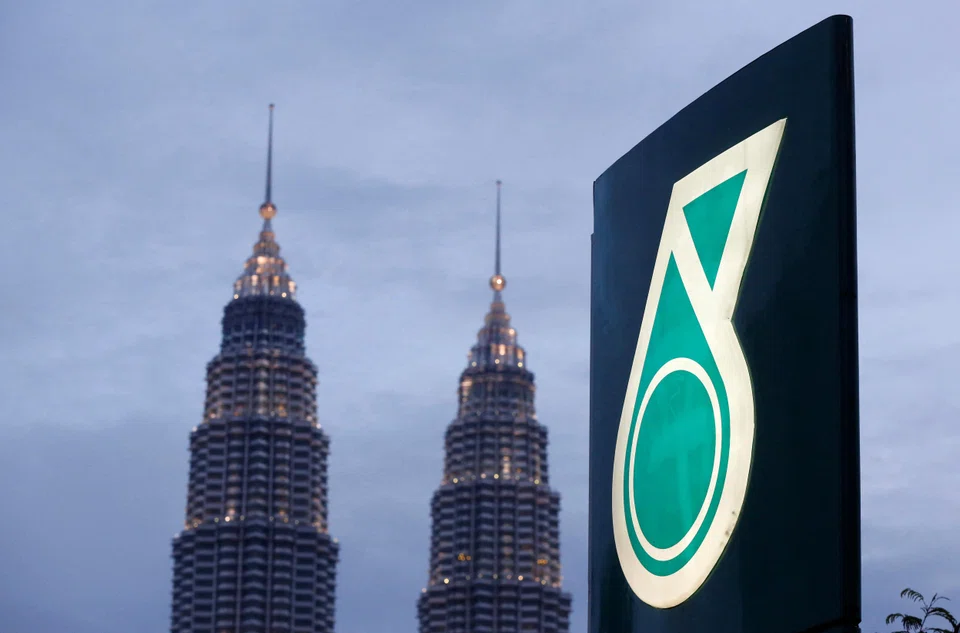
Yet, the Bursa-listed company, which counts state fund Permodalan Nasional as its largest shareholder, is set to receive a RM1.1 billion government lifeline, channelled through a special purpose vehicle under the Ministry of Finance. Amid the brouhaha over the government’s controversial rescue plan – slammed by critics as a bailout – the silence from national oil giant Petronas is striking. Especially so, given its long-standing ties to Sapura Energy, the company’s once-strategic role in Malaysia’s oil and gas sector, and the scale of the fallout from its collapse.
In 2011, SapuraCrest and Kencana Petroleum – then separate entities led by corporate heavyweights Shahril Shamsuddin and Mokhzani Mahathir – snagged Petronas’ first risk service contract (RSC) for the Berantai field. It was a bold swing in Malaysia’s push to cultivate home-grown upstream champions. Just a year later, the two merged to form SapuraKencana, landed global clients and later rebranded as Sapura Energy.
But cracks began to show after the 2014 oil price crash, which hit Sapura’s debt-fuelled global expansion hard – including its nearly US$3 billion acquisition of Seadrill’s tender rig business. Seadrill, then a top-tier offshore driller, would later file for bankruptcy twice – underscoring how even the industry’s biggest names weren’t immune when the market turned.
Since then and despite asset sales and restructuring, Sapura Energy’s recovery would be slow, uneven and ultimately unsuccessful in reversing its downward trajectory.
Petronas’ quiet stance in the Sapura saga – arguably a more natural candidate for intervention – stands in contrast to its politically driven rescues of the past, such as Proton and Konsortium Perkapalan, where it acted as a financial backstop despite limited strategic fit.
Could it be that Petronas’ decision not to step in signals a shift and – in the best-case scenario – towards a new era of financial discipline and strategic detachment? Yet Sapura’s collapse is no footnote – it was a product of Malaysia’s industrial playbook, shaped by Petronas’ policy to elevate local players in upstream oil and gas. The RSCs were meant to push that ambition further, offering an alternative to traditional contracts long dominated by deep-pocketed giants such as Shell and ExxonMobil.
Note that in 2023, Petronas wrote off its RM2.1 billion investment in SapuraOMV, its upstream joint venture with Sapura Energy – walking away from a partnership once seen as strategic. Also, last year, Sapura Energy bagged two jobs worth a combined RM1.4 billion from Petronas Carigali. This raises the question: Is Petronas’ silence final, or simply strategic?
It also forces a national reckoning: What happens when corporate giants stumble – and the state’s strongest arm in the sector decides that discipline, not rescue, is the new default?
TRENDING NOW

Inside Jensen Huang’s last hours as Nvidia CEO

Higher rates, weaker spending: Is the Philippines entering stagflation?

‘I’ll be buying more’: Singapore investors pour into Nvidia shares on Jensen Huang’s exit

Demand, tech capabilities position Apac and AI as Skyscanner’s next growth frontiers: CEO Bryan Batista

