Mandatory bag fee will serve as constant nudge to change consumer habits
THE war on plastic bags is a truly global one. Over a hundred countries either have a full or partial ban on these bags, or impose some form of tax on their usage. These include Bangladesh, Thailand, Indonesia, India, Australia, and almost every nation in Africa.
Singapore has not gone as far as to have an outright ban, instead preferring a pay-as-you-use approach as the authorities try different ways to bring down the numbers.
And the numbers are high. One news report in 2021 said that Singaporeans go through as many as 2.5 billion plastic bags a year, or about 452 bags for each person. Back in 2018, the Singapore Environment Council wrote in a position paper that Singapore uses at least 1.76 billion plastic items every year, including 820 million plastic bags from supermarkets.
Singaporeans are willing to change. In a National Environment Agency survey of about 1,000 residents in September 2021, almost 90 per cent agreed they had a part to play in reducing the use of disposable bags. More than 80 per cent agreed that the excessive use of disposable bags had a negative impact on the environment, while more than seven in 10 agreed that a mandatory charge would reduce the use of such bags.
But as recently as August 2020, Sustainability and the Environment Minister Grace Fu said that the government was in no hurry to impose legislation to ban plastic bags, given that the county already incinerates its plastic waste and harvests energy from that process.
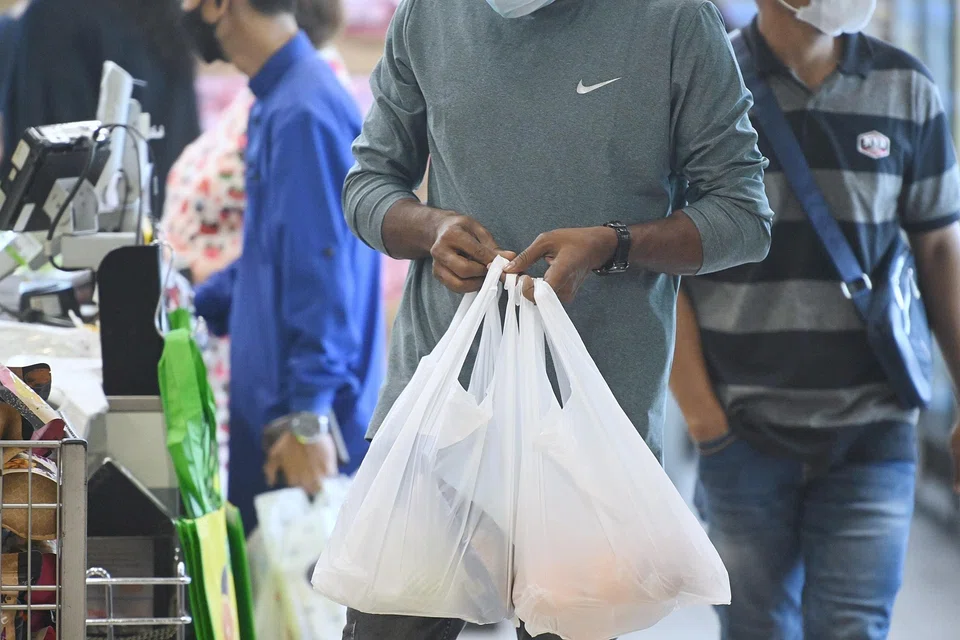
Still, the government is taking a big step towards – hopefully – changing consumer habits. From Jul 3, large supermarkets will have to charge a minimum of five cents for each disposable carrier bag they issue, regardless of the material.
This rule applies to operators with an annual turnover of over S$100 million – such as NTUC FairPrice, Prime, Sheng Siong and DFI Retail Group (which runs the Cold Storage and Giant chains) – covering about two-thirds of all supermarkets islandwide. Fu said last month that the decision to impose this disposable bag charge was made after years of discussion and consultation with the public.
From the consumer point of view, the extra levy comes at a time when almost every other daily expenditure seems to be rising. Some also disagree with the term “single-use” when it comes to plastic bags, as many households reuse these bags to line their rubbish bins, or even bring the same bags out again for the next round of grocery shopping.
That said, the disposable bag change is expected to result in some reduction in the number of bags being used. Five cents per bag may not seem like much, but it’s a big difference compared to some supermarkets’ prevailing levy of 20 cents per transaction.
If a shopper can make do with five bags instead of eight, or two rather than four, or even none at all because he or she remembered to bring along a recyclable bag, these baby steps will go a long way towards moving the needle in the right direction. The disposable carrier bag fee at supermarkets will hopefully serve as a constant nudge and reminder to all to consume only what we need, and do so in a more sustainable manner.