

The market for global infrastructure initiatives
THE world witnessed recently a gathering of world leaders at two important events, Apec 2022 and COP27. Both international conferences provide a platform to foster cooperation over major global issues. Although not formally discussed as part of their agendas, global infrastructure initiatives such as China’s Belt and Road Initiative (BRI) and the US-led Partnership for Global Infrastructure Investment (PGII) are at the core of competing goals of economic growth and decarbonisation globally. The efficacy and quality of global infrastructure investments will significantly affect the road map set by the 2015 Paris Agreement.
PGII was unveiled in June 2022. It combines multiple ongoing infrastructure plans initiated earlier by G7 members. Among others, it includes the European Union’s Global Gateway and the United States’ Blue Dot Network. In all, PGII committed more than US$600 billion over the next five years to be drawn from public and private funds as well as from international financial institutions. In comparison, the total contract value of BRI projects initiated and completed since 2013 is US$932 billion.
The geopolitical ramifications of PGII vis-a-vis China’s Belt and Road Initiative (BRI) remain to be seen and assessed by experts in the years to come. What’s undeniable is the huge “infrastructure investment gap” in the developing world. The Asian Development Bank (ADB) estimated in 2017 that Asia alone would need US$26 trillion of infrastructure investments from 2016 to 2030. Hence, at its core we can view the competitive dynamics between global infrastructure initiatives as a fundamental economic problem of supply and demand. Closing the gap will have spillover benefits for the global economy, unlocking new markets and industries. It’s no surprise that there is now more than one player in the global market of infrastructure investments.
Basic economics tells us that competition is generally good for markets to achieve efficient outcomes. As such, new “suppliers” need to be welcomed. In our view, there are several important challenges that characterise the global infrastructure initiatives in general, and which might indeed benefit from the emerging competition. In addition to the usual issues discussed in the literature such as financing, environmental degradation concerns and trade benefits, we identify here three other important, and yet rarely discussed, challenges for this growing global trend in the infrastructure arena.
Not in my backyard
Construction of infrastructure projects may burden the local communities where these are sited. This could manifest as noise, pollution, influx of labour, falling property prices, traffic congestion, and intangibly, as mental stress affecting local communities. Both BRI and PGII are aimed at filling the infrastructure gap in the developing world, which accounts for three-fourths of world population and occupies vast landmasses. As a result, there are inevitable conflicts between local communities that house these facilities and evince not-in-my-backyard (Nimby) sentiments, and societies at large desperate for economic growth. How can BRI and PGII deal with this fundamental conflict?
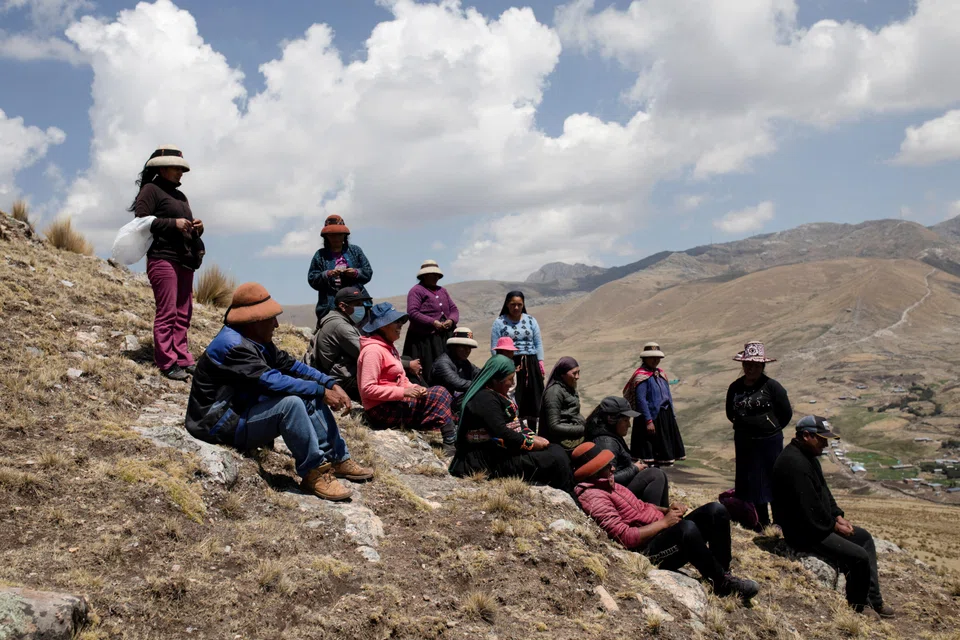
This was manifested, for instance, in projects where Chinese investments have been met with protests caused by inadequate assessment of environmental costs and magnitude of social impact that was left unmitigated or uncompensated. For example, Myitsone Dam in northern Myanmar is far from completion due to inadequate consideration of 447 square kilometres of affected region that covers many villages and sites of cultural and biodiversity importance. Similarly, Chinese miner MMG’s Las Bambas copper mine operations in Peru are being routinely interrupted by the local indigenous population, with no truce in sight at this point. Such cases stem from a lack of governance and institutions in the host countries. However, much of the failure also comes from China’s inexperience in dealing with legal frameworks that are different from its own.
G7 countries, while yet to prove their ability to address or mitigate the Nimby syndrome on a global scale, enjoy a more universal policy experience in facility siting, coming from its longer history of infrastructure investments and more experience with a variety of legal frameworks. The drawback, however, that comes from having more robust quality control practices is bureaucracy and red tape – which typically result in protracted timelines, hence defeating the original purpose of bringing about economic prosperity sooner. Both BRI and PGII will need to co-evolve to better meet the needs in the developing world, and this could be a unique opportunity to innovate in conflict resolution schemes that mitigate the Nimby syndrome. At the end of the day, whichever investor is better able to address Nimby issues together with the local authorities will be able to secure bigger shares in the global market of infrastructure projects.
More studies need to be made on conflict resolution instruments. Does compensation help? What types of compensation are most effective – monetary or in-kind, such as better street lighting for the host community, more parks and so on. Studies have showed that monetary compensation works best where the infrastructure faculty is not hazardous to health or life-threatening. Nuclear power projects, toxic chemical plants, for example, will be regarded as hazardous, while landfills, hospitals and conventional transmission stations aren’t. In the case of hazardous facilities, policies that give a monetary compensation will often be construed as attempting a bribe; the best conflict resolution instrument in such cases is to offer mitigation where harmful threats are reduced by greater attention to safeguards and checks, and may even involve participation of residents in monitoring the facilities and their operations.
The challenging issue of Nimby infrastructure facilities is significant because if they are not well resolved, any benefits from the projects will be delayed by protests, work stoppages and other disruptions.
Sustainable development
The ADB’s 2017 estimate of a US$26 trillion infrastructure bill for the region took into account the impact of climate change. While a wide array of investments is needed, such as building land and sea networks, the most important by far is in the energy sector. Most developing countries still rely primarily on fossil fuels to generate energy to sustain their economic growth momentum. This will remain the case in the foreseeable future, despite the enormous social cost of carbon when both climate change impact and public health costs are considered.
Transitioning of the global economy to meet sustainable development goals cannot be achieved with a one-size-fits-all solution. The developing world needs a wide range of policies, technologies, and funds to fulfil both environmental commitments and economic growth objectives. Neither China nor the G7 countries can meet these needs single-handedly. The developing countries will need both BRI and PGII to assess and pick what works best for them and their populace. In fact, the global infrastructure market is much bigger than what both BRI and PGII have pledged to invest.
The presence of competition is ultimately beneficial for all sides. Competition also creates opportunities to cooperate in areas where cooperation brings about mutual benefits. One example is addressing climate change and achieving sustainable development goals. Ultimately, the role of global infrastructure initiatives is to coordinate and trigger desirable sustainable development on a global scale. The whole world stands to benefit if such initiatives prove successful at addressing the global infrastructure gap.
Use of cost-benefit analysis in developing countries
To address these challenges, authorities and investors need to have evaluation tools that aid decision-making. Cost-benefit analysis (CBA) provides a comprehensive framework to account for tangible and intangible benefits and costs, to maximise social welfare. Project evaluation using CBA will help to address environmental and social concerns from the initial stages and avoid or mitigate Nimby issues.
One should be aware of fundamental differences between developing and developed countries that affect the use of CBA. Labour, goods, and financial markets differ between the countries, for instance. Using the standard discount rate to compare between future versus present benefits and costs will most likely be affected by the shorter life expectancy of people living in poorer countries. This in turn means that for these people, they would prefer more goods now than in the future, along with a higher discount rate.
Summing up
Overall, competition between the BRI and the PGII is a good thing, as it can promote innovation and ultimately lead to better infrastructure projects and greater economic development for the countries involved. At the same time, competition inadvertently creates conflicts of interest, undermines cooperation and collaboration in critical areas, and hinders effective achievement of shared goals and objectives, such as sustainable development and decarbonisation. It is important for the BRI and PGII to strike a balance between healthy competition and cooperation, and learn from each other to maximise their positive impact on economic development and infrastructure in developing countries.
Building infrastructures is one thing, but gaining acceptance by the host community is another. The latter requires much more than just overcoming financing challenges; the need to mitigate any harm or impact on the local community is key. Finding the right mix of conflict resolution instruments will greatly help in shortening the time it takes to complete these projects, and to ensure that they are accepted and embraced by the community.
Competing needs of economic growth and preservation of environment are centrepiece challenges of global infrastructure initiatives. Technological transfer, cooperation, but also competition in the market of global infrastructure projects will help developing countries to grow more sustainably. Whoever prevails in the competition between global infrastructure initiatives, success of projects on a global scale will prove that the twin goals of economic growth and meeting environmental obligations are indeed possible. Ultimately, the economic future of the developing world is in their own hands, and much will depend on their own capability to manage the competing needs of their societies. Participating countries need to be pragmatic and act in their own interests to gain the most from the competition.
Euston Quah is Albert Winsemius chair professor of economics and director of the Economic Growth Centre at Nanyang Technological University (NTU), Singapore. He is also president of the Economic Society of Singapore. Nursultan Iuldashov is a research associate at NTU.
TRENDING NOW

Once staunchly pro-China, Malaysian Chinese businesses are now distancing themselves from Beijing
New launch or resale unit? Here’s a guide for homebuyers
The lesser-known prospects in the Asian chipmaking supply chain

Cliff Tan has 7 million followers and a 4-month waitlist. Why won’t he expand his business?

