

Markets face dizzying US politics and mixed earnings reports while awaiting Fed rate cut
Investors should stick to their strategy while maintaining significant exposure to low-risk bonds and cash

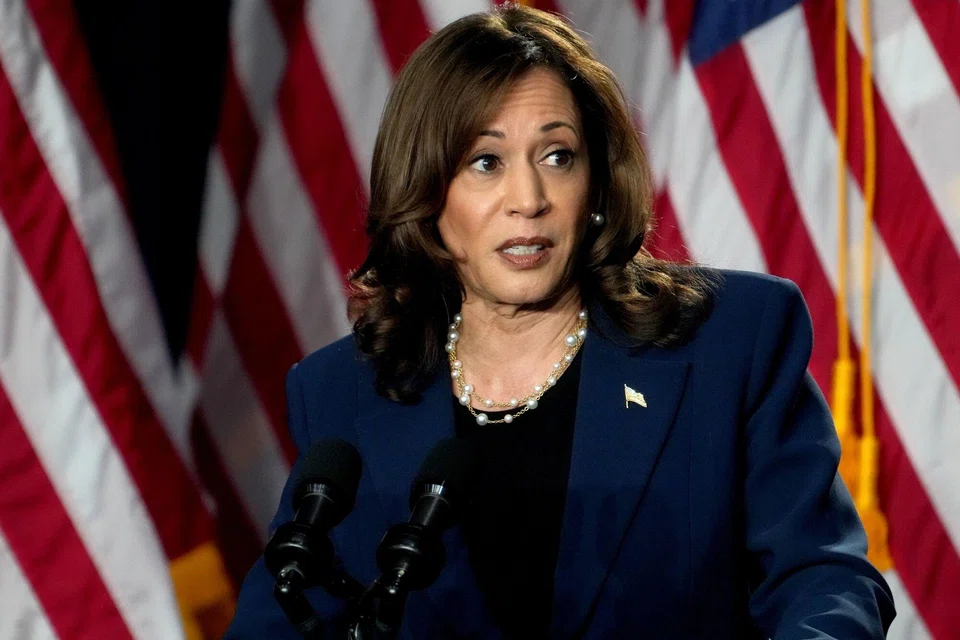
MANY investors would have been startled this past week by the sudden turn in the race for the White House.
It wasn’t just that US President Joe Biden decided to drop out, but that Vice-President Kamala Harris – not a particularly inspiring political figure – seems to have quickly re-energised her party and its supporters.
Within a week, Harris has reportedly secured enough support to become the Democratic Party nominee, raised bucket loads of money from donors, and won the endorsement of former president Barack Obama.
Is the likelihood of a Donald Trump victory now fading? What would a Harris presidency mean for investors?
The US elections are still more than three months away, which is a long time in US politics and financial markets.
For investors in this part of the world, I would hazard that a Harris win would be more positive than a Trump victory – as it would probably mean less US policy uncertainty and a lower risk of US inflation picking up again.
An unhindered widening of monetary policy easing by major central banks into next year would be supportive of global growth, as well as asset prices in Asia.
On the other hand, a Trump win could be inflationary, given his loudly expressed inclination to impose further tariffs on imports into the US, tighten immigration policies, and reduce taxes.
Markets are driven by more than just the intentions of the occupant of the White House, of course. A host of other factors matter, too – not least among them interest rates and stock valuations.
This column noted back in 2020 that former president George W Bush saw the S&P 500 fall 11.8 per cent during his first term, which began less than a year after the technology bubble began deflating.
His second term, which ended amid the subprime mortgage crisis, was marked by a 28.2 per cent decline in the benchmark index.
Bush’s successor Barack Obama was inaugurated four months after Lehman Brothers collapsed. From those crisis lows, the S&P 500 rallied 74.8 per cent in his first term; and 52.3 per cent in his second term.
Then came Trump. A big corporate tax cut early in his term triggered a surge in share buybacks. In the wake of the Covid-19 crisis, interest rates were cut to almost zero and big technology-oriented stocks rallied strongly. During his time in office, the S&P 500 advanced 69.1 per cent.
Under President Biden, the market has been buffeted by a steep rise in interest rates and excitement about the potential of artificial intelligence (AI). Since his inauguration in January 2021, the S&P 500 is up 42.1 per cent.
Less forgiving market
The next US president, whoever he or she may be, will be taking office at a time when US stocks are fairly elevated. The S&P 500 is currently trading at 20.6 times forward earnings, versus its five-year average of 19.3 times and 10-year average of 17.9 times.
The big question for investors now is whether corporate profitability proves sufficiently resilient to support these valuations, even as economic activity and inflation soften to accommodate the monetary policy easing that everyone is anticipating.
FactSet said last week that 41 per cent of the companies within the S&P 500 have reported Q2 2024 results, and their performance was mixed. While the proportion of companies reporting positive earnings surprises was above past average levels, the magnitude of those earnings surprises was below past average levels.
FactSet also noted that the market has been rewarding positive earnings surprises less than in the past, and punishing negative earnings surprises more severely.
This past week, Tesla shares fell 8.1 per cent as its earnings missed analysts’ estimates. Alphabet sank nearly 6 per cent, as concerns about its prospects in the AI field overshadowed its earnings beat.
This seemed to trigger a wider sell-off among the large, technology-oriented stocks that dominate the key market benchmarks. The S&P 500 ended last week more than 0.8 per cent lower, while the Nasdaq 100 sank 2.6 per cent.
The Magnificent Seven – which includes Alphabet and Tesla, as well as Amazon, Apple, Meta Platforms, Microsoft and Nvidia – were down an average of 3.8 per cent last week.
Fed rate cut?
Besides parsing further earnings reports this week, investors will be watching for signals from the Fed following its meeting on Jul 30-31 that it will begin cutting rates by September.
The market has held up well in the face of the Fed’s sharply tighter monetary policy over the past couple of years, as an unwinding of pandemic-era distortions in demand and supply supported economic growth and curtailed inflation.
However, the Fed’s restrictive monetary policy is now beginning to bite. US unemployment in June climbed to 4.1 per cent, from 4 per in May and 3.9 per cent in April. Without a Fed rate cut, confidence in a soft landing for the US economy could begin to wane.
Indeed, widespread expectation that the Fed will deliver its first rate cut soon has been spurring smaller cap US stocks in recent weeks. The Russell 2000 Index ended last week nearly 3.5 per cent higher.
What should investors do? Is it time to rotate from the Magnificent Seven – which have price-to-earnings ratios of more than 90 per cent higher than the S&P 500 – into more attractively priced small-cap stocks? Or, should investors simply buy the dip in big technology-oriented stocks? Is it a good idea to reduce risk as the US economy slows?
My view is that investors should stick to their various strategies at this point. If you have a carefully selected portfolio of stocks that you are confident will deliver good returns over the long term, just hang on to them.
If you have been riding a major market index such as the S&P 500, don’t get distracted by heightened volatility in specific sectors or individual stocks.
My only suggestion is to ensure that your overall portfolio includes significant exposure to low-risk bonds and cash; and that you rebalance your holdings regularly.
The story of the US presidential election and what it means for the markets is far from over, and it’s crucial to avoid being overwhelmed by any market volatility.






