MAS’ next decision may say more about growth than costs
Inflation due to the Iran war might now be less of a factor than surprisingly robust expansion

BY THE end of July, the Monetary Authority of Singapore (MAS) will put out its usual quarterly monetary policy statement: tightening, loosening or maintaining current settings. Whatever the decision, it may be for quite different reasons than assumed a month or two ago.
When the previous monetary policy statement was released in mid-April, news sites were still running daily live blogs on the Strait of Hormuz. With the US and Israel’s war on Iran just into its second month, hopes for a short-lived conflict had ebbed, and fears of an energy crisis were high.
As MAS noted at the time: “Shipping through the Strait of Hormuz has been severely constrained since late-February, and worldwide prices of crude oil, natural gas and related chemical compounds have risen sharply.”
It warned: “In the quarters ahead, higher inflation will also erode real incomes and crimp final demand.”
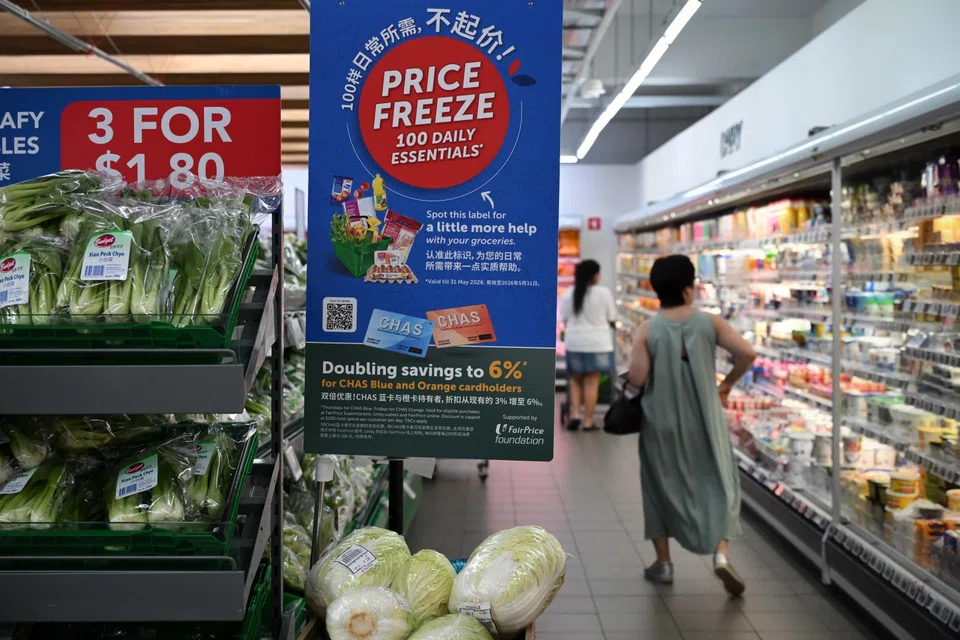
Two-and-a-half months later, however, cost-push inflation has not materialised as severely as feared.
Indeed, core inflation held steady at 1.4 per cent in May, below economists’ median expectation of 1.6 per cent.
Heading it off
Granted, as Singapore’s authorities have stressed, the effect of energy shortages will take time to show up in prices.
It is only in this quarter, for instance, that household electricity and gas tariffs are rising significantly due to the Iran war: up 17 per cent for electricity, and 7.1 per cent for gas.
And that lag is due merely to how the tariff is calculated. The indirect effects of energy prices on other supply chains, meanwhile, may take even longer to work their way through the system.
As MAS said at the release of May’s inflation figures: “As higher energy costs pass through global supply chains with a lag, they are expected to raise production and transport costs for a wider range of Singapore’s imported goods and services over time.”
Still, it is worth noting that MAS has not changed its forecast ranges for core and headline inflation, with both expected to average 1.5 to 2.5 per cent this year.
A happier problem?
In the most recent MAS survey of professional forecasters, a majority of respondents – 61.9 per cent – still expect the central bank to keep policy settings unchanged in July.
Compared with a quarter ago, however, more now expect policy to be tightened in July with a steepening of the policy band’s slope: 38.1 per cent, up from 23.5 per cent in the March survey sent out before the Iran war.
If MAS does end up tightening policy in July, this may not simply be due to worries about cost-push inflation.
Inflation is not the only macroeconomic variable that has been defying expectations. Growth has also been doing so, in the opposite direction.
While Singapore’s second-quarter gross domestic product growth will be released only later this month, economists are expecting a strong performance on the back of robust manufacturing figures.
This is as demand for artificial intelligence continues to drive a boom in electronics. Indeed, in the MAS survey, a sustained upturn in the AI-led tech cycle was cited as an upside risk by all respondents, and as the top risk by 80 per cent of them.
If growth proves sustained and stronger than earlier expected, this might instead cause demand-pull inflation. Compared to supply-side inflation – which also carries the risk of hurting demand – this would arguably be a happier reason for any tightening by MAS.
Decoding Asia newsletter: your guide to navigating Asia in a new global order. Sign up here to get Decoding Asia newsletter. Delivered to your inbox. Free.
Copyright SPH Media. All rights reserved.
TRENDING NOW
Japanese brewer Sapporo Breweries, Carlsberg to invest in US$643 million Singapore-based JV
With AI, it’s not about coding better; workers need to think better: Koh Boon Hwee
Nvidia chips case: Man charged with fraud allegedly used over S$38m in ill-gotten gains to buy house
Not in education, employment or training: Why more Hong Kong youths are opting out of work