

MAS should require EQDP fund managers to express their views, flex shareholder power
An alignment of interests with minority investors could be a more constructive motivating force for IDs than their vaunted independence

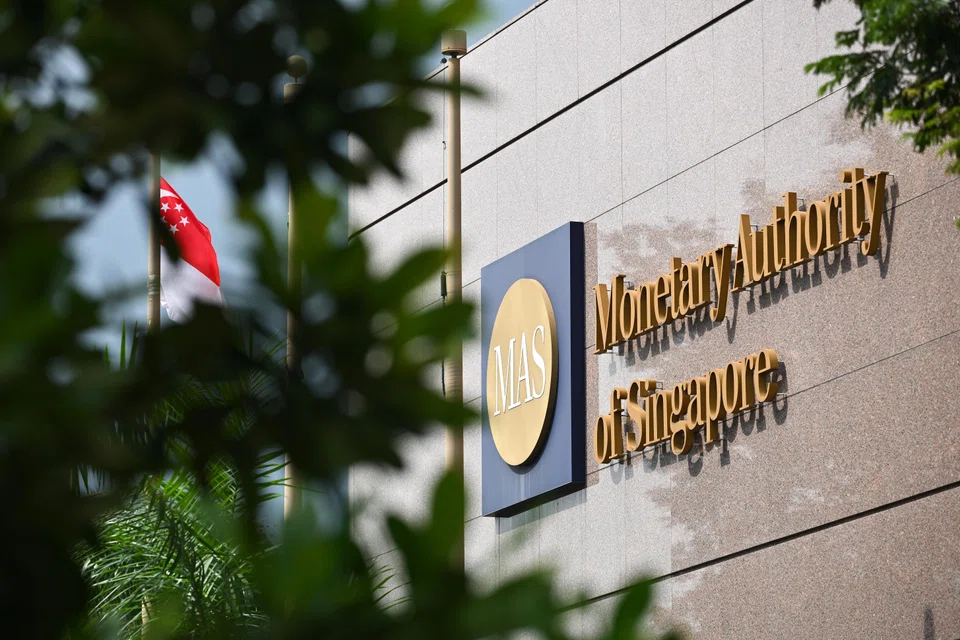
[SINGAPORE] Many investors are likely to have been encouraged by the strong message on the topic of delivering shareholder value that the Monetary Authority of Singapore (MAS) sent to the boards of public-listed companies during the Singapore Institute of Directors’ (SID) inaugural Chairpersons Guild Forum on Mar 6.
MAS managing director Chia Der Jiun said during his speech at the event that companies tend to perform well when they have strong corporate governance practices, disciplined capital allocation processes and well-developed strategies for engaging investors.
He went on to say that much of the groundwork to enable boards to adopt the right practices has already been laid. Notably, MAS announced a Value Unlock programme late last year to help companies build up their capabilities in corporate strategy, financial management and investor relations.
A review of the Code of Corporate Governance is also under way to place more emphasis on the responsibility of corporate boards for shareholder value creation and investor engagement, and to enhance provisions relating to corporate culture, board effectiveness and risk management, Chia said.
On top of that, the Singapore Exchange (SGX) is considering mandatory disclosures relevant to shareholder value such as a company’s dividend policy, investor relations policy and the link between remuneration and value creation.
This comes in the wake of a broad advance in the local market over the past year, and a significant expansion in trading volumes – driven at least partly by excitement about the Equity Market Development Programme (EQDP), in which S$6.5 billion will be farmed out to fund managers with a strong focus on Singapore stocks.
Chia said: “The stage, the lighting, the costumes, the music – we have gotten all of these ready for all of you, chairmen and board directors of listed companies, to now play your parts.
“We want all our listed companies to be in a position to shine, and we hope that some of our listed companies will grow into superstars.”
But is pushing corporate boards to focus on shareholder value all it will take to maintain the recent strong performance of the Singapore market? What more needs to be done?
Emboldened investors, imaginative initiatives
It is probably fair to say that there was a great deal of scepticism in the market when MAS formed the equities market review group in August 2024. Many observers did not expect anything new or substantive to emerge from the whole exercise.
Then, after the review group announced its first set of recommendations in February 2025, there was much debate about whether it had the right approach and priorities. In particular, the recommended move towards a more pro-enterprise, disclosure-based regulatory regime did not sit well with many investors.
There were concerns that streamlining listing processes, adopting a more targeted approach for post-listing queries, alerts and trading suspensions, and doing away with the financial watch list would result in an overall decline in the quality of locally listed companies.
The worries were understandable. After all, minority investors rely on independent corporate boards as well as vigilant market regulators to protect their interests.
Little more than a year on, however, these concerns seem to have evaporated. Investors now appear convinced that corporate boards will step up as market regulators step back.
This may be partly attributable to the strong rise in the market over the past year – which has emboldened investors to take a chance on the potential that many companies have to unlock value and boost their profitability.
Some of the headline initiatives to revitalise the local market that are now being implemented have also turned out to be far more imaginative than many market watchers were expecting at the outset.
For instance, the planned SGX-Nasdaq dual listing bridge that will enable companies to simultaneously list on both exchanges with a single prospectus is a remarkably inventive move to draw promising listings to Singapore, in my view.
Meanwhile, the Value Unlock programme is shaping up to be more than just a subsidy scheme for companies to promote themselves.
SGX’s head of capital market development Chan Kum Kong explained to me in a recent podcast that it is also a means for the exchange to work more closely with companies that have the potential to grow, and that recognise the importance of delivering shareholder value.
The goal is ultimately to change attitudes across Singapore’s boardrooms.
In a similar vein, the recently launched SID Chairpersons Guild – which organised the event where Chia spoke earlier this month – is working to build a community of corporate board leaders for learning and mutual support in the pursuit of value creation.
Aligned interest versus independence
It might be a good idea for investors to retain some of their early scepticism, though.
While MAS and SGX have made significant progress in enlivening the market, it is not clear to me that the underlying motivations of corporate boards have changed.
The reality is that directors are effectively selected by controlling shareholders. Unless these controlling shareholders are overtly in favour of major value-unlocking initiatives – which may include a big reorganisation of a company’s business profile and capital structure – boards might simply choose not to act.
Can anything be done to alter this dynamic? Perhaps MAS should push fund management firms that receive EQDP money to flex their influence as shareholders.
This column suggested last year that EQDP fund managers propose that their investee companies pay independent directors (IDs) half their fees in the form of shares purchased from the market, which the IDs cannot sell for as long as they remain on their respective boards.
The idea was to incentivise the IDs to think like long-term shareholders, and to attract potential ID candidates with the necessary skills to help companies increase the market value of their shares.
From the perspective of minority investors, this alignment of interest may be a more constructive motivating force for IDs than their vaunted independence.
EQDP fund managers should perhaps also be required to publicly express their views on the Singapore-listed stocks they hold, and suggest ways in which their performance might be improved. This is not a big ask, as it is something the fund managers are likely to already be doing in the ordinary course of their business.
Indeed, it may well have a positive impact on their investment activities, as it would draw market attention to their ideas and possibly result in the stocks they hold reaching their target prices more quickly.
Expressing their views about the stocks in their portfolios could also draw differing opinions from various corners of the market, spurring debate as well as trading activity in the market.
This could eventually become a powerful disciplining force on locally listed companies, and complement MAS and SGX’s efforts to place shareholder value creation high up on the agenda of corporate boards.
In short, it could be just what is needed to keep Singapore’s pro-enterprise, disclosure-based market functioning as it should.
TRENDING NOW

Once staunchly pro-China, Malaysian Chinese businesses are now distancing themselves from Beijing

Looking beyond looming CEO succession, should UOB potentially pursue a transformative merger?

Could stablecoins be the future of money?

Grab CEO’s wife Chloe Tong on life with Anthony Tan and finding her purpose

