

Masayoshi Son may be the oddest of the oddball billionaires
A new biography sheds light not just on his hit-and-miss methods, but also on globalisation from a Japanese perspective
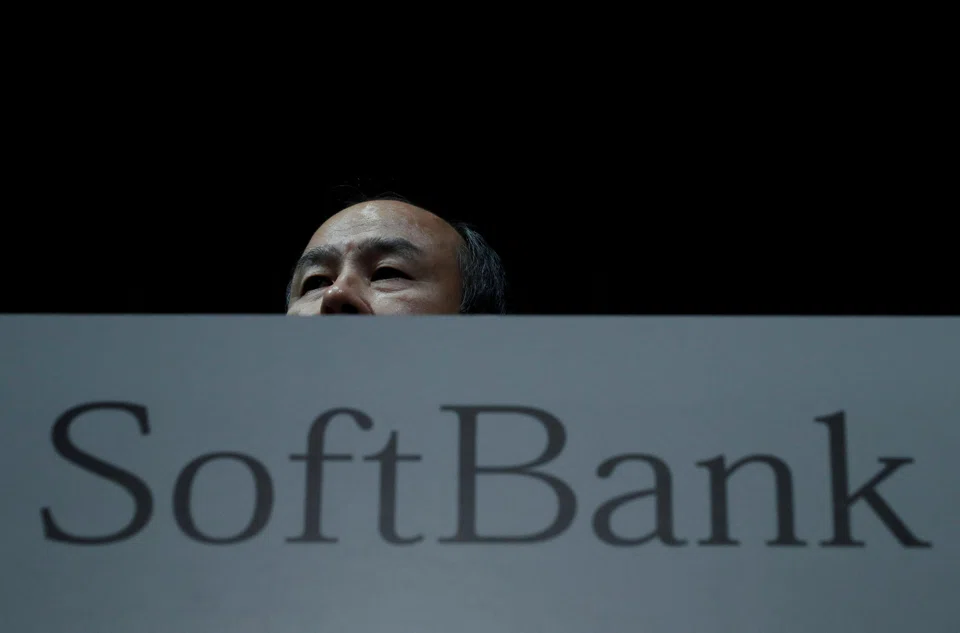
IN 2019, Elliott Management, an activist investment fund which had built up a 3 per cent stake in Softbank, demanded a meeting with the company’s founder and CEO, Masayoshi Son. Elliott complained that the company’s governance was such a mess that the stock was trading at least 50 per cent below net asset or “fair” value – the board was tame, the corporate structure was over-complicated, and “transparency” was not even a concept. Other business titans such as Bill Gates and Mark Zuckerberg had bowed down before the god of good corporate governance. Why not Masa Son?
Son’s reply came as a surprise. “These are one-business guys. Bill Gates just started Microsoft and Mark Zuckerberg started Facebook. I am involved in 100 businesses, and I control the entire (tech) ecosystem. These are not my peers. The right comparison for me is Napoleon or Genghis Khan or Emperor Qin (builder of the Great Wall of China). I am not a CEO. I am building an empire.”
Emperor Son stands out as an oddball even in a world oversupplied with billionaire oddballs. He has made and lost more money than any man alive, topping the list of the world’s richest people in February 2000, then losing 97 per cent of his wealth in the dotcom crash. He has been the largest foreign investor in both capitalist America and communist China, the biggest startup funder in the world and the owner of 70 per cent of Japan’s Internet economy. He signs his e-mails “Big Boss”, and his private plane has the tail number N25TID, T standing for trillions and D for dollars.
He lives in the biggest house in Tokyo. But he also has other mega-properties – a “starter castle” in Woodside, near Stanford University, which he bought for US$117.5 million, and, more oddly, another one in Kansas. His office desk is Putin-sized. But if you slide open two wooden doors you enter a magical world: a vast open space with three trees, symbolising spring, summer and autumn respectively, their leaves exquisitely hand-painted to capture the changing seasons, and three rock pools.
He will fly 6,000 miles to lunch with somebody he has read about, bringing along his favourite wine, DRC (Domaine de la Romanee-Conti). He strikes deals worth many millions after a single meeting. His passion for golf is so consuming that the artificial golf course he had built in his house can mimic the playing conditions of any of the world’s greatest courses. He once surprised Henry Kravis, the boss of KKR, with how well he played at the famed Augusta golf course. When Kravis complained that he must have played there before, Son replied, in a supreme act of one-upmanship, that “I’ve only played Augusta in my basement”.
How did Son rise to the heights of global wealth and power? And how did he acquire the self-confidence to bounce back from repeated meltdowns? Lionel Barber answers these questions in Gambling Man: The Wild Ride of Japan’s Masayoshi Son. It is not only a first-rate biography of an elusive billionaire; it is also, and just as intriguingly, an analysis of the recent age of tech-driven globalisation from the unusual perspective of Japan.
Son’s secret weapon was that he was an insider outsider: Japanese enough to fit into a closed society but alien enough not to be captured by it. His parents were Korean Japanese who initially made ends meet by keeping pigs and collecting scrap, but whose fortunes were transformed when his father broke into the pachinko business. Conscious of being looked down upon as a Korean Japanese, Son took the extraordinary decision to finish his high-school education in California rather than Japan. He fell in love with the Bay Area’s freewheeling culture, won a place at Berkeley, familiarised himself with the tech culture that was then developing and even came up with a revolutionary idea of his own, a pocket speech translator. But he never doubted that his long-term future lay in Japan rather than the United States.
Son made his fortune not by developing a tech product (the translator was a dud) or an operating system (he was never that good with computers), but by becoming a bridge between Californian tech culture and Japan. He recognised that Japan’s distribution system was too complicated for any Westerner to understand. So, he set about acquiring Western tech assets and introducing them to Japan, starting with computer magazines, then expanding into computers and floppy disks and then into online services.
Barber argues that Son’s aim was to create a modern version of a traditional Japanese Zaibatsu, an extended group of companies that were held together by a central company, in this case Softbank; and that his method was to adopt a new Japanese persona, not that of the “salaryman” who had powered postwar Japan, but the Japanese ninja – dynamic, decisive and unpredictable. This vision of an “ecosystem” drove his mania for deal-making: He was always looking for another piece to add to the ever-evolving puzzle. And he snapped things up immediately, often dispensing with due diligence, and moved onto the next deal. Both ecosystems and instant decisions have one thing in common: They require a firehose of money.
Son had a genius for spotting tech talent: He was the first outsider to bet on Jack Ma and Alibaba, and for a while Alibaba’s profits were keeping Softbank afloat. He also had a genius for squeezing money out of money men. He persuaded staid Japanese banks that the only way to prevent Japan from falling behind the West was to invest in him; then, when he had failed too many times, he turned to the vast pools of money in Middle Eastern sovereign wealth funds. He so beguiled Crown Prince Mohammed bin Salman with his vision of the tech-enabled future that the prince and his entourage arrived in Japan on no fewer than 13 planes, two of them A380 jumbos.
Son’s eye for talent had some blind spots. He was vulnerable to fellow dreamers who shared his belief that if you believe in something enough, it will come to pass. He wrote a cheque for US$4 billion to Adam Neumann after listening to his pitch for an office-leasing company in the back of his car on the way to a meeting with Donald Trump. And his talent for raising money was not matched with one for husbanding it: He almost destroyed California’s venture capital system by flooding it with too much money. (Right now, he’s pouring money into AI.)
He consequently lost several fortunes in the tech equivalent of Napoleon’s march on Moscow.
Have we seen Son’s last act? Or is more to come from the Japanese gambling man? Political division and rising interest rates are destroying the world of pell-mell globalisation and ultra-cheap money that created him. The US rivals such as Gates and Zuckerberg that Son disparaged have built unassailable business empires through focus and discipline. The early work of fitting Japan into the tech economy is now completed. In fact, Japanese researchers just broke the Internet speed record.
Yet Barber cannot help admiring Son for all his eccentricities and failures. Son remains a tech optimist in a world that is succumbing to pessimism. The globe’s division into rival blocs might just provide opportunities for a natural dealmaker and gambling-man – so much so that Barber might one day be obliged to produce a revised edition of this excellent biography.






