

Metaverse dating has legitimate use cases, accompanying business opportunities
 Add BT as a preferred source
A ROMANTIC stroll amid cherry blossoms in a Japanese-themed garden, followed by a friendly game of ten-pin bowling, capped with a relaxing soak in a traditional onsen. A fitting finish to what seems like the perfect tryst… except that it never quite happened. Or did it?
Welcome to the world of meta-dating where, instead of browsing the wares at high-street fashion stores, amorous couples mouse over on-screen wardrobe options to dress up their avatars. They don immersive headsets to meet their sweethearts in painstakingly detailed digital realms, without ever leaving the comfort – and for some, the security – of their rooms.
In the past, potential spouses were often found wherever large groups congregated: schools, churches, and bars. In future, more may look to hook up in the metaverse. At least, that is what a recent survey by online matchmaking platform Dating.com found – a third of singles are planning to venture into meta-dating in 2023.
What is the metaverse?
The metaverse is where the physical and cyber worlds come together. To cross the threshold, people create avatars that digitally represent them in a virtual space where they can interact in almost every way they could in real life.
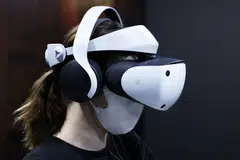
A key technology is the virtual reality (VR) headset. These head-mounted devices envelop the eyes and typically contain stereoscopic displays to trick the brain into perceiving a three-dimensional virtual world. Headphones, and sensors to track movement and orientation, complete the package. Full sensory bodysuits exist, transmitting the sensation of touch. But at up to US$20,000 a pop, they are too costly for mainstream use.
Dating in the metaverse
Meta-dating can be considered a natural evolution of online dating, providing an arguably better toolbox for finding a match. Replacing a photo with an avatar de-emphasises appearance and emphasises personality, “making physical attraction one of several factors rather than the primary way people connect”, said Cam Mullen, the chief executive of Nevermet, a meta-dating app, in an interview with The New York Times.
And instead of endlessly exchanging texts, the potential couple donning their devices and sensors in the metaverse could easily take each other out for that proverbial test drive and tell if there’s chemistry through live conversation and body language. Some even claim to experience “phantom touch”, experiencing in real life what is happening to their avatars.
Launched last Valentine’s Day, Nevermet is the first meta-dating app. Flirtual followed in May (although its developers say it is a reboot of a 2018 service called Virtual Reality Looking-for-Partner). Both apps send matched users to third-party platforms such as VRChat. But rival Planet Theta, which will launch soon, intends to host its own virtual worlds. Nevermet said in its first six months, more than 200,000 metaverse relationships were made on the platform. Flirtual claims more than half of its users are between 18 and 30.
So far, the online dating big boys appear to be sitting out the meta-dating revolution. Tinder pulled the plug on its foray into the space (as well as scrapping its in-app currency initiative) after disappointing earnings forced it to cut back on research and development. Bumble has relayed that it intends to prepare for “whatever emerges” in the realm, but has yet to demonstrate a product.

The business of meta-dating
According to market and consumer data provider Statista, the global online dating industry has doubled in the past six years and will be worth some US$3 billion. If meta-dating supports or supplants online dating, it may bring big money.
Meta-dating apps, like their predecessors, operate largely on a freemium model: the base service is free, but additional features attract a fee. Bigger revenue growth opportunities may come from other metaverse developments.
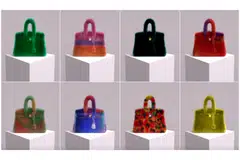
Fashion houses are purveying purely digital couture for tidy sums. In 2021, Dolce & Gabbana set a US$5.7 million record for fashion non-fungible tokens (NFTs) selling a nine-piece collection featuring dresses, crowns and a men’s suit via luxury marketplace UNXD. Fashion’s cross-over into the meta-dating space would not be far-fetched – avatars need to be dressed for a hot date, after all.
The meta-dating scene could also mean additional revenue streams for film studios and music producers. According to research by creative agency Wunderman Thompson, 78 per cent of those interviewed who have heard of the metaverse are keen to attend a digital concert. The ratio rises to 87 per cent for digital film screenings. Fully virtual engagement ceremonies and weddings – connecting far-flung friends and family who may not have the time or wherewithal to travel – may not be that far off.
Augmenting, not replacing
It is projected that by 2035, more people will meet their partners online than offline; and around one in six marriages will start online.
A future of fully virtual dating and marriage sounds dystopian. Yet, legitimate niche applications exist: lonely octogenarians in nursing homes who are too weak to physically meet loved ones, for instance, or even the next pandemic. Meta-dating could broaden the horizons of those living in small towns with limited dating options, or the socially awkward who may need a helping hand building up confidence for a first physical meet-up.
Planet Theta’s co-founder hopes its users will take time to connect outside the metaverse. “It ultimately ends with you having a relationship with somebody that hopefully you love and ultimately live with, not something where you’re trying to talk endlessly in VR only,” Chris Crew said in a Forbes interview.
Safety is a concern, as meta-dating spaces are loosely regulated. VRChat, for example, has been criticised for exposing younger users to alternative lifestyles deemed socially unacceptable. More needs to be done to protect the vulnerable. Singapore has started efforts to help victims of online harms with the launch of SG Her Empowerment. But for any efforts to be effective, the scope of online harms will need to include metaverse interactions.
Proxy economic indicators prove the world has not given up on in-person love and interaction. In the United States, planned Valentine’s Day spending – flowers, chocolates and that all-important dinner date – is slated to hit US$25.9 billion this year, up US$2 billion from last year. Couples also look intent on completing the night with a bang. The global condom market is slated to grow from US$9.9 billion in 2021 to US$19.15 billion by 2029, according to market research company GreyViews.
Meta-dating is likely to augment rather than replace the love lives of people in the physical world. The surreal has to still feel, and be, real.
The writer is partner, litigation and dispute resolution, at TSMP Law Corp
Decoding Asia newsletter: your guide to navigating Asia in a new global order. Sign up here to get Decoding Asia newsletter. Delivered to your inbox. Free.
Share with us your feedback on BT's products and services
TRENDING NOW

SIA sinks into the red with S$76 million Q1 loss as fuel costs jump
15-month wait-out curb lifted for private property owners buying HDB resale flats

ABSD deadline extended to up to 7 years for developers of large en bloc sites to encourage reuse of land

A ‘shadow bank’ hiding in Singapore’s Little India casts light on financial services gap

