Metro should abandon the retail business and focus on building condos
No need to try new formats; build homes to get back to profitability

[SINGAPORE] When I was growing up in Singapore in the 1970s and 1980s, visiting a Metro department store was a treat. Its array of goods available was mind-boggling.
Often, mainboard-listed Metro was the go-to place for clothes for Chinese New Year, toys for Christmas and gifts for special occasions.
When the extended family gathered for Christmas, the exchange of presents invariably involved numerous items that were bought at a Metro outlet.
I still like visiting physical retail stores in Singapore. However, my days of patronising a Metro store are long over.
In recent years, many other retail outlets offer superior shopping experiences and value propositions to department stores.
Perhaps, for old times’ sake, I should visit a Metro store soon while I still have the opportunity to do so.
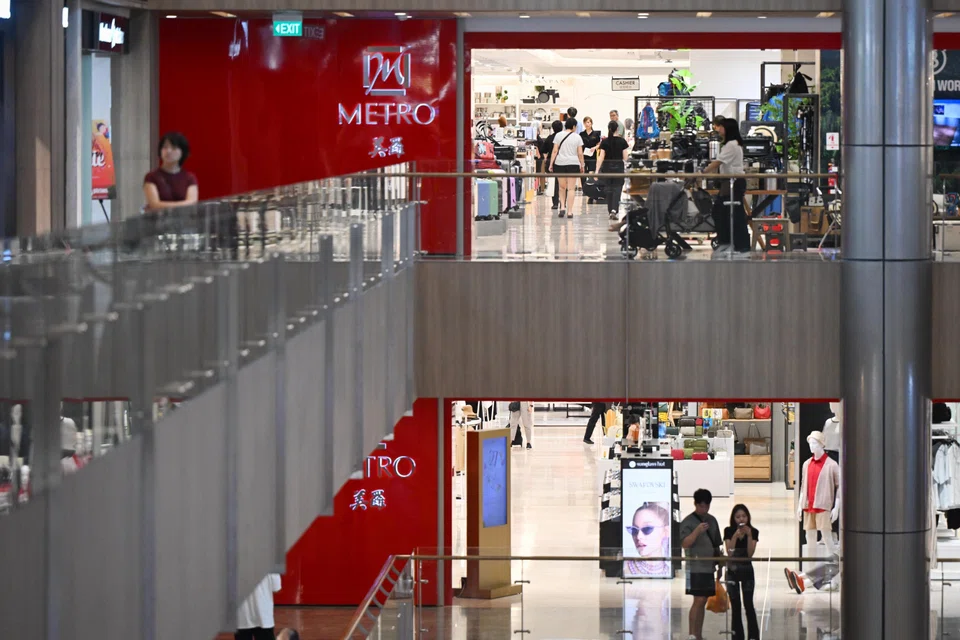
Recently, Metro said it would shutter its last two remaining department stores here at Paragon and Causeway Point when the current leases expire.
From an emotional viewpoint, it is sad to see department stores, which used to be the king of retail formats here, gradually disappear. Also, it is sad for loyal, long-serving staff of such stores to see said stores shutter.
Nonetheless, putting sentiment aside, as a shareholder, I applaud Metro’s possibly long-overdue decision to exit large-format department stores.
The listed group’s retail operations have been bleeding.
The retail division reported a loss after tax of S$11.4 million in the financial year ended Mar 31, 2026, or FY2026, compared with a loss after tax of S$6.9 million in FY2025.
This was mainly due to lower revenue, lower gross margins and higher impairment loss amid the challenges confronting Singapore’s retail sector.
Metro plans transition to more flexible retail approach
However, while Metro is getting out of running department stores, it is not looking to exit the retail business – a potentially wrong move in my view.
Metro’s board of directors said the group will transition to a more flexible retail approach and is evaluating various retail formats, including smaller-format stores, multi-speciality concept stores, curated retail experiences and pop-up store initiatives.
Accordingly, the group’s management has commenced evaluating locations and opportunities for the roll-out of the new retail multi-concept stores. Among its various considerations is financial viability.
Should Metro be investing time and resources in trying to do things differently in retail?
Generating a decent profit from running physical retail stores selling third-party goods can be tough.
Major brands are investing in mega stores to boost their engagement with customers. Some Chinese and international retail stores are proving competitive here with their strong procurement networks.
Fortunes tied to property business
As it stands, Metro’s fortunes are already largely tied to how its property development and investment business performs.
Recently, the property division has been awash in a sea of red due to China’s prolonged property sector headwinds.
For FY2026, Metro suffered a net loss attributable to shareholders of S$203.2 million. This was mainly due to non-cash fair value and impairment losses arising from its China real-estate exposure.
Shareholders’ funds shrank from S$1.58 billion in FY2022 to S$925 million in FY2026.
Nevertheless, Metro can bank on its property business to turn around its fortunes, albeit the group should look to double down on developing private homes in Singapore.
In May, a 70:30 joint venture (JV) between wholly owned subsidiaries of Wing Tai and Metro was awarded a 99-year leasehold site at Dunearn Road by the Urban Redevelopment Authority at the tender price of about S$533 million.
The JV company plans to build a residential development comprising about 330 homes with commercial uses at the ground floor.
At its launch weekend in July, 56 per cent of the 380 homes at the neighbouring Dunearn House were snapped up at an average price of S$3,140 per square foot.
Why focus on condo development
Going forward, Metro should focus on building new condo projects in Singapore. It can look to beef up capabilities in condo development and take a majority stake in such projects when working with partners.
While housing developers face tough rules, building new private homes in the Republic can be a good business to be in.
The supply of housing land is typically well-controlled, while private housing demand is generally resilient.
Growth in income and household formation, coupled with liquidity, as well as enduring aspirations for condo living support private housing demand.
Financial returns from condo development can be decent, considering the risks involved.
A housing project which experiences robust sales when units are launched for sale off-plan may deliver a double-digit internal rate of return.
Crucially, the private housing development market here is fragmented, and one where a larger player may not enjoy much advantage over smaller rivals.
Much of the work in the building and selling of homes is generally outsourced to third parties. Meanwhile, the attributes and quality of individual projects are often what matters to increasingly discerning home buyers.
Metro was founded in 1957 by the late Ong Tjoe Kim, who started out with a textile store along High Street. The group was listed on the domestic bourse in 1973, with retail being its dominant business in the early days.
There are multi-pronged efforts underway to boost investor interest in Singapore stocks. More investors will flock to local-listed entities if those entities fare better financially.
Doubtless, Metro has a rich retail history. However, businesses need to transform, as market conditions and consumer needs change.
Metro can do well for its shareholders and play its part in boosting investor interest in the local bourse, by ditching the retail business and banking on building homes here to deliver consistent profits.