SENSE & CENTS

Mind the costs of using CPF savings to buy a home

Aim for higher payouts under CPF Life and enjoy good interest rates on CPF savings

Summarise
Leslie Yee
Published Tue, Jan 13, 2026 · 04:14 PM
    • Homeownership is often seen as a key pillar to ensuring financial adequacy for retirement.
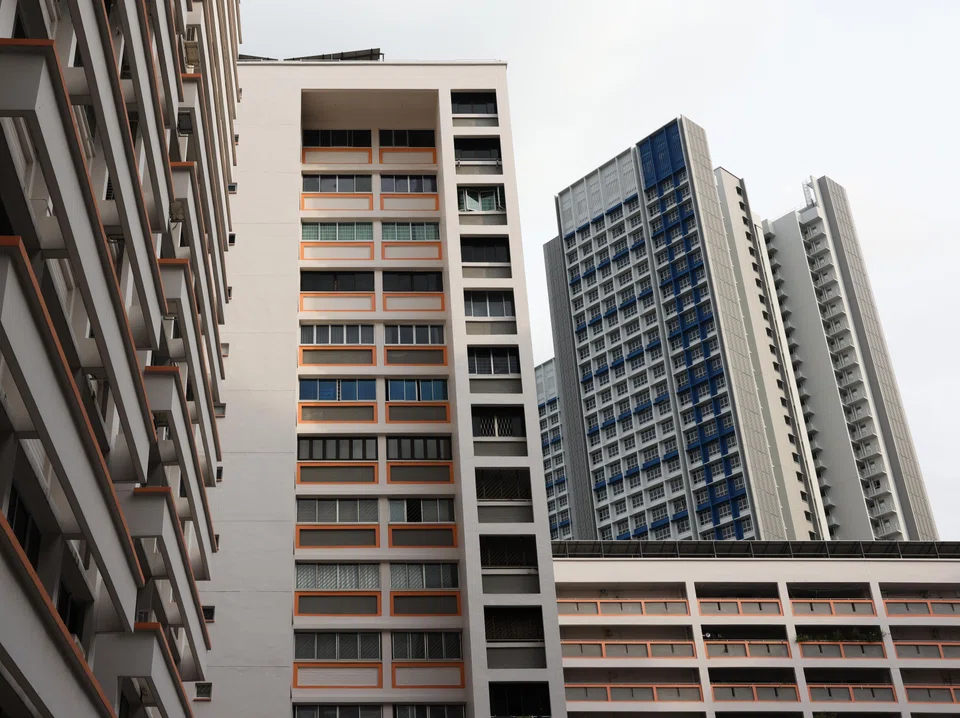
    • Homeownership is often seen as a key pillar to ensuring financial adequacy for retirement. PHOTO: TAY CHU YI, BT

    BUYING a home represents a major financial commitment. For many people, making a down payment or servicing the repayments on a home loan is greatly helped by being able to use savings from one’s CPF Ordinary Account (OA).

    In 2024, the net amount withdrawn for Housing and Development Board (HDB) flat purchases was S$7.5 billion from 720,521 members, while the net amount withdrawn for private home purchases was S$6.1 billion from 276,068 members.

    The net amount withdrawn from Central Provident Fund (CPF) accounts for housing in the first nine months of 2025 amounted to about S$5.8 billion for HDB flats and S$3.6 billion for private homes. 

    As interest rates decline, stretching finances to buy pricier homes with mortgages that can largely be “painlessly” serviced by CPF OA savings appears alluring. 

    Indeed, with the strong sales rates at some recent major condo launches, people may feel compelled to quickly rush to buy a new condo unit for the fear of missing out.

    Costs of using CPF funds

    However, while one can use CPF OA funds to buy a home, subject to various conditions, maxing out the use of OA savings to fund a home purchase is far from a no-brainer.

    First, while home ownership can be a key pillar to ensuring financial adequacy for retirement, it may be equally vital to achieve as large a monthly payout under CPF Life as possible. CPF Life is a national longevity insurance annuity scheme that provides individuals with monthly payouts no matter how long one lives.

    For those who turn 55 years old in 2026, the full retirement sum is S$220,400, while the enhanced retirement sum (ERS) is S$440,800.

    A male member who turns 55 this year and puts the ERS in his retirement account can expect to receive a monthly payout for life from the age of 65 of S$3,440 under the CPF Life Standard Plan.

    In perspective, the above payout amount is about 60 per cent of the median gross monthly income from employment including employer/platform operator CPF contributions of full-time employed residents in mid-2025 of S$5,775. 

    Also, it will take a S$2 million investment home generating just over 2 per cent net yield annually to produce a monthly sum of around S$3,440.

    Ultimately, CPF members may be prudent to balance withdrawing from their OA account to finance a home purchase with letting funds build up in their OA account to receive as high a payout under CPF Life as possible.

    Second, the seeming effortlessness of servicing a home loan via CPA OA savings could be dangerously deceptive.

    For one, as income rises, a person might easily raise his outgoings by upgrading lifestyle choices. This raises risks when home loan rates rise or income takes a hit.

    Crucially, losing a job could severely affect the ability to service a home loan. And the risk of losing a job may be rising as many companies and industries face disruption whether from competition, regulations, digitalisation, supply chain fragmentation, green transition or the growing power of artificial intelligence. Add to that, older workers could struggle to find a suitable new job.

    If one cannot service a home loan from CPF OA savings due to a job loss, he may need to tap other funds at a time when finances are likely to be under severe stress.

    Third, as interest rates soften, the minimum interest of 2.5 per cent per annum that one’s CPF OA savings earns looks increasingly attractive. A CPF member under the age of 55 can earn up to 5 per cent per annum on the first S$60,000 of combined CPF balances, capped at S$20,000 for the OA.

    Sure, some OA funds may productively be channelled into investments such as local blue chip equities. Nonetheless, it might be wise to leave a substantial sum in one’s OA untouched. Through the power of compounding, funds left untouched in the OA can build up risk-free to a meaningful sum over time.

    Buying a home for owner occupation helps one to hedge against inflation and provides one a sense of security. Generally, home prices in Singapore should rise over time because of income growth, improving infrastructure, increase in household formation and political stability. Also, through using leverage, one may achieve a potentially attractive return on equity from buying a home.

    Weaker financial returns

    Still, it may be wise not to stretch to buy as pricey a home as one can afford. A higher value home attracts higher property taxes. Property tax rates are progressive, with owner-occupier rates ranging from 0 per cent to 32 per cent. 

    If property tax rates become even more progressive, owner occupiers of more expensive homes could face heftier property tax bills. 

    Critically, while homeownership has been a proven way of wealth creation in Singapore, factors such as an ageing population, slow population growth, potentially higher taxes and active government intervention to moderate housing price growth could blunt the financial returns from homeownership going forward. 

    In addition, will wages in the Republic grow quickly in future given a maturing economy and a challenging global environment?

    Having fairly liberal rules governing the use of CPF funds to buy a home has helped many people achieve their homeownership dreams and given them a stake in Singapore’s growing prosperity.

    Still, some people may arguably be tying up too much of their wealth in an owner-occupied home, which often generates zero positive cash flow.

    Let’s have faith in people making good financial decisions and continue to allow individuals to have fairly wide discretion over using CPF OA funds to finance home purchases. 

    However, individuals would do well to be prudent with how they use CPF savings in funding their homeownership dreams. Older CPF members with huge CPF cash piles, who can freely withdraw ample sums from their OA account to do as they please, should also think hard before emptying such savings to help their offspring buy a home.