Mind the perils of buying a minority stake in a landed home
Why purchasing a one-seventh interest in 5 Oxley Rise could be a big gamble

[SINGAPORE] Freehold landed homes sitting on sprawling grounds in prime districts can offer a compelling proposition to the rising number of super-wealthy Singapore citizens.
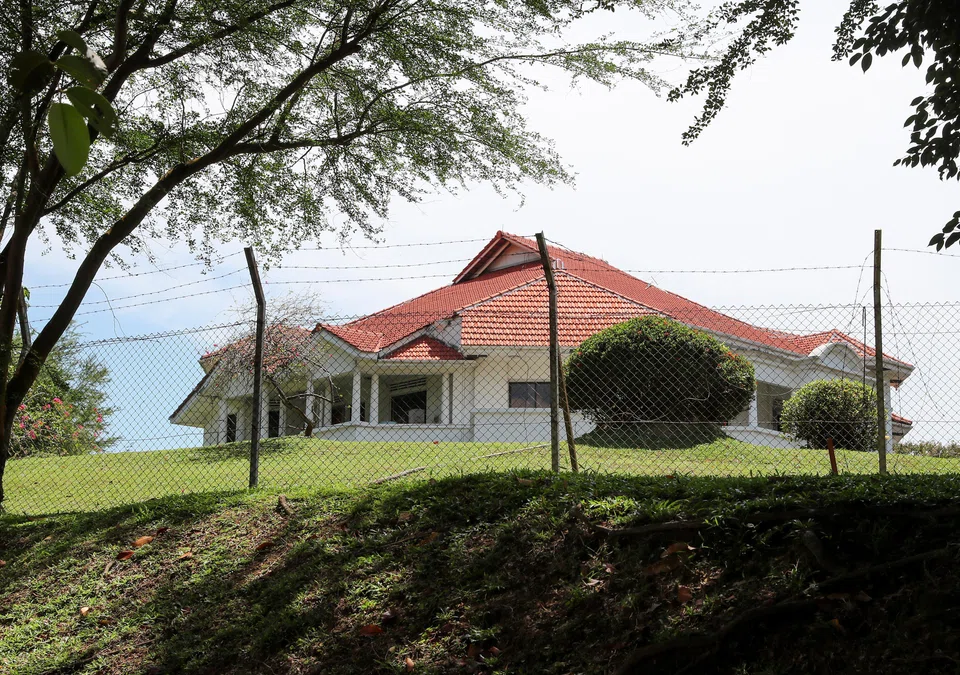
One such property situated atop a hill in the heart of District 9 and near Orchard Road, 5 Oxley Rise, houses a two-storey bungalow with single-storey outhouses.
Including an access road bordering its eastern boundary, the site’s total land area is around 151,204 square feet (sq ft). According to the Master Plan 2025, the main plot of about 117,229 sq ft is zoned for two-storey envelope mixed landed housing.
In 2022, 5 Oxley Rise was put up for sale, seeking offers of more than S$300 million.
In late February, ERA Realty Network announced that it was appointed by receivers Alvarez & Marsal (SE Asia) to sell a one-seventh interest in 5 Oxley Rise.
The tender for the sale closes on Apr 9.
The property was the home of Cheong Eak Chong, a pioneer real estate developer here who founded Hong Fok Corporation . Today, members of the Cheong family hold the ownership interest in 5 Oxley Rise.
Sure, finding an investor to pump around S$40 million into a property here, especially one with strong attributes, may not be difficult.
Nonetheless, there are dangers aplenty associated with buying a minority interest in a landed home.
Liquidity risks of a minority stake in a physical property
One, when buying a big-ticket item such as physical property, it is important to look at how to exit the investment in the future.
Selling a minority stake in any property can be problematic. Many potential buyers may prefer securing majority or 100 per cent interest so that they have control over what to do with the property.
The illiquidity of a minority stake in a physical property is worse for landed homes.
Buyers have to take extreme care with residential property purchases here. Hefty additional buyer’s stamp duty rates apply to Singapore citizens and permanent residents (PRs) buying second and subsequent homes, as well as non-PR foreigners and entities buying any residential property.
In addition, the purchase of landed homes is generally restricted to Singapore citizens.
Rental yield
Two, while patient capital may be happy to earn recurrent rental income from holding a minority share in a property, the yield from a landed home sitting on huge grounds can be particularly unappealing.
As it stands, industrial and commercial properties here typically offer better yields than residential properties.
Moreover, while a property comprising an older building sitting on a large land plot may have as high a capital value as a property comprising a new building sitting on a smaller land plot, the latter might fetch better rental income and hence offer a higher yield.
In addition, an investor in a pricey home faces higher property tax rates. Such taxes on homes are applied on a progressive scale. Non-owner-occupier residential property tax rates range from 12 to 36 per cent of a property’s annual value, while non-residential properties are taxed at 10 per cent of the annual value.
The annual value of buildings is the estimated gross annual rent of the property if it were to be rented out, excluding furniture, furnishings and maintenance fees.
Motivation of majority owners
Three, paying around today’s market price for a stake in a property where the entry costs of the other owners is much lower can be problematic.
Sure, banking giant UOB owns a minority interest in One Raffles Place – a commercial property in the Central Business District.
The majority owner is OUB Centre Ltd, which is in turn largely owned by OUE Real Estate Investment Trust (OUE Reit). In this case, UOB can expect OUE Reit’s manager to help optimise rental returns from the property as the trust’s manager is focused on growing distributable income.
A minority owner of a property can enjoy a pro rata share of rental returns from the property. However, a minority owner may not be able to push to maximise rental returns or for asset enhancements works that create value.
Where a property’s majority owners have low entry costs, the owners may hardly face financial pressure to extract maximum returns from the property be it through driving rental revenue hard, carrying out asset enhancement works or redevelopment.
Capital appreciation
Four, while an investor in a prime landed home can rightly expect to achieve solid capital appreciation over the long term, holding a minority interest may mean that one reaps only paper gains.
Private landed homes enjoy a scarcity premium compared with non-landed homes.
As at the fourth quarter of 2025, there were 423,352 private homes excluding executive condominiums, comprising 349,713 non-landed homes and 73,639 landed homes – among which there were 10,752 detached houses according to URA Realis.
URA Realis’ data showed that private landed home prices as at Q4 2025 rose 7.6 per cent from a year earlier and 45.6 per cent versus Q4 2020.
Should the number of wealthy Singaporeans continue to grow and the rich get even richer, expect steady growth in prime landed home prices.
However, while a prime landed home’s value may rise, an owner of a minority stake might find difficulty in monetising his capital gains. Ultimately, majority owners are likely to hold sway over when capital gains are realised. And a property’s maximum capital value may probably be realised only upon selling a 100 per cent interest in the property.
Doubtless, 5 Oxley Rise is a rare property in dense Singapore. It has huge grounds, a great location and a rich history that is associated with Manasseh Meyer, a Jewish tycoon and philanthropist responsible for constructing the neighbouring Chesed-El Synagogue.
However, a party buying a one-seventh share of 5 Oxley Rise who does not have a close relationship with or a deep understanding of the motivations of the property’s other owners could be in for a hard time.
Could buying a one-seventh share of 5 Oxley Rise be too risky for a third party, and the best hope for the receivers be that a Cheong family member buys the stake?
There may be a right price at which buying a minority stake in a prime landed home is worth the risks involved. After all, such a freehold home in safe-haven Singapore represents a good store of value.
Still, a buyer of a small share in a large freehold landed home is probably taking a gamble and should prepare for a possibly long and frustrating journey before potentially getting a windfall.