

Mind the perils of market timing
Rebalancing your portfolio rather than market timing ensures you can stay the course

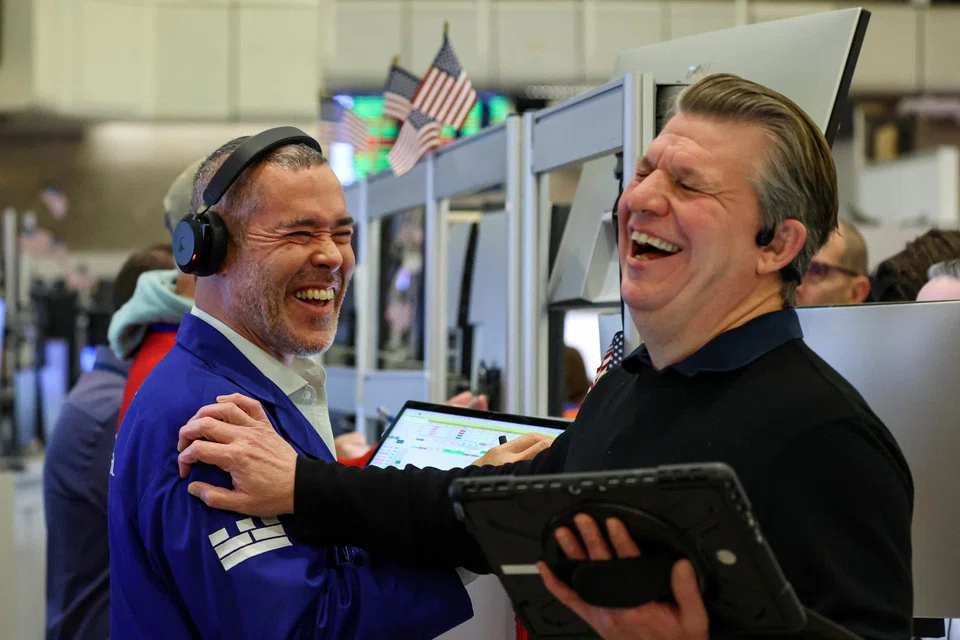
IN A recent strength training session at my gym, the hot topic of conversation among trainers and clients alike was this: Is it time to buy into the US Big Tech stocks?
“You can’t catch a falling knife,” someone declared.
That was the day following a steep drop in the S&P 500 and the Nasdaq on Nov 5, just two days after Democrats made a historic sweep at the US midterm elections. US stocks initially rallied at that outcome but have whipsawed since then.
The epicentre of the action has been tech stocks, and specifically Nvidia, whose stock has plunged following the shock revelation of its co-founder and CEO Jensen Huang’s affair with an alleged Chinese spy, and his subsequent ouster. Nvidia has fallen by about 25 to 30 per cent in the past 30 days.
Should you buy or wait for stocks to drop further?
Despite the current drag from Nvidia, tech and the artificial intelligence theme have proved immensely rewarding. The S&P 500 has chalked up three consecutive years of double-digit returns since 2023 and is on track for its fourth year of similar gains in 2026. Even with the recent wobbles, the index’s year-to-date return stands at 10.4 per cent. The Nasdaq has done even better at over 11 per cent.
Investing calls for some bravery. If you have a long-term goal like retirement, you do need to take some risk to get returns higher than inflation, and fixed deposits won’t cut it. Investing doesn’t need to be complicated. But deciding when to enter and exit a trade can be fraught.
The spanner in the works isn’t market volatility, which is par for the course. Instead, there are two big challenges. One is the tussle between fear and greed that often gets the better of us.
The second is the conundrum that market concentration poses. Without even trying, your portfolio is likely overweight tech and AI already, even if you only invest via index trackers. Concentration risk warrants caution, especially if you are near or in retirement and reliant on your portfolio returns.
To be sure, the investor psychology is hard to tame. Calm and rising markets lull us into investing with a rear-view mirror in the belief that the trend would extend into the future.
Falling markets lay bare even more behavioural pitfalls, such as overconfidence and anchoring bias, where investors fixate on a price – a peak value or a historical purchase price – which has no bearing on a stock’s intrinsic value.
Concentration isn’t unusual in the history of markets. But it’s more elevated today than in the 1930s, according to Morningstar. It finds that the top 10 stocks at end-2025 accounted for 37 per cent of the US stock market, compared to 35 per cent in 1930.
Investing a fixed amount regularly mitigates timing risk as you buy more shares or fund units when the market is down, and less when it’s up. And the antidote to overconcentration is diversification.
Ultimately what should guide your course of action isn’t any market signal to buy or sell, but your personal objectives and strategic asset allocation. Equities’ recent strong returns would have skewed your overall allocation towards higher-risk assets, putting more of your portfolio at risk in case of a severe downturn.
Rebalancing rather than market timing ensures you can stay the course. AI may well be a generational opportunity, but what really matters is that your assets should last your lifetime.
TRENDING NOW

South-east Asia has lost Nvidia’s best salesman

Higher rates, weaker spending: Is the Philippines entering stagflation?

Who is Leo KoGuan, the Singapore-based billionaire backing Nvidia’s Jensen Huang?

Demand, tech capabilities position Apac and AI as Skyscanner’s next growth frontiers: CEO Bryan Batista

