

More mixed-use projects sprouting up, but are they a better buy?
As more of such developments combine two or more asset classes, industry players say there are more factors to consider beyond scale

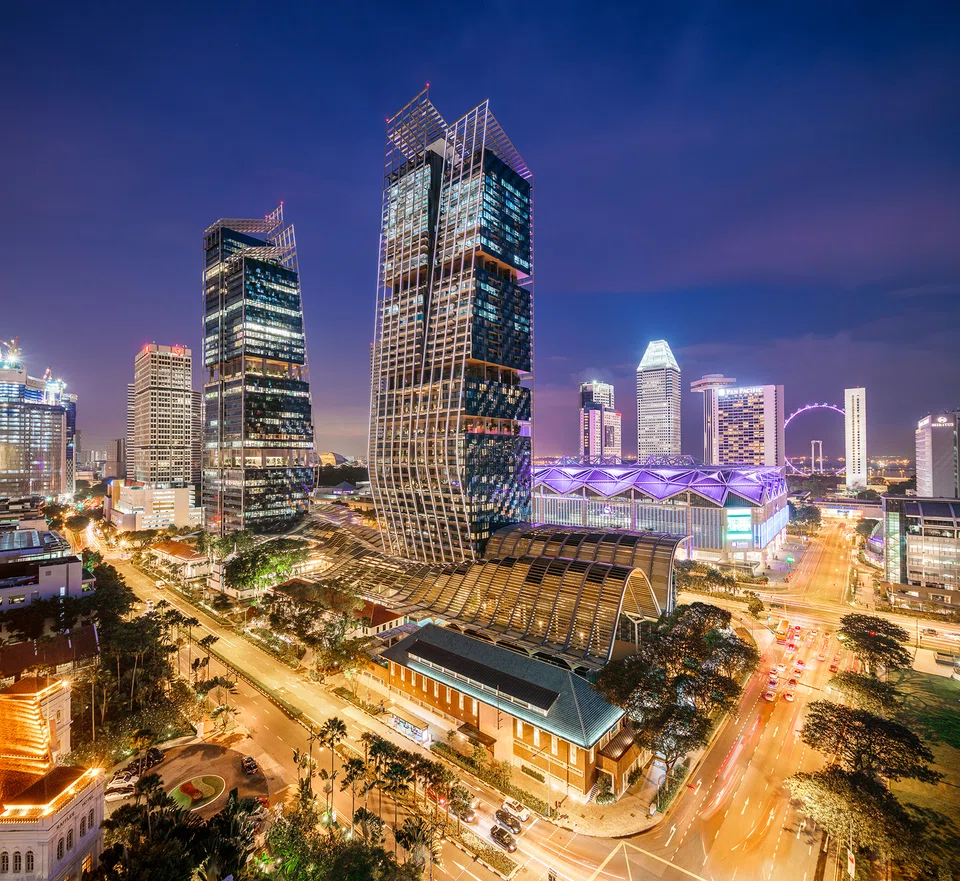
MIXED-USE developments are not new concepts in the property market, but they have taken off strongly post-pandemic as more people realise the value of amenities and convenience within arm’s reach.
In line with Singapore’s decentralisation strategy, industry players tell The Business Times (BT) that the supply for such projects, also known as “integrated developments”, have gone up together with demand.
Between 2018 and 2023, about 33 per cent or 16 government land sales (GLS) sites awarded were for mixed-use projects. And in the first five months of this year, three out of five sites awarded were for mixed-use purposes.
The recent increase in supply through the GLS confirmed list, is in tandem with the government’s ramp up in overall private residential supply to moderate price growth, points out Wong Xian Yang, head of research for Singapore and South-east Asia at Cushman & Wakefield (C&W).
The consensus among industry players is that many of these mixed-use projects are intended as catalysts to spur growth or to rejuvenate existing areas, while optimising land use with the integration of transport nodes such as MRT stations or bus interchanges.
Such developments are meant to be a comprehensive and self-sustaining environment where people can live, work and enjoy a range of amenities without venturing elsewhere.
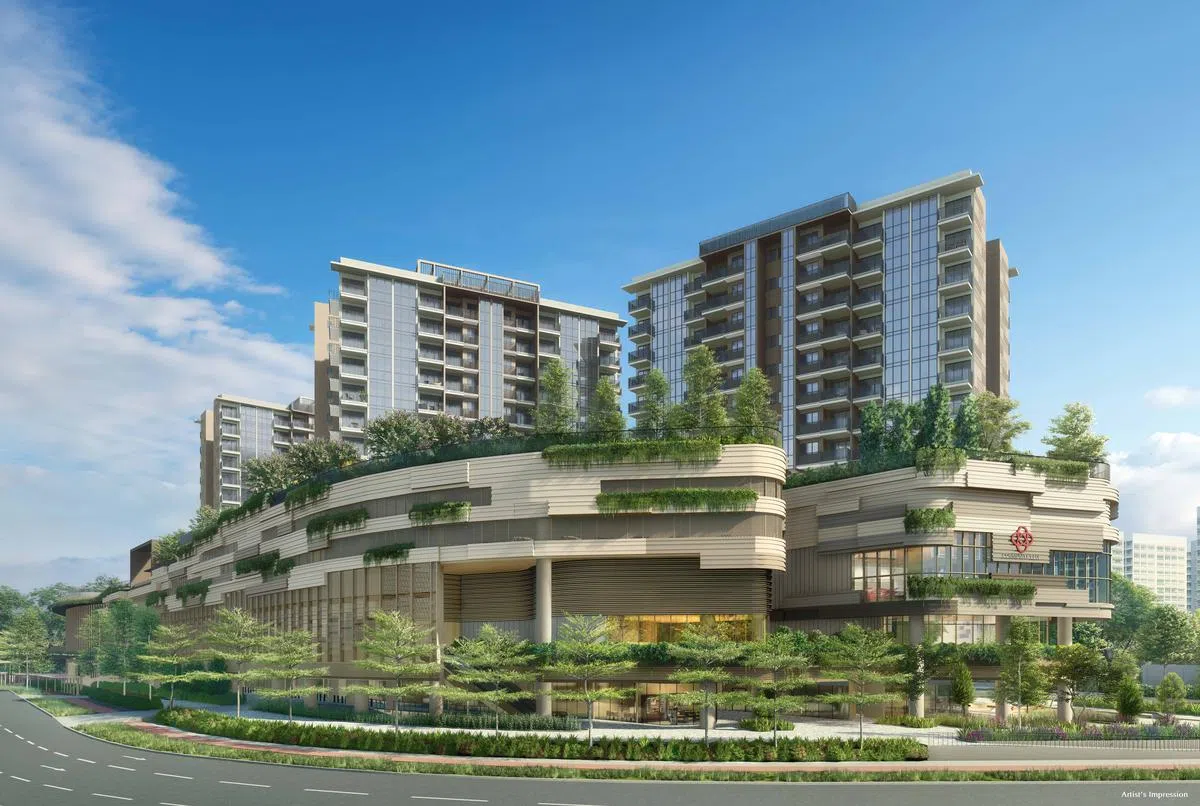
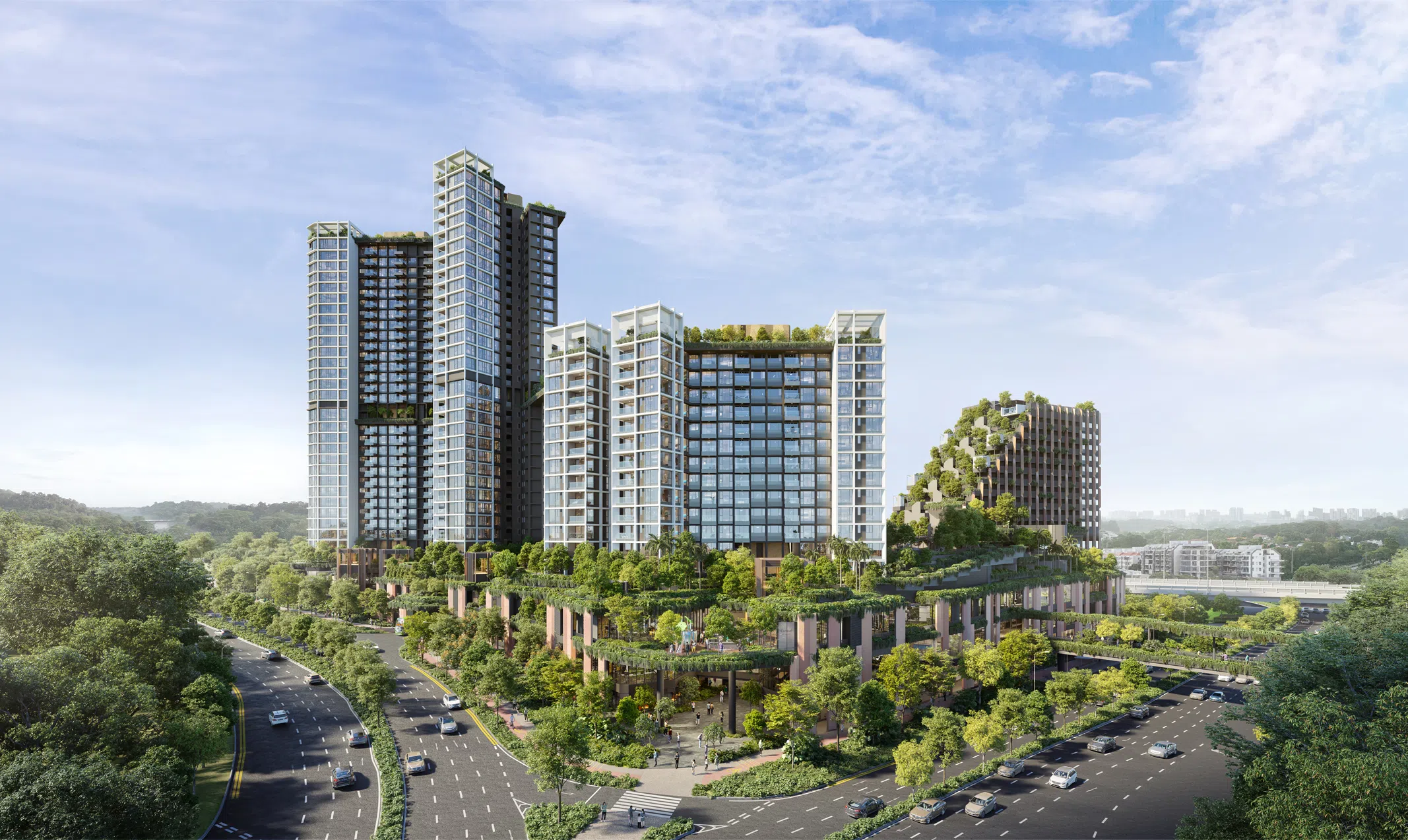
One upcoming project is the mega mixed-use development at Tampines Avenue 11 by a joint venture between UOL, Singapore Land and CapitaLand Development, slated to be launched in the second half of this year.
The 50,680 square metres (sq m) site will have direct connectivity to the future Tampines North MRT station, and will include a bus interchange, community club, food centre as well as retail shops in addition to the residential aspect.
With the continued rise of mixed-use developments, the big question is whether these projects – which tend to have a higher price tag – are still a better buy compared with others in the vicinity and whether this trend is likely to gain momentum.
Rising popularity
“In the 1970s, People’s Park Complex and Golden Mile Centre were the forerunners of larger-scale, modern mixed-use developments during Singapore’s nation building era,” says Marc Boey, Far East Organisation’s (FEO) executive director for property services.
Government initiatives such as the Central Business District Incentive Scheme have also contributed to the rise of mixed-use developments, say industry watchers.
Alongside that, Singapore’s decentralisation strategy has helped mixed-use developments take off. This strategy locates workplaces near residential areas, promoting integrated environments that maximise land use efficiency and community vitality, according to a spokesperson for Frasers Property.
Mixed-use developments are popular for a number of reasons.
The better marketability, convenience and accessibility to amenities have allowed homeowners to command higher rental rates and resale prices, says Colliers Singapore’s director of capital markets and investment services Melvin Chay.
“For developers, mixed-use developments see increased marketability and higher price on a per square foot basis, in part thanks to the increased demand from buyers,” he adds.
But building a mixed-use development does not magically make it a better investment option.
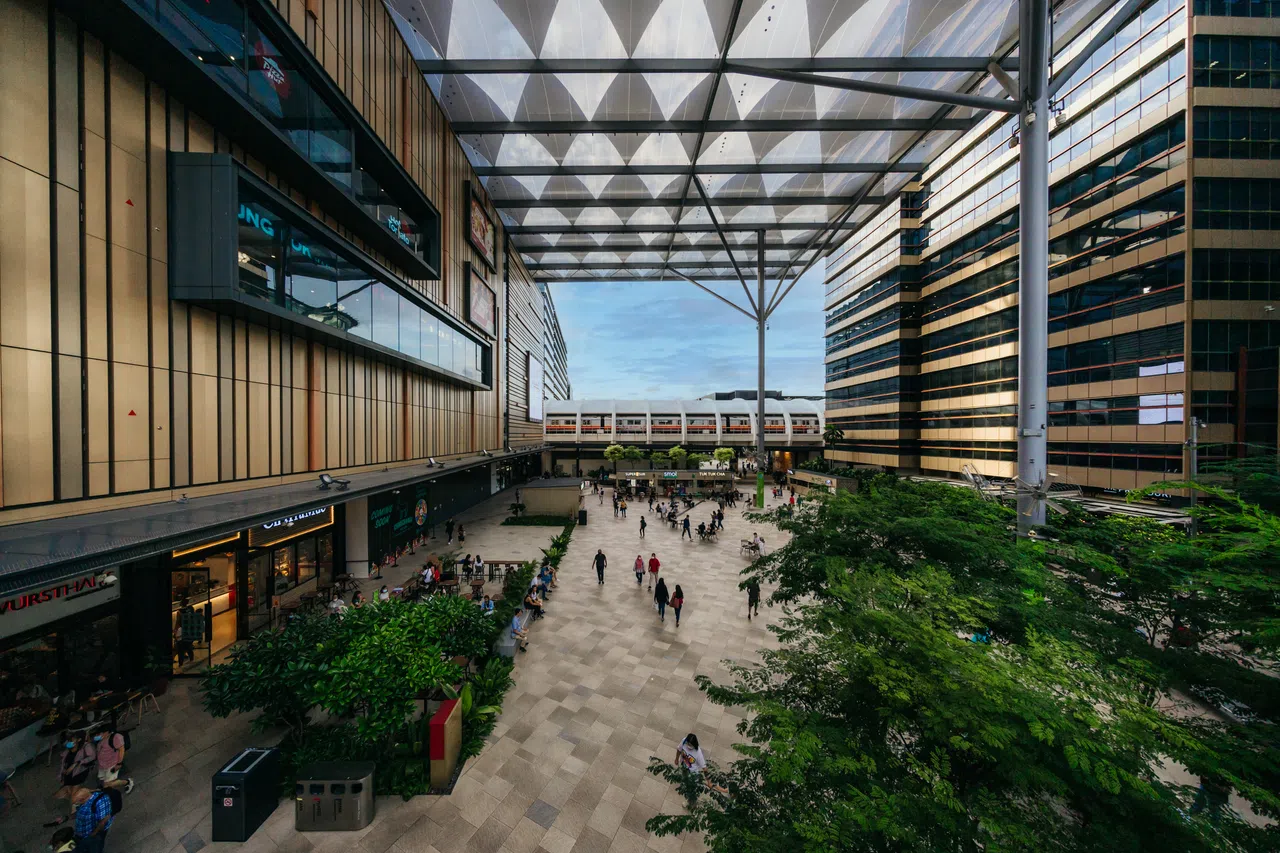
“It has to have an ‘X-factor’, like how the ingredients come together. (More) importantly, it needs superb connectivity, quality amenities and a dynamic character through events management,” notes Lendlease’s head of development, Richard Paine.
Higher land cost
But with all the attributes of a mixed-use development, such projects are usually priced at a premium compared with pure residential projects in the vicinity.
C&W’s Wong says: “Mixed-use development sites tend to attract a higher land premium, and this typically translates to higher launch prices compared to a pure residential development with similar locational and project attributes.”
Comparing the GLS sites awarded at the Lentor precinct from 2021 to 2023, Lentor Modern, a mixed-use development, was sold at a higher land price per square foot per plot ratio (psf ppr) compared with the subsequent pure residential plots that were tendered later.
The average launch price of the project’s residential units was also higher, and it was 99 per cent sold out based on the number of caveats lodged as at June – the highest among the various launches at Lentor precinct so far.
However, JLL’s head of residential research Chia Siew Chuin says that the land price for mixed-use developments can vary greatly depending on location, market conditions and the specific mix of uses within the project.
In some cases, land prices may be higher due to the added value and demand associated with mixed-use projects. However, the potential for multiple revenue streams and higher returns can offset the land cost.
“There is no one-size-fits-all optimal mix for a mixed-use or integrated development,” she adds.
Better premiums
So far, it seems that mixed-use developments have outperformed single-use projects in their month of launch.
Based on C&W’s data, for projects that were launched between 2023 and the first quarter of 2024, mixed-use developments achieved, on average, a 59 per cent sold-out rate compared to single-use residential developments of about 39 per cent.
“This could be due to the relative rarity of mixed-use developments compared to full residential developments,” says C&W’s Wong.
The residential component in mixed-use projects also appears to be better long-term investments, according to market transaction data.
Home units in mixed-use developments do command higher resale prices compared to those in pure residential developments nearby, based on JLL’s data.
For instance, projects such as Park Place Residence, Watertown and Bedok Residences have their units resold at higher price premiums compared to surrounding projects that were located nearby.
But it is still important to consider other factors like market conditions, age, lease tenure and the demand in a specific location to determine the pricing dynamics of residential units in both mixed-use and single-use developments alike, says JLL’s Chia.
Generally for a project to do well, it has to offer “a compelling reason” as to why people should buy a unit, lease a shop or an office, or to simply visit it, according to Lendlease’s Paine.
Constance Leung, CBRE’s head of consulting, valuation and advisory services, points out that the office component within integrated developments can potentially command rental premiums of about 5 to 15 per cent, with the premium being more pronounced in decentralised locations.
“For the retail component within integrated developments, rents are primarily driven by location, retail trade mix and amenities within the locality. The enhanced accessibility due to strong connectivity to transport nodes result in significantly higher footfall, which generates considerable retail sales,” says Leung.
The rental premium due to these advantages are approximately 10 to 20 per cent, she adds.
For residential projects, the integration of convenience and access to a range of amenities adds to the appeal of residential units in mixed-use development.
Typically, residential units within integrated projects could see a premium of around 10 to 15 per cent over similar comparables in the vicinity, says a spokesperson from City Developments Ltd (CDL).
Market watchers told BT there are some current and future mixed-use developments that are considered “successful” as they serve as catalysts for the transformation of the entire precinct because of their size and unique offerings.
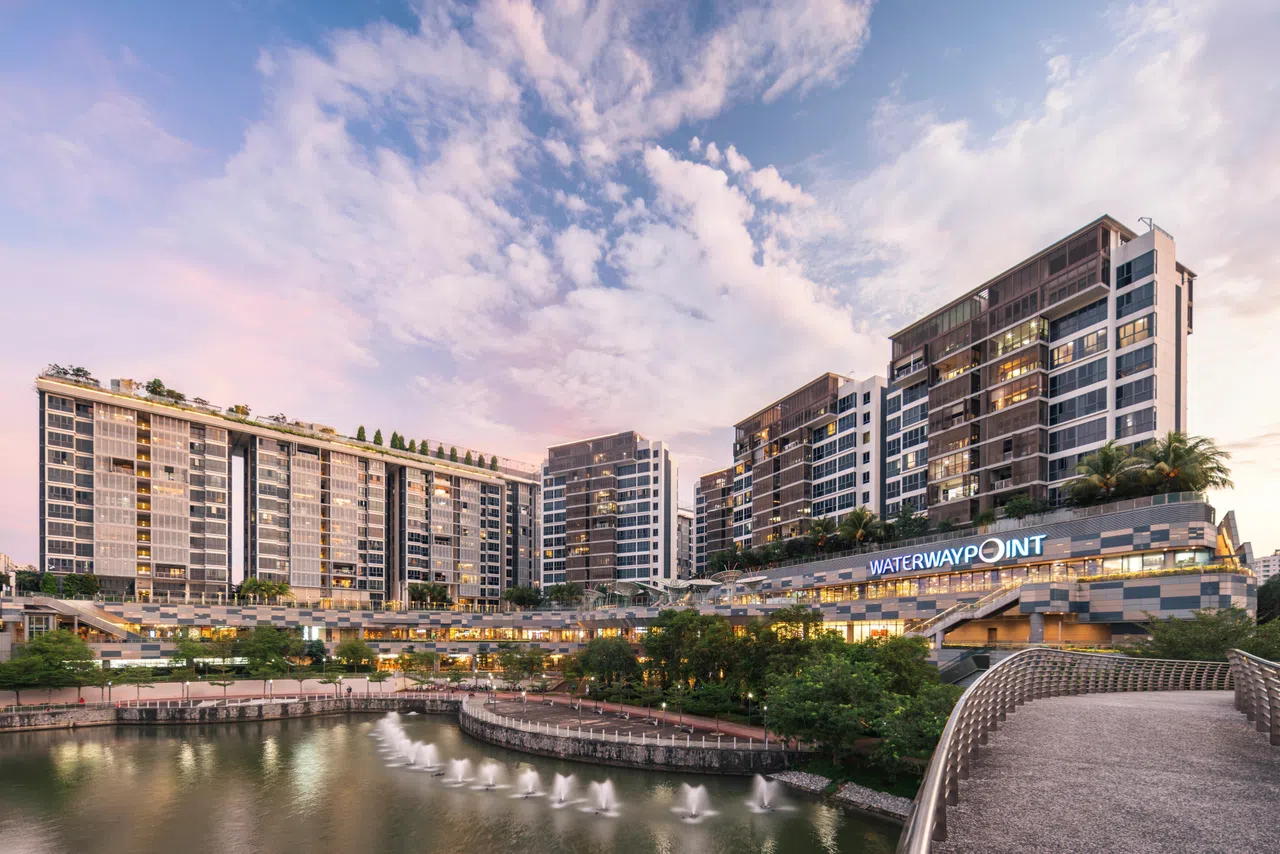
One notable example is Waterway Point and Watertown. The transit-oriented mixed-use development is Punggol’s first integrated waterfront residential and retail development, with 992 residential units. It also boasts close to 370,000 square feet (sq ft) of net lettable retail space and 230 retail units. The residential units were first launched in January 2012 at a median price of S$1,169 psf and the project is fully sold.
Future supply
The rising popularity also means more supply will come onstream. Four new integrated development projects are expected to be completed between 2024 and 2026, while the redevelopments of the former Fuji Xerox Tower and the former AXA Tower are scheduled for completion in 2027 and 2028, respectively, based on CBRE’s data.
On the public sector side, the government had launched a white site tender for the Jurong Lake District in March this year under the Confirmed List, which will provide 100,000 sq m of commercial space and 600 residential units.
Four sites out of 10 in the list available for sale for the second half of 2024 are also zoned for residential with commercial components, signifying the government’s push for more mixed-use projects in the market.
Under the Reserve List, two white sites and another hotel site with commercial space have also been put up for sale.
Does size and scale matter?
In general, industry watchers concur that size and scale do matter for mixed-use developments.
“Larger projects generate more economies of scale, such as more facilities for residents and critical mass for retail malls and office clustering and draw more demand. The key is to plan and optimise the space to complement the existing offerings,” says CBRE’s head of research for Singapore and South-east Asia, Tricia Song.
Size and scale of the components have to be significant to meaningfully drive the full benefits of a mixed-use development.
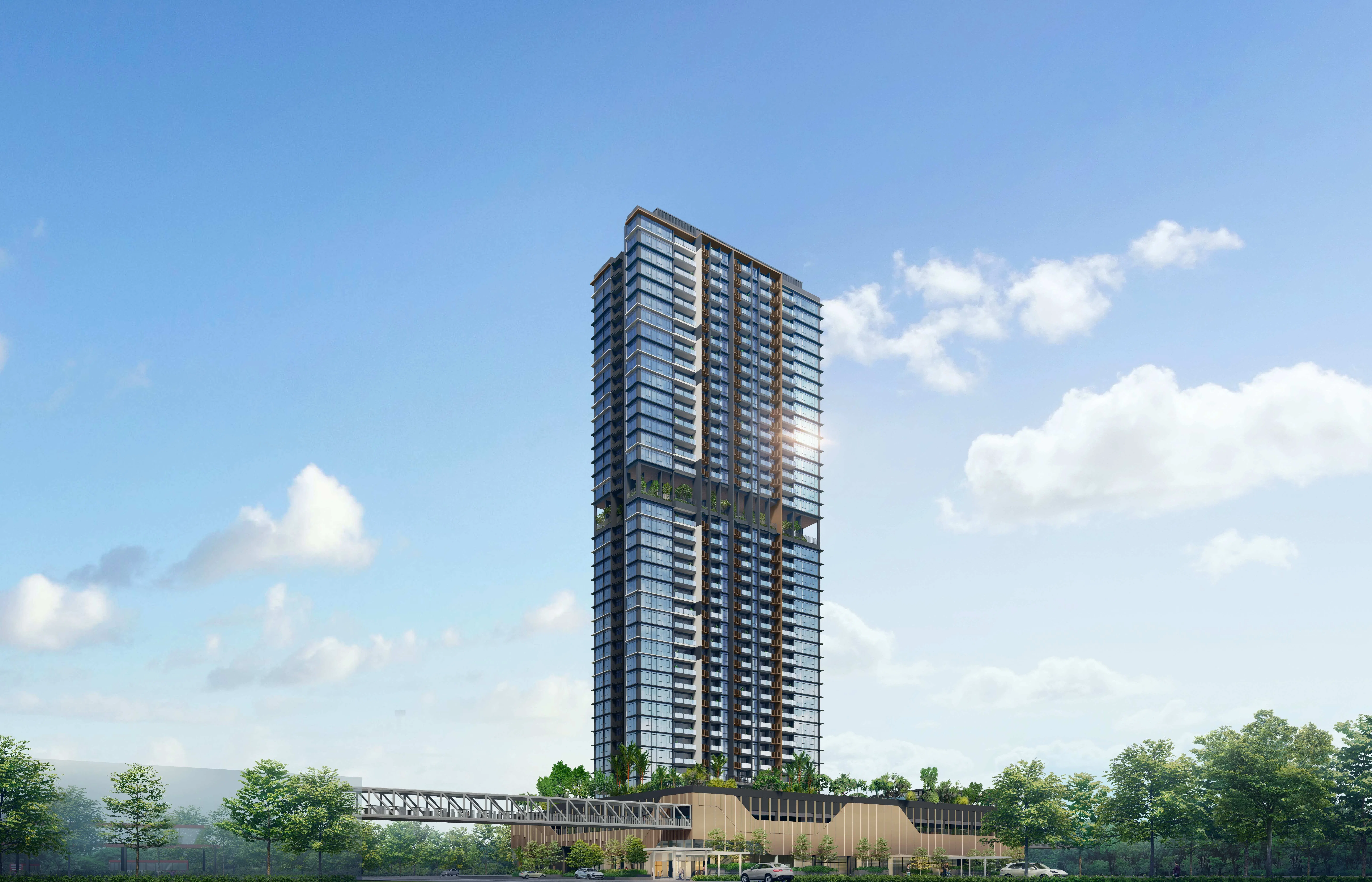
For a mixed-use development with retail and residential components, the retail component would need at least 80,000 sq ft of space in order to drive traffic to the mall and allow for a retail operator (e.g. anchor tenant) to maximise its use successfully, Colliers’ Chay says.
Larger mixed-use developments may also require substantial investment and must address challenges such as traffic congestion, infrastructure demands and neighbourhood integration.
“Smaller-size developments may target niche markets and offer affordability but will have limited building massing and resources to create a meaningful combination of uses for more amenities and sustainability initiatives,” says JLL’s Chia.
Finding the right balance and proportion between various uses is crucial to ensure that the development meets the needs and preferences of its target market, adds Chia.
Challenges ahead
While mixed-use developments offer many benefits and convenience, investors and buyers should be aware of drawbacks such as:
- Disamenities such as overcrowding and littering
- Noise from shops, restaurants, MRT stations
- Privacy issues
- Parking issues at the mall / office
- Traffic congestion
FEO’s Boey says such challenges are common but also present opportunities for innovative solutions through sensitive planning and design.
“Segregating vehicular access for residents and shoppers can enhance convenience and safety, and locating food & beverage establishments away from the residences can create a vibrant atmosphere without causing disturbances,” he adds.
While mixed-use developments will continue to add vibrancy and transform the cityscape, the development process for white sites or mixed-use developments pose several challenges as well, says a spokesperson from CDL.
Mixed-use developments generally require a longer planning period with more requirements from government agencies.
Higher construction costs and lower building efficiency are two other challenges developers face for such projects.
That said, industry players remain upbeat on the future for such developments in Singapore, considering the nation’s land scarcity and land use strategies.
“It will continue to be relevant and popular with both government support and buyers demand, especially in strategic transport nodes or estates that require some form of rejuvenation,” says Colliers’ Chay.
TRENDING NOW

Malaysian king buys stake in Singapore-listed mining firm expanding into rare earths

Grab CEO’s wife Chloe Tong on life with Anthony Tan and finding her purpose

Once staunchly pro-China, Malaysian Chinese businesses are now distancing themselves from Beijing

Longer wait times expected as S’pore healthcare institutions report system disruptions

