Moving the needle in Singapore’s climate progress
IF THERE was an expression that summed up the atmosphere at the 2015 United Nations Climate Change Conference (COP21), it would be “cautious optimism”. While nearly 200 countries signed the landmark Paris Agreement, most knew the hurdles they had to overcome to achieve those promised numbers. The upcoming COP28, which is set to assess and take stock of the progress made since COP21, is a much-needed reality check. It is time for countries to show their hands.
Singapore has many reasons to head to COP28 with its head held up high. Over the years, the city-state saw an increase in renewable energy investments and even managed to achieve several milestones. Despite the lack of renewable energy sources such as wind, large-scale solar and hydropower, Singapore’s progress has been good.
The numbers are on Singapore’s side – for the most part. Over the last 50 years, Singapore has successfully migrated from oil to natural gas as fuel for power generation. In fact, 95 per cent of Singapore’s electricity is powered by natural gas, the cleanest form of fossil fuel. In recent times, Singapore also announced the achievement of its 2020 solar target of 350 megawatt-peak and set a new solar target of at least 2 gigawatt-peak by 2030.
However, its stellar report card is not without blemishes. For example, the top five years with the highest carbon emissions in Singapore all happened after the Paris Agreement. While its emissions account for less than 0.22 per cent of the global discharges, Singapore still ranks 27th in the world in terms of emissions per capita – a dismal number for a country that ranks 114th for total population. To achieve net zero, Singapore must reduce the net output of each person by 8.31 tonnes of carbon emissions by 2050.
The ingredients of change
Taking an objective view, few other places in South-east Asia are in a better position to secure its sustainability aspirations than Singapore. While all the right ingredients are here, there is more work left to be done.
First, Singapore’s strong adoption of liquified natural gas (LNG) has been heartening to see. Even more exciting is the launch of the second LNG terminal, which will further diversify Singapore’s energy supply and bolster its energy resilience.
Expansion, then, is the next natural step. The Singapore government must craft robust policies geared towards strengthening its existing LNG infrastructure. For instance, e-LNG, or green hydrogen-based LNG, is a more environmentally friendly option when coupled with integrated renewable power generation. Upgraded turbines can also lead to significant fuel savings and emission reductions.
LNG developers and operators have major roles to play in this. They should consider tapping the potential of digital technology – such as artificial intelligence, digital twins and predictive analytics – which enable real-time monitoring of the operational environment in the facilities. This allows operators to swiftly investigate and resolve any incidents and improve overall efficiency.
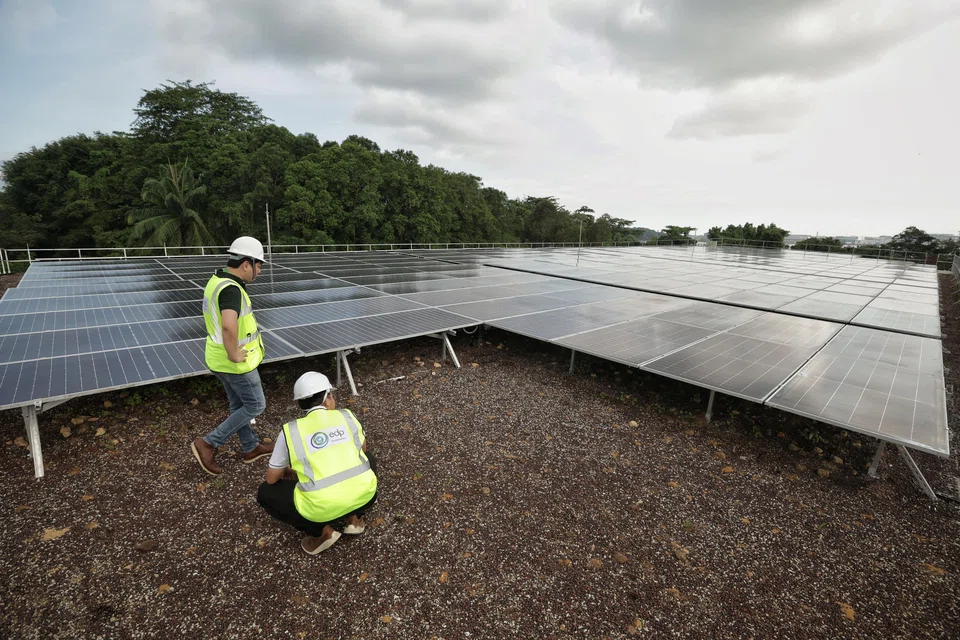
On the solar front, we are already seeing more and more solar arrays deployed on rooftops, reservoirs, offshore spaces and vacant lands across Singapore. The ongoing trial of a groundbreaking floating solar panel system on Jurong Island also goes a long way in maximising Singapore’s solar potential and showcasing the way it optimises domestic solar capacity.
While these are important milestones, grid stability, too, is crucial in achieving Singapore’s solar targets. That is why, beyond generation, we strongly advocate for a solar strategy that incorporates storage mechanisms. Specifically, options such as compressed-air energy storage hold the potential to transform our energy landscape, thus turning Singapore into a solar success story.
Leading up to COP28, hydrogen was earmarked as a top priority when Sultan Ahmed Al Jaber, COP28 president-designate, called for a “dramatic scale-up of new low-carbon hydrogen production”. Singapore’s National Hydrogen Strategy, then, is a strong indicator that the city-state is establishing itself as a key player in the regional hydrogen and ammonia supply chain and the future global hydrogen economy. While momentum is certainly picking up, we believe that Singapore can do more by retrofitting its existing power plants with turbines that burn both gas and hydrogen. Tapping its reputation as an innovation hub, Singapore must also facilitate the development of hydrogen solutions, which in turn would accelerate their commercialisation in the long run.
Of course, these pricey initiatives must have government support to succeed. Aside from setting a national carbon target to signify its resolve to embrace hydrogen and ammonia, the Singapore government must also put money where its mouth is by funding such projects. After all, cost remains the biggest barrier to hydrogen adoption. By putting the full weight of the government behind this endeavour, it is possible to address price parity against other fuels and drive offtake agreements to make hydrogen commercially viable.
What Singapore does best
Arguably, the greatest hurdle to overcome is an internal one: the preconceived notion that energy is but a commodity.
Indeed, to achieve their net-zero aspirations, Singapore and the world at large must radically rethink how they live and recognise that, beyond mere utility, energy is a powerful force for economic growth and social development – and the upcoming COP28 is the ideal avenue for public and private stakeholders to discuss best practices and knowledge sharing. Amid varying geography, regulatory disparities and implementation capabilities, COP28 serves as an effective platform for developing strong, coordinated policies and frameworks. It is specifically designed to cultivate a clear strategy for public-private partnerships that foster testing and pilot programmes, ultimately scaling them up for commercialisation.
This is also where Singapore is particularly well-positioned to become an energy leader in the region. The small, resource-scarce island succeeded by relying heavily on cross-border trade and collaborations. In mere decades, it has transformed into an economic powerhouse in the region.
Now, with the climate crisis at hand, Singapore must once again do what it does best: pushing innovation, fostering partnerships, and working with others to come up with smart, practical solutions for our shared future.
It has done it before and, with careful planning and concerted effort, it will get there.
The writer is senior vice-president and managing director of Asia-Pacific, Siemens Energy