

Moving Thailand forward: Between stability and reform
After 3 prime ministers and past incidents of street protests and violence, the economy – stuck at a 1-2% growth rate – seems to be on the rebound
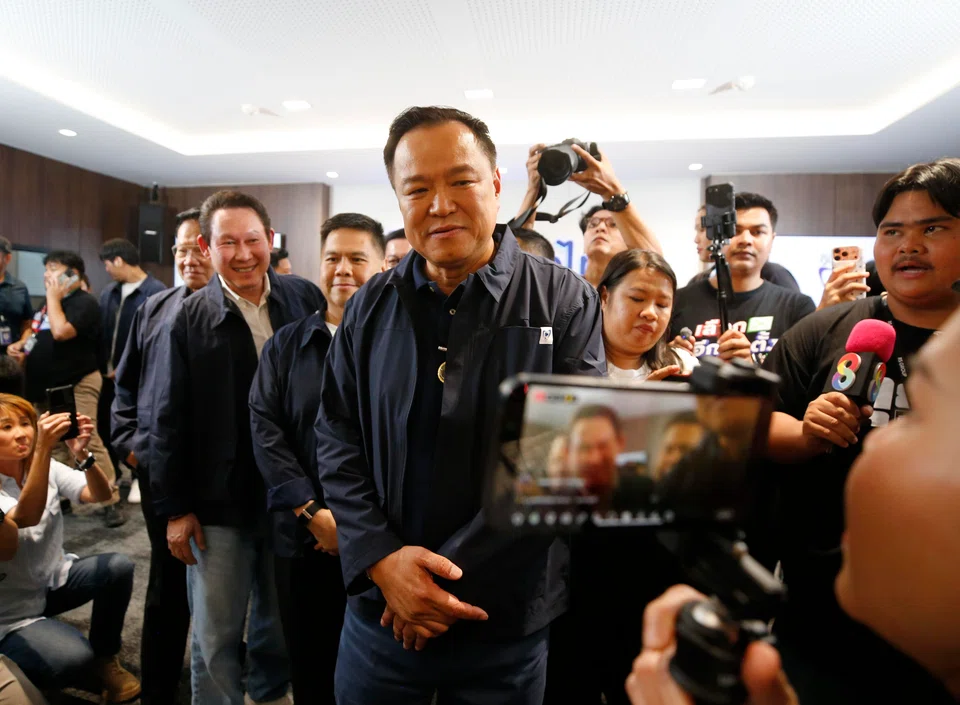
MANY hope that results from Thailand’s recent general elections will bring stability to one of the region’s largest economies. With its clear win, the conservative Bhumjaithai party (BJT) led by Anutin Charnvirakul is well-placed to form a government with a comfortable majority.
Thai markets and the baht have been buoyed, and most analysts were quick to express optimism. After three prime ministers in as many years and past incidents of street protests and violence, an economy dubbed recently “the sick man of Asia” and stuck at a 1 to 2 per cent growth rate seems to be on the rebound.
Political stability can bring benefits. Yet, stability alone will not be enough. Larger questions lie beyond election results, and will matter more in the coming months.
How they won
While the BJT is the reported winner, claims about election tampering have surfaced; and the relevant authorities must respond to preserve legitimacy. Presently, most observers do not anticipate a wholesale recount. As things stand, the BJT will have some 193 parliamentary seats out of 500, and is considering other parties to partner.
The once-dominant Pheu Thai stumbled to third place, but still has 74 seats and has accepted being a junior partner. Other parties will be trickier. Kla Tham won 58 seats, and includes some former members of military-backed parties. But controversy looms – its leader was previously jailed in Australia for conspiring to smuggle heroin; and the party is seen as old-style politics.
There are calls for the new government to be capable, credible and cleaner. There are even online calls to bring in the Democrats and the respected former prime minister Abhisit Vejjajiva. That seems less than likely, but speculation and horse trading can surprise. Whoever else joins government, the BJT’s sizeable win comforts the establishment.
Polls had shown the People’s Party leading, and most observers believed the reformist movement would gain further ground. It won in 2023 as Move Forward, although its proposals were seen as too radical – especially changing the lese majeste law that prohibits criticism of the royalty. Court rulings disbanded the party and barred its leaders from politics so they never took office.
Now, in 2026, the reformists were beaten back to second place as Anutin led a canny campaign that pressed many buttons. The ongoing border conflict with Cambodia played to a strong nationalistic and pro-military mood. Promises of assistance were also made, adopting populist tactics used by the Pheu Thai, albeit with more financial restraint.
The BJT deployed its firm links to local strongmen, especially in the northern provinces. After becoming caretaker premier, Anutin strengthened his hand. He attracted some incumbent MPs to the BJT fold, reshuffled senior officials across key departments, and appointed several provincial governors. This shrewdly outflanked the relative newcomers who led the People’s Party and Pheu Thai.

Can reform move forward?
Yet, the BJT win does not mean that reforms are off the table. The People’s Party still secured a sizeable 110 seats. It also won all 33 seats in Bangkok, showing entrenched support among urban voters. In party-list voting, it was first, too, suggesting the value of its “brand”.
The wish for reform is also clearly signalled in the referendum held in parallel with the elections. The current constitution is seen to support the status quo and entrench power for the non-elected Senate and other bodies. In the referendum, the vast majority of Thais – almost two-thirds – voted for a new constitution.
That process will be drawn out and contested, and the government in power will be influential. The vote nevertheless underscores the continuing wish for reform. The BJT is positioned for reform too, in its own way.
A number of well-reputed and capable technocrats are already in the caretaker Cabinet as ministers. Former Dusit Thani group CEO Suphajee Suthumpun heads the commerce ministry, while two highly regarded senior officials have been elevated – Ekniti Nitithanprapas leads the finance ministry and former permanent secretary Sihasak Phuangketkeow is in charge of foreign affairs.
Campaign posters featured them prominently, and their next moves are anticipated to gauge the commitment to new policies. They will be watched not only to see if they continue in the new government, but also for their degree of influence and supervision over other ministries, perhaps as deputy prime minsters.
BJT-style changes will not question the roles of the monarchy and military, as pledged by the reformist parties. Expect instead an overhaul of economic policy to gear for growth as well as policies in dealing with Cambodia and Myanmar, and to position the country amid Sino-US tensions.
The wish list for new economic initiatives is long. One aim is to lower household debt levels, while avoiding massive hand-outs. Another is to reach out to new markets and achieve higher value for Thai exports, given tariff uncertainties.
Other reforms are to be debated and balanced. For instance, most agree Thailand needs more emphasis on innovation and entrepreneurship. However, this has implications on the dominant position of state-owned enterprises and the large conglomerates. Similarly, relooking energy policy and pricing will need to contend with wealthy and powerful vested interests.
Another important challenge would be to address systemic corruption. In the latest survey by Transparency International, Thailand fell behind Asean neighbours Indonesia and Vietnam. Scam centres should clearly be in the spotlight for law enforcement and financial supervision. Yet the flood of illicit money may prove pernicious to some of the establishment.
Before being beset by political uncertainties, Thailand enjoyed many years of strong growth. The hope is that with the election results, there will be no more mass disruptions and protests. Core strengths in the Thai economy can bounce back, compared to the doldrums of recent years.
Beyond that, if stability is taken to mean standing still and protecting the status quo, it will not suffice. Reforms and new thinking under a conservative government will not be easy. Yet, they are needed to shift Thailand’s current trajectory and move the country forward.
The writer is chairman of the Singapore Institute of International Affairs
Decoding Asia newsletter: your guide to navigating Asia in a new global order. Sign up here to get Decoding Asia newsletter. Delivered to your inbox. Free.
Share with us your feedback on BT's products and services
TRENDING NOW

Government to bring forward raising of retirement age, give employers more financial support to create flexi-load jobs

If Europe goes to war, the fallout will be felt in East Asia

Indonesia stocks suffer worst plunge in nearly 30 years as MSCI proposes standalone status

Vietnam’s northern provinces, not Hanoi or Ho Chi Minh City, are powering near 10% GDP growth

