Musk ally Meloni emerges as global political player
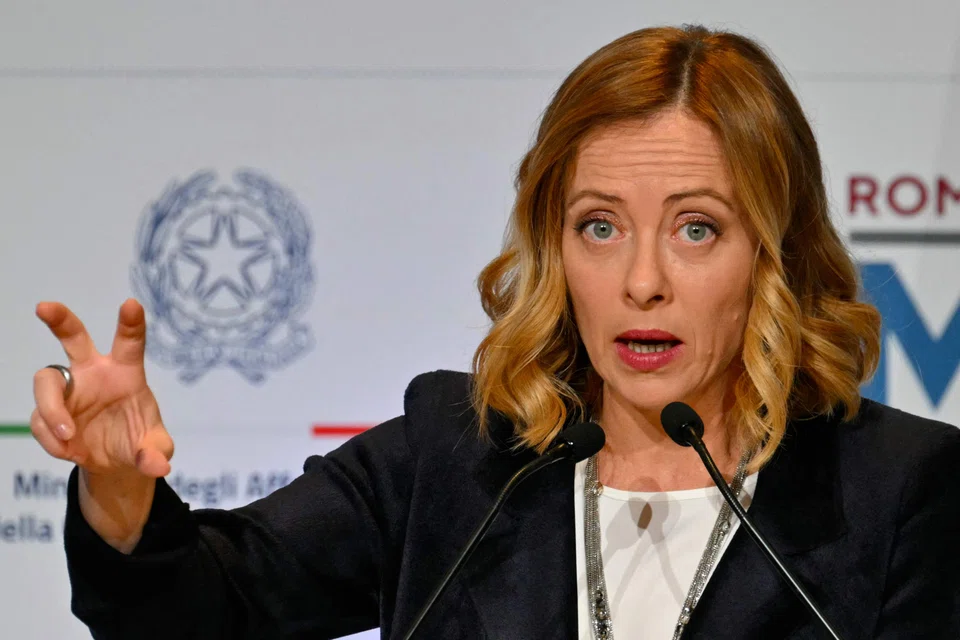
WHEN Giorgia Meloni won power in 2022, she was widely expected to be no more than a footnote in the nation’s political history. However, Italy’s first woman prime minister is not only proving to be one of the most consequential European politicians of modern times, but also “punching hard” on the global stage, including with her chairing of the G7 in 2024.
Her growing prominence will be showcased, again, when Joe Biden is scheduled to travel to Rome next week in what is likely to be his last foreign visit as US president. He is planning to make a swansong overseas trip to meet Meloni and Pope Francis, after former president Jimmy Carter’s state funeral on Jan 9.
Yet, respectful as Biden’s relationship is with Meloni, her ideological bond with US president-elect Donald Trump is warmer. So her political stock could hit its peak in the next four years, given that she and Trump have much in common policy-wise, including clamping down on immigration.
To be sure, Trump has multiple admirers in Europe, including Hungarian Prime Minister Viktor Orban.
However, it is Meloni who wants to become the political “bridge” between the Trump team and Europe, in a Washington-Rome alliance underpinned by disruptive diplomacy. After meeting Trump in Paris in December, she made this intent explicit when she said that “the US-EU axis (now) passes through Italy”.
One enabler of Meloni’s grand ambition is her apparently close political relationship with Tesla chief executive officer Elon Musk. Now apparently a member of Trump’s inner circle, Musk was a keynote speaker at the 2023 national political convention of Meloni’s Brothers of Italy party.
One key litmus test of Meloni’s ambition to become Europe’s interlocutor with the new US administration in 2025 will be how much she shifts her stance on foreign policy in a Trumpian direction. Prior to her taking power, there were widespread reservations in Western capitals, including in the Biden White House, about her suitability for office given her far-right political roots. However, her actions since have surprised on the upside, including her strong support for Ukraine.
Yet, this could change, not least given Italian public opinion being more sympathetic to Russia than much of the rest of Europe. It was no huge surprise in June 2018 when then prime minister Giuseppe Conte supported Trump’s extraordinary call for Moscow to re-enter the G7 (rejuvenating the former G8 club), a move rejected by all of the other members in the club of advanced economies.
Meloni’s political calculus on Ukraine is also shaped by the fact that anti-establishment political parties such as League – which forms part of her Italian coalition – had, prior to Russia’s invasion, sought a positive re-evaluation of Rome’s relationship with Moscow. This included calling for the lifting of European Union sanctions put in place prior to February 2022.
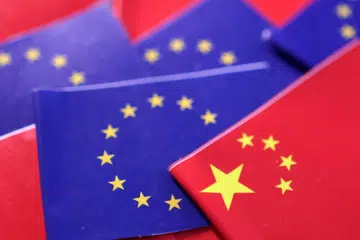
Beyond Ukraine, another area of foreign policy that Meloni and Trump can bond over is China. The first Trump administration, in 2019, was furious when Conte became the first G7 leader to sign up for membership of Beijing’s Belt and Road project, a decision which has since been reversed by Meloni for both security and economic reasons.
Italy joining the Belt and Road Initiative sent seismic shockwaves across the Western world. This included a strong rebuke from Garrett Marquis, Trump’s then National Security Council spokesperson, who asserted that there was “no need for the Italian government to lend legitimacy to China’s infrastructure vanity project”.
Partly because of Meloni’s ties to Trump, there are growing perceptions of her being one of the (if not the single) most powerful national leaders in Europe. Her success there owes much to her perceived pragmatism in office, often tacking to the centre from her far-right origins with her previous praise for former dictator Benito Mussolini, a key ally of Adolf Hitler.
However, she has shown some authoritarian tendencies. This includes social media attacks on the judiciary, with some of these same judges now requiring police protection. This helped prompt a rebuke from the Council of Europe which asserted that “excessive criticism of individual judges… puts their independence at risk”.
Controversially too, her government in 2024 also passed a law criminalising surrogacy as a “universal crime”, allowed anti-abortion activists to enter abortion clinics, and introduced labour and healthcare measures that triggered widespread strikes. The European Commission has also raised concerns over the deterioration of press freedom in Italy.
Yet, Meloni has avoided, so far, major international controversy. And, at the same time, she has benefited from the perception that her far-right populism has global political winds in its sails. This, at the same time as the politics of the two traditional motors of European integration, Germany and Italy, are in crisis.
With the next Italian national election potentially not until December 2027, Meloni could well serve a half-decade in power before the country goes to the polls. That would be a big feat in itself, given that the average tenure of post-war Italian prime ministers has become much shorter in recent decades.
In part, this high turnover of prime ministers stems from the nation’s recurrent political and economic instability. The country has the second-biggest debt load in the eurozone at over 130 per cent of its gross domestic product, and its banking sector is under significant stress with massive underperforming loans.
Yet, Meloni may be an exception to this pattern of constant turnover of political leaders in office, and has a reasonable shot at re-election. Her Brothers of Italy party is polling around 30 per cent, well ahead of the left-of-centre Democratic Party, its closest competitor.
Going forward, there are at least two ways that she could continue to have an outsized international impact.
First, she could help a new generation of other far-right populist leaders in Europe and beyond come to the fore. This includes Marine Le Pen, who hopes to stand for a third time for the French presidency.
Second, Italy under her leadership has the potential to continue punching above its weight on the global stage, especially if France and Germany cannot rejuvenate themselves.
While Italy is not always seen as a top-tier power, one reason why the Trump-Meloni relationship could have significant implications is Rome’s continued systemic importance. Italy is not only a G7 country, but also the third-largest eurozone economy.
Taken together, the warmth between Trump and Meloni is therefore only the latest sign of a resurgent Italian-US political relationship. While the nations have long been allies, the populist stripes of these two leaders in Rome and Washington will bring new spice to bilateral bonds which could have significant international implications.
The writer is an associate at LSE IDEAS at the London School of Economics