

Nacho versus Taco: Are these Tex-Mex themes about to give investors in Singapore indigestion?
Mega-cap listing aspirants may draw liquidity away from less exciting companies around the world

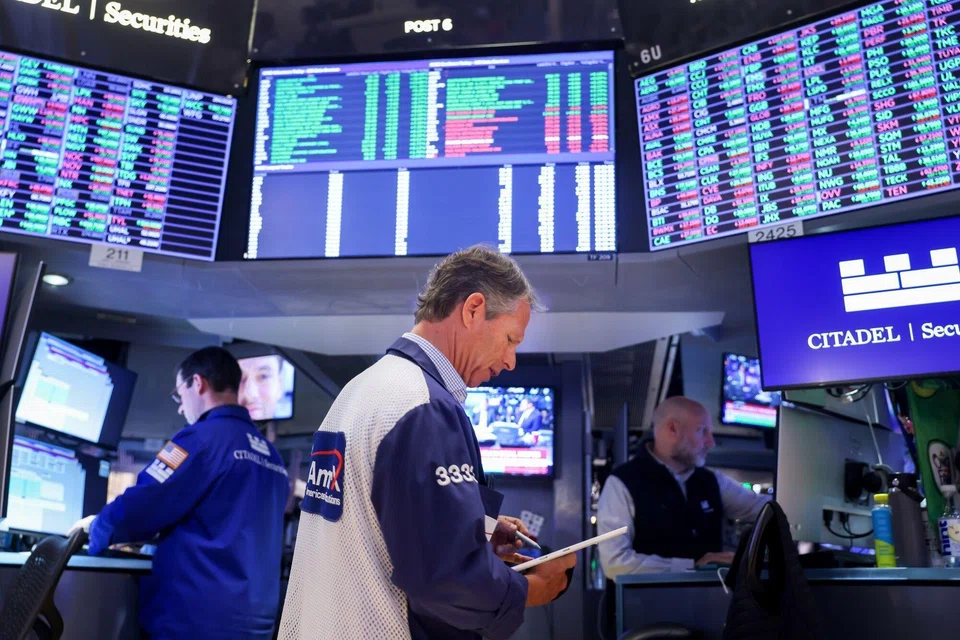
[SINGAPORE] When global bond yields suddenly began surging on May 15, it felt as though investors were finally giving up on “looking through” the inflationary impact of the war in Iran, and positioning themselves for tighter monetary policy from the US Federal Reserve and other major central banks.
Then, almost on cue, US President Donald Trump said that he had authorised a new wave of attacks on Iran, but called them off in order to facilitate peace negotiations. Iran subsequently said it was reviewing a new proposal from the US.
Since returning to office last year, Trump has repeatedly walked back his harshest economic and military threats in the face of financial market pressure – a pattern of behaviour that has come to be associated with the acronym Taco, which stands for Trump always chickens out.
This has given rise to so-called Taco trade – a sort of buy-the-dip strategy whenever Trump says or does something outrageous, in anticipation of a rebound when he invariably pulls back from the brink.
The fact that Trump did not actually leave any time between announcing military strikes on Iran last week and cancelling them did not even seem to matter. The mere reminder that the US administration is trying to end the war seemed to revive optimism in the market.
The 10-year Treasury yield – which nudged 4.7 per cent last Tuesday (May 19) – slipped below 4.6 per cent by the end of week.
The S&P 500 closed on Friday at 7,473.47, up 0.9 per cent for the week. The Dow Jones Industrial Average climbed 2.1 per cent, ending the week at a new closing high of 50,579.7.
Yet, it is unclear when – or even whether – a lasting end to the hostilities will be hammered out. In the meantime, the flow of oil through the Strait of Hormuz remains severely curtailed, increasing the likelihood of central banks having to raise interest rates to keep inflation expectations from becoming unmoored.
This has given rise to an opposing market theme dubbed Nacho, which stands for not a chance Hormuz opens.
Could the Nacho trade soon overwhelm the Taco trade? Is the combination of these Tex-Mex culinary market themes about to give investors a case of indigestion?
Why has the prospect of higher interest rates not already taken a toll on stock prices? What does it mean for investors in Singapore?
Market gravity, corporate moonshots
In my view, one reason stocks have not faltered despite the growing likelihood of higher interest rates is that corporate earnings have been more robust than expected.
Financial data provider FactSet said last week that blended year-on-year earnings growth for constituents of the S&P 500 in Q1 2026 was 28.4 per cent, well ahead of the 13 per cent growth that analysts were expecting only a few weeks before, on Mar 31.
It was also the fastest pace of earnings growth achieved by the index since Q4 2021, when the world was emerging from the Covid-19 pandemic.
No doubt, some fast-growing mega-cap stocks skewed this overall growth rate, Nvidia not least among them. According to FactSet, the Magnificent 7 companies alone reported earnings growth of 63.2 per cent in Q1 2026.
The other 493 constituents of the S&P 500 did not fare too poorly, though. Their blended earnings growth rate in Q1 2026 was 17.4 per cent.
More to the point, analysts have been raising their earnings estimates. FactSet said last week that the Magnificent 7 companies are now forecast to achieve full-year earnings growth of 34.9 per cent, up from 24.3 per cent on Mar 31.
The other 493 constituents of the S&P 500 are forecast to deliver 2026 earnings growth of 17.9 per cent, up from 14.7 per cent on Mar 31.
Interest rates are akin to gravity when it comes to valuing most assets – especially those at the higher end of the risk spectrum, such as fast-growing companies that are expected to be significantly more profitable in the future.
Yet, with some of the most prominent fast-growing companies currently beating expectations, interest rates may have to rise very significantly to have an adverse effect on their market valuations.
The imminent listing of Elon Musk’s SpaceX could test this optimism. The space transportation and artificial intelligence player is reportedly planning to raise US$75 billion from investors, and may be valued at as much as US$2 trillion.
This would immediately make it one the largest public listed companies in the world, and a significant constituent of major market indices.
However, unlike other listed companies with valuations north of US$1 trillion, SpaceX has recently reported losses.
It will be interesting to see how quickly the moonshots it is planning to take – such as putting data centres in space, and building a colony on Mars – become money makers; and whether it garners as much investor support in the interim as companies in the same league that are solidly profitable.
Rising rates, staying relevant
To be clear, I am not suggesting that companies ought to be profitable before coming to market. With rising interest rates weighing on valuations, it is arguably more important now that listing aspirants are able to credibly demonstrate that they are somehow changing the world.
This is where SpaceX – as well as OpenAI and Anthropic, which are also reportedly preparing to list – may have an edge in mobilising capital. Many investors may be quite willing to forgo higher US Treasury bond yields to participate in the exciting potential of the space economy and AI revolution.
Indeed, this new crop of mega-caps may well draw liquidity away from a broad swathe of companies around the world with less interesting prospects, exacerbating the downward valuation pressure on their shares as the Nacho trade bites.
Where does all this leave investors in the Singapore market? The Straits Times Index has performed relatively well over the past couple of years, fuelled by elevated profitability at some of its largest constituents as well as big value-unlocking initiatives.
To drive the next phase of its growth, the local market now needs more companies that are relevant to global investors. Besides attracting new listings with dominant positions in fast expanding sectors, Singapore’s largest companies should position themselves on the right side of big geopolitical and technological trends.
As global interest rates rise and the likes of SpaceX, OpenAI and Anthropic drain liquidity from the various corners of the world, the pressure on Singapore’s largest companies to stay relevant is rising.
TRENDING NOW
Prima to move out of historic Keppel Road flour mill building in 2028

Grab CEO’s wife Chloe Tong on life with Anthony Tan and finding her purpose

OCBC sheds S$8 billion in value as shares close nearly 6% down; analysts cautious on banks

As Asia’s food delivery giants rejig the pie, who will win the market?

