National Day Rally: Balancing between a ‘reset’ and policy continuity
Breaking new ground while maintaining stability will be a delicate act for the prime minister

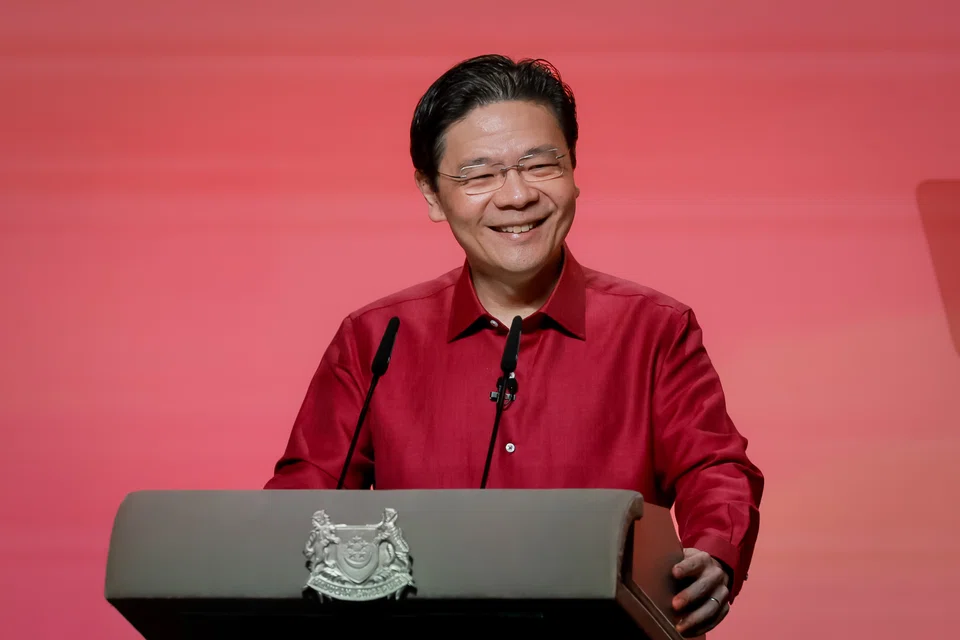
IN MANY ways, Singapore’s fourth prime minister, Lawrence Wong, is an embodiment of the “Singapore dream”.
Growing up in an average middle-class family in post-independence Singapore, he attended schools near his home but was given ample opportunity to develop his potential and excel, eventually clinching a government scholarship.
At his first National Day Rally (NDR) on Sunday (Aug 18), his personal stories about his seeming ordinariness were striking and relatable. He had trouble adjusting to kindergarten at first; he had to put more effort to learn Chinese as his family did not speak Mandarin; he went to schools in his neighbourhood and, in his words, “turned out okay”.
He said as much himself: “I may be Prime Minister, but I’m also a fellow citizen and friend, sharing the same experiences and concerns as all of you.”
In other words, PM Wong presents himself as “one of us”. That he has risen to the top job in the country is perhaps proof that Singapore’s system, undergirded by meritocratic principles, is working.
Yet he also sees a clear need for a “refresh” of the Singapore dream, arising from the mass citizen consultation exercise called Forward Singapore that he and his team conducted over the last two years.
Singaporeans, he reiterated on Sunday, want a more compassionate and inclusive society even as the country continues to seek economic growth. Realising this will require a “major reset” both in policies and people’s attitudes.
Yet, therein lies a conundrum for the new PM: how does one break new ground while maintaining stability?
The balance between “refreshing” policy and maintaining continuity is a delicate one. As prime minister, he needs to lead the country forward, taking into account increasingly complex global challenges and Singaporeans’ changing aspirations. But this needs to be done in a calibrated way so that the good work of his predecessors is not inadvertently dismantled.
It is thus no surprise that despite framing Sunday’s announcements as a “reset”, PM Wong stuck to a familiar script of recurring themes that clearly resonate with him, as well as Singaporeans: providing opportunities and more help for those who need it.
In other words, the “major reset” should not be interpreted as a rejection of older ways, but a doubling down of the policy shifts already set in motion by his predecessor’s team – of which PM Wong himself was a key member.
After all, help for the vulnerable was also a key theme for former prime minister Lee Hsien Loong. The government mindset of “help for those who help themselves” is also maintained by PM Wong, as seen in the design of upcoming re-employment support for the involuntarily unemployed.
Considering this may potentially be PM Wong’s only NDR before the next general election, the absence of radical changes is within expectations. It is also likely to offer reassurance to markets, particularly at a time of volatility and geopolitical uncertainty.
Granted, one particular announcement on Sunday could be seen as bold for Singapore and surprising for some businesses: introducing an additional 10 weeks of mandatory paid parental leave, in an bid to raise Singapore’s dismally low total fertility rate.
On that note, the eagle-eyed among us may have spotted a parallel between the first NDR speeches of PM Wong and his predecessor. During Lee’s first rally, back in 2004, he announced that childcare leave would be made an entitlement. This, some could say, could be seen as a perfect display of policy continuity.