Navigating a connected yet contested world in S-E Asia
By monitoring key watch points, maintaining a trifocal lens, and adopting specific strategies, the region can stay resilient and tap opportunities going forward
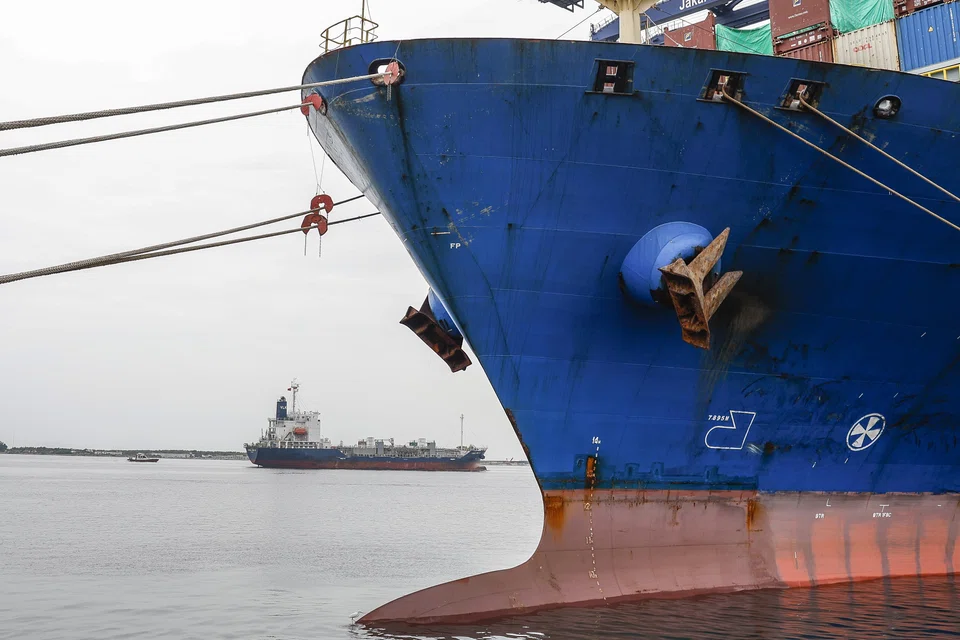
SOUTH-EAST Asia is at a critical geo-economic crossroads. Recent actions by major economies, notably the US administration’s imposition of tariffs at levels not seen in a century, signal a shift towards more protectionist trade policies. These actions will intensify existing pressures on global supply chains, growth trajectories, and strategic partnerships. For member states of the Association of Southeast Asian Nations (Asean), whose combined economies form the world’s fifth-largest bloc and serve as vital connectors between the world’s two largest economies – China and the United States – this evolving landscape brings both heightened risk and strategic opportunity. Navigating the moment will require agility in the face of volatility, including monitoring key geo-economic watch points, and rethinking trade linkages and resilience strategies.
Key watch points
Asean confronts a range of geopolitical “grey rhinos”. These are known risks of high impact, ranging from ones at a global level – namely, the China-US strategic competition, the fallout from Russia’s invasion of Ukraine, and the conflict in the Middle East – to those at a regional level, such as tensions on the Korean peninsula and in the maritime domain, including in the South China Sea and the Taiwan Strait. The new US administration’s approach to the global trading system is further shaping Asean’s strategic environment.
Eight key geo-economic watch points for Asean emerge from policies and pronouncements to date:
* A potential reimposition of US reciprocal tariffs (currently suspended for a 90-day period as of Apr 9), and scaling up of tariffs based on product type, trade surpluses, and perceived lack of reciprocity and circumvention of existing tariffs.
* A redirection of supply chains as multinational companies shift from exposed markets, creating opportunities and also risks due to diverted overcapacity affecting local industries.
* Expanding export controls around access to and transit of critical and emerging technologies in Asean.
* Evolving investment-screening regimens that will shape the ability of companies in Asean to pursue overseas investment opportunities.
* Scrutiny of critical infrastructure such as ports in terms of access and ownership.
* Regional growth trajectory as escalating trade tensions may more broadly dampen economic prospects for Asean economies with high trade dependencies.
* Energy prices in light of trade volatility and its impact on global growth.
* The strength and role of the US dollar as the world’s reserve currency.
Potential approaches
In response to the increasingly complex geo-economic environment, policymakers and business leaders in Asean could consider three strategies: maintaining a trifocal lens, calibrating their responses to trade measures, and investing in geopolitical resilience.
- Keeping a trifocal lens
Maintaining a trifocal lens entails executing an affirmative trade and connectivity agenda that starts in Asean, extends across Asia, and expands to the rest of the world.
Within Asean, a key imperative is to advance both the “software” of trade agreements and the “hardware” of infrastructure investment to catalyse further connectivity and trade.
Software includes upgrades to existing agreements that are already under way, such as the Asean Trade in Goods Agreement, which has made strides in eliminating tariffs on intra-Asean trade; the conclusion of new agreements, such as the Digital Economy Framework Agreement; and the actualisation of agile intra-Asean configurations of interest, for instance, the Johor-Singapore Special Economic Zone.
Hardware entails investment in infrastructure, such as roads, seaports, airports, railroads, and bridges, that is needed to support trade flows with Asean. This will require around US$60 billion in infrastructure investments, with a particular focus on transport infrastructure.
Extending beyond Asean to the rest of Asia, while 90 per cent of South-east Asian exports remain in the Asia-Pacific, more could be done to bolster intra-regional connectivity. India, for example, is a key focal market of opportunity that repeatedly arises for Asean member states. Upgrading the Asean-India Trade in Goods Agreement, as well as advancing other complementary agreements, such as building out the India-Singapore semiconductor ecosystem partnership, could be important accelerants.
The changing geopolitical landscape could also present opportunities and impetus for traditionally closed economies to diversify and deepen trading ties.
Last, Asean policymakers and business leaders could also maintain a lens beyond Asia to build their relationships with countries and markets such as Canada and the European Union, as well as to advocate for strengthening global trade rules in forums such as the World Trade Organization.
The demand-side signal for diversification is already here. European Commission President Ursula von der Leyen noted in her remarks at the Asean Future Forum in Hanoi in February 2025: “You (Asean) want to build new industries and the key economic sectors of the future. We (the EU) want to diversify supply chains and strengthen our economic security. Your companies want better access to the world’s largest single market, while ours want to bring their innovative products and services to a global centre of growth.” Since her remarks, the diversification imperative for Asean has only sharpened further.
- Calibrating an “Indra” strategy
Amid the global winds of protectionism, policymakers and business leaders in Asean could carefully calibrate their strategies and responses while balancing a sometimes contradictory host of factors.
Countries and companies are making moves, for example, in the face of measures announced by the US administration. These can be described by the acronym “Indra” – initiate, negotiate, diversify, respond, accelerate. Policymakers and business leaders will likely combine a number of these elements in how they navigate and set their Indra strategy with care.
- Building geopolitical resilience
A third strategy entails taking a proactive approach to geopolitics and investing in geopolitical resilience in three key domains: insight, oversight, and foresight.
Insight: To navigate a fraught geo-economic landscape, policymakers and business leaders may need to set up a geopolitical risk unit to monitor and serve as their early warning system around the key watch points above. Policymakers may also need to radiate those insights out to companies in their country that may not have the channel or resources to directly source insights.
Oversight: Companies operating in Asean will need to exercise critical oversight over their strategy and operations, from reassessing their supply chains to thinking through product engineering and classification management supported by a dedicated geopolitics and trade nerve centre to coordinate and drive action.
Foresight: The need to build capabilities around foresight is equally important. The premium on being able to look around the corner and anticipate not just black swans and grey rhinos but also silver linings – opportunities amid volatility – has never been greater. Leaders will need to think through a range of geo-economic scenarios over multiple time horizons to calibrate their global positioning and footprint.
Public-private collaboration in the co-creation and review of such scenarios can potentially unlock richer insights as well as foster alignment on precisely where and how to build resilience.
Different models exist globally – for example, governments conducting scenario-planning internally and providing sanitised high-level briefings to businesses as part of sharing insights and policy guidance, businesses developing their own scenarios and sharing them with their governments, and utilising Track 1.5 models where industry associations and think tanks take the lead in convening policymakers and leaders from the private sector to run tabletop exercises and discuss key learnings for planning and resilience purposes.
Asean confronts a brave new world – one that could test the core of its growth agenda.
A wave of global trade reconfiguration in recent years has reaped unique dividends for Asean. A second wave, though, may usher in a further reconfiguration and a different set of pressure points.
Policymakers and business leaders in Asean will need to maintain a laser focus on the eight key watch points that could impact the region, maintain a trifocal lens, calibrate their Indra strategy, and invest in geopolitical resilience and strategies that could preserve their geo-economic position to the benefit of Asean’s centrality, security, and prosperity.
The writer is a partner in McKinsey & Company’s Singapore office and co-leads McKinsey’s geopolitics practice. He previously served in the Obama administration as the US special representative for commercial and business affairs in the US Department of State.
This original version of this article was published by McKinsey & Company, www.mckinsey.com. Copyright (c) (2025) All rights reserved. Reprinted by permission.