

Netflix missed another opportunity with ‘KPop Demon Hunters’
The company’s belief that theatres are dead led it to the nonsensical decision to pull the sing-along box office hit after just one weekend
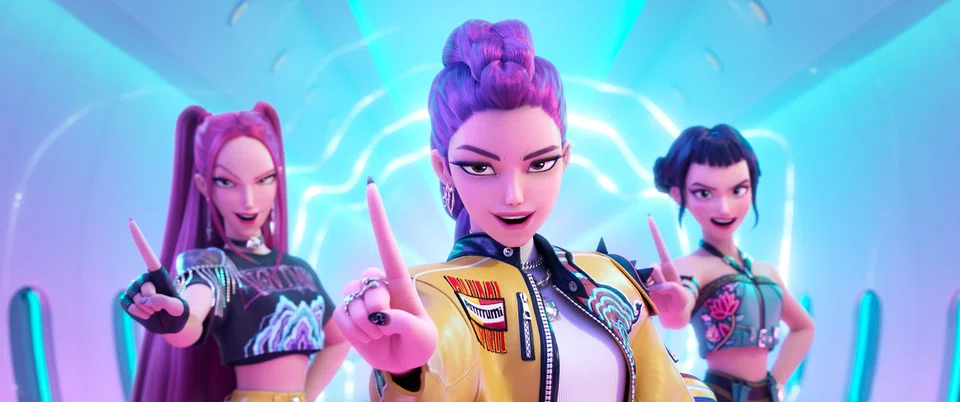
IT MUST have come as some surprise to Netflix when its KPop Demon Hunters Sing-Along was the weekend’s top moneymaker in movie theatres. As recently as April, Netflix co-chief executive Ted Sarandos insisted that film-makers creating movies “for movie theatres, for the communal experience” is “an outmoded idea”.
But the company defied its usual anti-theatrical stance to present the sing-along version of the film at those outmoded movie theatres, making it a limited event at 2,180 venues around the world.
Unlike conventional studios, the company does not report its box office earnings, but it claimed over 1,300 of those screenings sold out, and experts are estimating its US$18 million to US$20 million in ticket sales would put it on top for the weekend.
Keep in mind, this is the sing-along version of a movie viewers have been able to watch on Netflix at home, as often as they want, since June. But that audience chose to leave those precious living rooms and experience the picture in a theatrical setting.
So, what is a company to do when its performance in the marketplace disproves its CEO’s own assertions? Netflix decided to respond to the robust returns of the KPop Demon Hunters Sing-Along not by taking the public temperature and extending its theatrical run to a second weekend or beyond, but by promptly announcing its arrival on the service the very next day. (It’s there now.)
It’s as if the streamer’s executives saw how much they could make with a theatrical release, and had to put a stop to that immediately, cutting off their nose to spite their collective face. Tortured logic is necessary to frame this as a business decision rather than a philosophical one, because Netflix is demonstrably leaving money on the table.
Long-running battle
In fairness, the company’s long-running battle with theatrical exhibitors (indeed, with the entire philosophy of theatrical exhibition) may simply fall in line with the overall Silicon Valley philosophy to “move fast and break things”. The trouble is that some things are harder to break than others.
Netflix’s initial successes, first via mail-order DVD rental and then direct-to-consumer streaming video, were easier to navigate because the end of the video store was somewhat inevitable. It was a model that had only been around for so long, and was absolutely vulnerable to the kind of advances in ingenuity and technology that Netflix provided.
The theatrical experience is not invulnerable, but it’s much more durable. Movies are more than a century old, occupying a central place in the American cultural consciousness that the video store merely served to supplement.
“It’s as if the streamer’s executives saw how much they could make with a theatrical release, and had to put a stop to that immediately, cutting off their nose to spite their collective face.”
Watching movies at home can be a joyful experience, whether alone, with family or with friends; we can watch whatever we want, chat or scroll at will, and pause for bathroom and snack breaks.
But that’s an entirely separate sensation from the communal joy of sharing a movie with a room full of like-minded strangers, simultaneously entranced, shocked or amused (or, in this specific case, singing and dancing and vibing along).
The solitude of the home viewing experience will never replace that – nor should it. And that’s where Netflix ends up looking like a killjoy with KPop Demon Hunters Sing-Along.
Sticking to its exceedingly ill-advised guns
But the company has put itself in this avoidable predicament before, most notably in 2022, with Rian Johnson’s Knives Out sequel Glass Onion.
Despite the pleas of not only the director but also theatre chains desperate for post-Covid products, and despite the healthy box office numbers from its limited, one-week theatrical engagement, Netflix steadfastly refused to extend that film’s run.
A full theatrical release would not only have delighted moviegoers; it would also have helped the company recoup its staggering US$450 million investment in Johnson’s franchise.
Netflix is no doubt motivated by the fact that subscriptions are a major source of its revenue and wants to keep big-ticket items on the platform. But the company’s decision to stick to its exceedingly ill-advised guns is a strategy that, as time passes, may not only cost it money, but access to desired talent.
Stranger Things masterminds the Duffer Brothers left Netflix for Paramount Global, in a deal that was reportedly greatly informed by the streamer’s resistance to theatrical releases. Even a power player like Greta Gerwig was only able to get the company to agree to a two-week exclusivity window (and only in Imax theatres) for her forthcoming adaptations of The Chronicles of Narnia.
In Sarandos’ refusal to follow the demonstrable desires of audiences, which clearly value the experience of viewing films in both home and theatrical settings, he is ignoring his own advice.
“Netflix is a very consumer-focused company,” Sarandos also said in April. “We really do care that we deliver the programme to you in a way you want to watch it.”
But in ignoring how many of its consumers “want to watch” in a theatre, Netflix is looking increasingly like the stodgy, out-of-step video stores and cable companies it has essentially replaced. And if it’s not careful, it might turn out to be just as expendable. BLOOMBERG
The writer is a film critic, historian and author of Gandolfini: Jim, Tony, and the Life of a Legend
TRENDING NOW

Britain’s mansion tax shows the difficulty of targeting wealth

Once staunchly pro-China, Malaysian Chinese businesses are now distancing themselves from Beijing

The only common thing in S-E Asia is that we all eat rice: Cisco’s Asean president

Singapore data centre operator DayOne opts for US IPO at likely US$20 billion valuation

