
COMMENTARY

‘Never waste a crisis’: Putting Iran war price pressures to good use

If higher fuel and energy prices drive lasting behavioural change, Singapore will be better off in the long run

Summarise
Janice Heng
Published Wed, Apr 8, 2026 · 05:30 PM
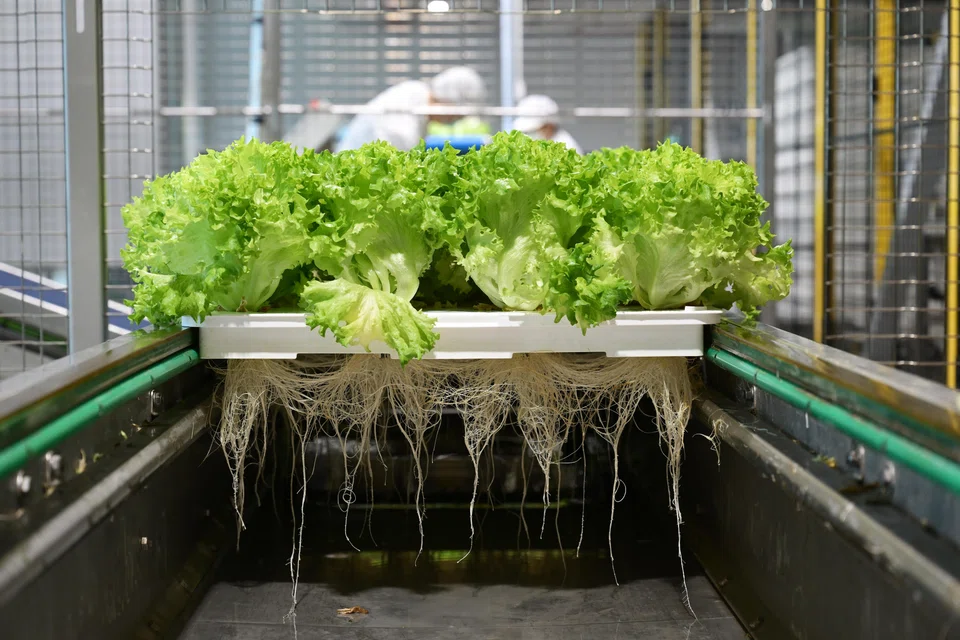
    • If the Iran war drives up food import prices, consumers should start looking closer to home.
    • If the Iran war drives up food import prices, consumers should start looking closer to home. PHOTO: BT FILE

    SINGAPORE is spending nearly S$1 billion to help households and businesses cope with the impact of the Iran War – but without compromising on its characteristic sensitivity to how prices change behaviour.

    If anything, allowing price pressures to bite might be better for the country in the long run.

    In Parliament on Tuesday (Apr 7), the government unveiled both new measures and earlier disbursement of previously-announced support, in a move that will require the country’s first supplementary budget since the Covid-19 pandemic.

    These include targeted support for platform workers and taxi or private-hire drivers; tiered increases to the Cost-of-Living Special Payment for households; and a higher corporate income tax rebate for businesses.

    Some measures taken in other countries, however, stayed off the table – and were raised by Members of Parliament instead. Several MPs asked about possible controls on petrol prices, or reducing duties on petrol and diesel.

    The government does not want to do that, replied Acting Minister for Transport Jeffrey Siow.

    If anything, rising fuel prices “should be an incentive for people to drive less and maybe, hopefully, to use public transport more”, he added.

    Similarly, when asked about helping smaller businesses with the cost of utilities, Siow said: “We don’t want to subsidise them ... too much on energy because that will blunt the price signals and slow down the process of encouraging these companies to continue to be energy-efficient, at a stage where I think it is very important for us to reinforce this message.”

    He added: “We need to help companies, in fact, move through this transition phase quickly, to be more energy-efficient if they can.”

    Paying the price

    The pain felt by households and businesses is real. But if this pain encourages behavioural changes that are better in the long run, perhaps it does not need to be mitigated too broadly.

    If anything, one might argue that energy has been priced “too cheaply” thus far, considering the negative externalities of its consumption.

    Firstly, both electricity generation and road transport result in pollution and carbon emissions. Singapore is slowly pricing in these negative externalities by offering incentives for cleaner vehicles and carbon taxes, for example.

    From an environmental perspective, however, it would not hurt to curb consumption further.

    Then there is the broader question of scarcity. The depletion of the world’s fossil fuels takes place over such a long timescale that it is easy – some might even say rational – for today’s consumers to ignore it.

    But where moral motivations fail, financial ones may yet succeed. Higher energy prices today are a mere preview of what future generations will face if the transition towards renewable energy falters.

    Importantly, support is still provided where most needed.

    Bishan-Toa Payoh GRC MP Elysa Chen noted that shift workers or caregivers may have little flexibility to change travel patterns when costs rise. She asked what could be done to ensure affordability for those “with no realistic ability to substitute or reduce usage” of private transport.

    To this, Siow replied that lower-income families do receive support for their transport needs, and large families can use Large Family LifeSG Credits for private-hire transport.

    “Never waste a good crisis”

    Even as Singapore aims to cushion its population from the harshest effects of the war, some pressures of the global situation can be turned into opportunities.

    Asked whether Singapore should consider power rationing, Minister-in-charge of Energy and Science and Technology Tan See Leng said the government is “contemplating ... an exercise to test out the readiness when it comes to power rationing”.

    This does not come from any pressing need, he stressed. The country’s situation is stable, and the government does not want to cause panic; rather, the exercise could be part of observing Total Defence, for instance.

    The fact that this can be contemplated as a mere exercise – rather than an urgent response – is a testament to Singapore’s position of strength, earned not through natural resources, but careful planning.

    Exposing the population to such rationing, however, might be a good reminder of how current comforts cannot be taken for granted.

    On the food security front, there are opportunities to change both mindsets and markets.

    Senior Minister of State of Sustainability and the Environment Zaqy Mohamad noted that Singapore’s food resilience is built on four pillars: diversification, global partnerships, stockpiling and local production.

    Together, these mean that Singapore will be able to meet its food needs even amid global supply disruptions.

    But Zaqy added: “However, we also have to recognise that in a crisis, we will have to prioritise our efforts. It will not always be possible to have everyone’s favourite food or favourite brand in every disruption, but what we can do is to provide the assurance of food supply where it matters most.”

    Temperate-climate fruit and air-flown fish, for instance, used to be relative luxuries. The efficiency of global supply chains may have democratised access to such foods, but their higher prices will be a reminder of the miles that such items cross – and the corresponding carbon footprint created – to get them to Singapore.

    Ideally, import price pressures should prompt consumers to look closer to home. Zaqy said the government wants to support local farmers to not just weather the crisis, but to grow their market share.

    This will benefit the farmers, of course, but also strengthen Singapore’s food resilience in the long term. As Zaqy himself concluded: “As they say, never waste a good crisis.”



