

New AI models risk economic amnesia
Will machines that think also forget?
ARTIFICIAL intelligence (AI) is now irreversibly out of Pandora’s box, as Martin Wolf of the Financial Times observed, and we must learn to live with machines that can think. The real concern, however, is not just the intelligence of these machines but what they might choose to forget.
For centuries, economic history has served as a foundation for policymakers, investors and scholars to learn about financial cycles, crises and macroeconomic transformations. From the South Sea Bubble of 1720 to France’s Mississippi Company collapse and the Panic of 1873, history has repeatedly warned of the dangers of speculation, leverage and financial excess.
Contemporary challenges, from inflationary spirals to financial bubbles, have even more recent historical parallels from the Great Depression to the 2008 financial crisis, which reaffirm how history provides insight. Even our understanding of the global South’s economic trajectory today is incomplete without acknowledging the structural forces that shaped it over centuries.
As AI takes on a greater role in economic analysis and policy, an unsettling question arises: will its ability to recognise systemic risks with historical precedents weaken with a lack of immediate algorithmic reference? If AI models prioritise recent information, they may fail to detect the cyclical patterns that have long defined economic history.
The risk is not that AI will erase history, but that it will make historical knowledge seem less relevant and ultimately less studied. A world that sidelines history in favour of algorithmic optimisation risks repeating past mistakes under the illusion that AI-driven models are inherently forward-looking and rational.
Forgetting the past
Economic thought has never evolved in isolation. The Wealth of Nations by Adam Smith was shaped by the emergence of industrial capitalism, Keynesian economics was a response to the Great Depression and Milton Friedman’s monetarist theories were a reaction to the inflationary crises of the 1970s. More recently, post-2008 financial regulations, including stress testing, capital buffers and macroprudential measures, were crafted with past financial crises in mind.
Yet as central banks, financial institutions and regulatory bodies turn to AI models for predictive accuracy, historical analysis risks becoming secondary. AI excels at identifying correlations within a defined dataset, but economic and financial cycles do not always conform to short-term trends or linear progressions. For instance, Mexico’s vulnerability to short-term external debt before the 1994 peso crisis was crucially underestimated, as its immediate economic history had been one of high investor confidence. The failure of AI models to account for these deeper historical cycles could leave policymakers unprepared for financial stress that follows long-established, often forgotten patterns.
Perils of financial amnesia
Financial markets, more than any other domain, have long suffered from a collective amnesia, repeatedly underestimating risks with clear historical precedents. AI-driven quantitative trading models, typically trained on just 10 to 20 years of data, could worsen this tendency by reinforcing short-termism. If AI-based trading strategies dominate decision-making, will human investors still be able to recognise these warning signs?
The 2008 financial crisis is a prime example: risk models failed to foresee a nationwide housing market collapse, largely because such an event had not occurred in modern financial history. If AI models trained primarily on post-2010 data reinforce similar blind spots, markets could once again be lulled into a false sense of security. The risk is not simply that financial crises will recur – that is inevitable – but that broader preparedness for systemic crises will erode as day-to-day algorithmic prediction becomes more precise.
Dangers of algorithmic curation
AI is not only transforming economic analysis, it is also shaping access to historical knowledge entirely. AI-powered search engines, large language models and financial news aggregators increasingly determine which historical narratives are visible and which fade from view. This algorithmic curation of history is not neutral; it reflects biases embedded in training data and prioritises dominant sources over others. Over time, this could narrow economic discourse, reinforcing widely accepted but potentially flawed interpretations, while marginalising alternative viewpoints.
This is particularly concerning in cases where economic history is complex and contested. There is continuous debate over whether the Great Depression was primarily a market failure or a policy failure, whether the collapse of the Bretton Woods system in the 1970s was inevitable or the result of avoidable policy missteps, and whether the 2008 financial crisis stemmed more from excessive leverage or from decades of financial deregulation. There are various interpretations of colonialism’s economic consequences and the extent to which today’s economic development problems go back to taxation and trade policies of those times.
These are not simple questions, nor do they have singular, prepackaged answers. Yet if AI-driven knowledge systems prioritise specific interpretations over others, they risk flattening historical complexity into deterministic narratives, narrowing the scope of economic debate.
AI’s impact on policymaking
The most immediate danger of AI-driven historical amnesia lies in economic policymaking. Central banks and financial regulators have traditionally studied past crises to inform present decisions. Even post-pandemic monetary policies reflected a deep reading of past inflationary episodes. As AI-driven models take on a larger role in policy analysis, we will see historical case studies being supplanted by algorithmic forecasting and real-time risk modelling. While AI can improve short-term predictive accuracy, it remains unclear whether it will detect vulnerabilities rooted in past financial crises.
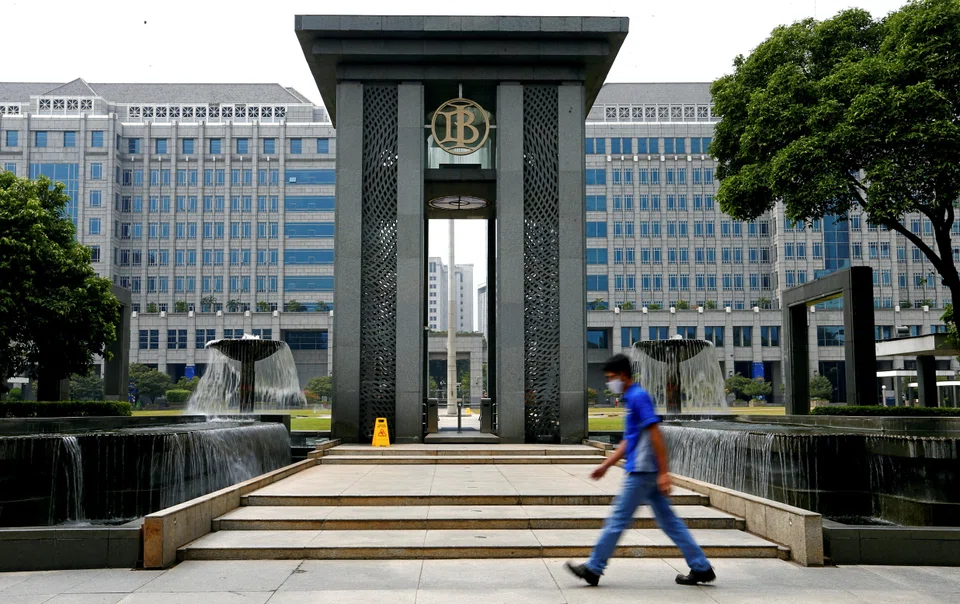
OMFIF’s Future of payments report notes that institutions such as Bank Indonesia and Banque de France are deploying AI to enhance predictive accuracy. Would AI models trained primarily on post-2010 data have flagged the structural weaknesses that led to the Asian financial crisis, the 1994 Mexican peso crisis or the 2008 collapse? The danger is not simply a failure to predict the next financial shock, but a weakening of institutional memory that makes crisis response less effective.
Despite these risks, AI could serve as a tool for historical preservation rather than amnesia, and, if used properly, could enhance economic history rather than erode it. The technology has the potential to digitalise and reconstruct lost economic records, making archives more accessible as well as help identify long-term economic patterns that can span multiple centuries and improve our understanding of financial cycles. AI has the potential to democratise access to historical economic knowledge, ensuring that insights once buried in academic journals or central bank archives are available to a broader audience.
The challenge, then, is not merely to ensure AI’s accuracy in short-term forecasting, but to guard against the erosion of historical context in its analysis. The machines are here, but whether they deepen our understanding of economic history or contribute to its gradual neglect remains a choice still within human hands.
The writer is a visiting professor at the National Council of Applied Economic Research, senior non-resident adviser at the Bank of England, senior adviser of the International Forum for Sovereign Wealth Funds, and distinguished fellow at the Observer Research Foundation America. He previously worked at the Bank for International Settlements, the International Monetary Fund and the Reserve Bank of India.
TRENDING NOW

Once staunchly pro-China, Malaysian Chinese businesses are now distancing themselves from Beijing

Britain’s mansion tax shows the difficulty of targeting wealth

Three hats, one goal: How Ng Kian Swan runs sustainability at NUHS

COE review: The gap between luxury and mass-market cars isn’t the only one worth bridging

