

New dawn for S-Reits as Fed rate cuts get underway
Investors should not lose sight of the underlying fundamentals of various S-Reits, and the risk of more fundraising and acquisitions

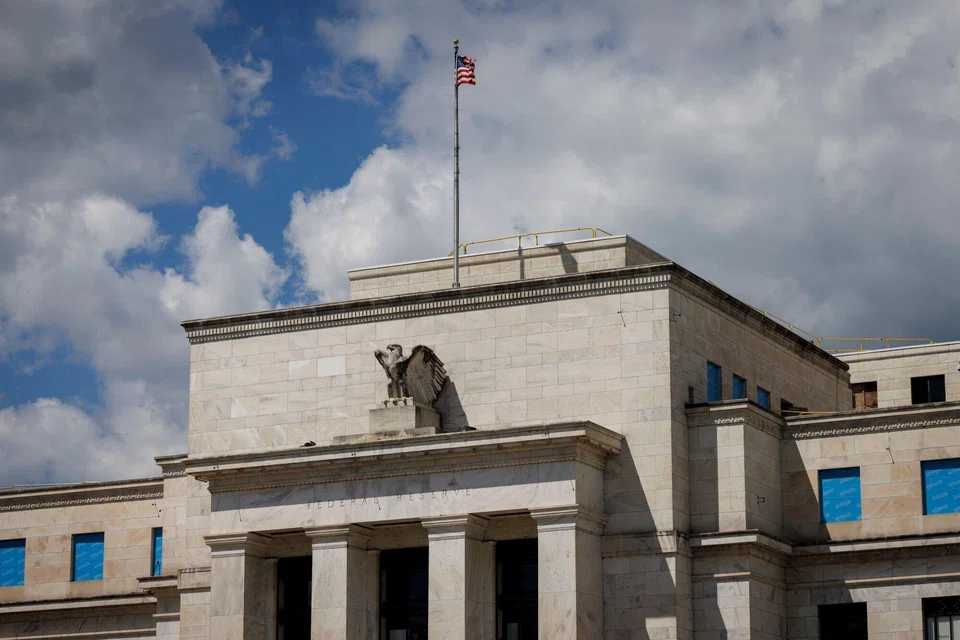
JEROME Powell left almost no doubt on Friday (Aug 23) that the Federal Open Market Committee will finally deliver its first rate cut next month.
“The time has come for policy to adjust,” he said, during a speech at the Kansas City Fed’s annual conference in Jackson Hole.
The Fed chairman added that the timing and pace of any rate cuts would hinge on incoming data, and that he was now more confident US inflation was on a sustainable path to the Fed’s target of 2 per cent.
Markets across Asia are likely to react positively to Powell’s comments this week. For investors in Singapore, this could be the moment to begin increasing exposure to some of the larger Singapore-listed real estate investment trusts (S-Reits).
While Fed rate cuts have been widely anticipated since the end of last year, this column has expressed ambivalence about the outlook for S-Reits.
This was partly because I feared elevated interest rates would not get US inflation under control without also adversely affecting US economic growth and global market confidence.
Indeed, markets across the world suffered an unnerving rout earlier this month following signs of weakness in the US labour market.
It also seemed unlikely to me that any initial loosening of monetary policy by the Fed and other major central banks would immediately translate to lower funding costs and higher distributions per unit (DPUs) for many S-Reits.
It now seems that some of my concerns were unwarranted. In particular, it appears that inflation has been sufficiently tamed for global central banks to refocus on supporting economic growth.
Minutes of the Fed’s July meeting, which were released last week, showed “the vast majority” of participants observed that it would be appropriate to ease policy at the next meeting on Sep 17 and 18.
The minutes also showed that several meeting participants observed “the recent progress on inflation and increases in the unemployment rate had provided a plausible case for reducing the target range (of the federal funds rate by) 25 basis points at (the July meeting), or that they could have supported such a decision”.
Other central banks in the West that are already loosening monetary policy include the European Central Bank, the Swiss National Bank and the Bank of England.
If the Fed does cut rates as expected next month, it would take pressure off Asian currencies and facilitate a broader loosening of monetary policy in this region that would likely support economic growth and asset prices.
Interest rate pressure
S-Reits have been weighed down by soaring debt costs and concerns about deflating asset valuations since inflation and interest rates took off in 2022.
Since end-2021, the iEdge S-Reit Index has chalked up a negative total return of 8.2 per cent. The Straits Times Index (STI) delivered a positive total return of 24.4 per cent during the same period.
Since the beginning of this year – when it was already clear the Fed would not raise rates any further – the S-Reit index recorded a negative total return of 2.2 per cent. The STI achieved a positive total return of more than 9.6 per cent.
There has been a wide variation of performance among the components of the S-Reit index, of course.
The best performer since end-2021 was Far East Hospitality Trust (FEHT), with a total positive return of more than 26.9 per cent.
The worst performer was Manulife US Reit, with a negative total return of nearly 86.5 per cent.
Still, performance has not been great even among the seven Reits that are components of the STI. The best performer among these relatively large and widely followed Reits since end-2021 was Frasers Centrepoint Trust (FCT), with a total return of 17.3 per cent.
CapitaLand Integrated Commercial Trust was not far behind, with a total return of 16.9 per cent.
Only two other Reits within the STI were in positive territory for the period: CapitaLand Ascendas Reit (Clar), with a total return of 13.5 per cent; and Mapletree Industrial Trust, with a total return of 2.9 per cent.
Lagged effect
As interest rates begin falling, market sentiment towards S-Reits is likely to turn more positive.
Investors should tread carefully, however, as it could take several months for S-Reits to begin reporting higher distributable income, and paying out bigger DPUs, on the back of lower debt costs.
Given the very rapid and steep rise in interest rates since 2022, S-Reits are likely to still suffer increases in their overall debt costs as they refinance their maturing loans in the months ahead.
DBS Group Research said in a report last week that S-Reits might not benefit from a reversal in overall financing costs until 2026, based on the assumption of a 100-basis-point reduction in benchmark rates in 2025.
“There will be a lagged effect on overall financing costs, and significant savings will likely become more evident in the latter part of 2026,” the research house said.
Falling interest rates will naturally have a more immediate positive impact on S-Reits with a relatively small proportion of their loans tied to fixed rates. Among them, DBS said, are CDL Hospitality Trusts, FEHT, Suntec Reit, OUE Reit and Lendlease Global Commercial Reit (Lendlease Reit).
Focus on fundamentals
While easing interest rates could provide a tailwind for S-Reits over the next couple of years, investors should not lose sight of their underlying fundamentals.
DBS said in its report that it was now most positive on the outlook for Reits in the retail property space, followed by those focused on industrial properties and offices.
It said retail properties are seeing stronger-than-expected rental reversions, and there is little new supply coming through.
On the other hand, DBS said the outlook for hotels is marred by “a burst” of new supply as well as “budget wariness” among tourists.
DBS’s top picks among retail property Reits are FCT, Lendlease Reit and Mapletree Pan Asia Commercial Trust. The research house also favours Clar and Frasers Logistics and Commercial Trust among industrial property Reits; and Keppel Reit among office property Reits.
Among the hospitality Reits, DBS said it sees the most value in CapitaLand Ascott Trust, which is poised to reap the benefits of a number of asset enhancement initiatives and acquisitions.
As interest rates gradually fall and market sentiment turns more positive on S-Reits, investors should perhaps also be prepared for a surge in fundraising as the managers and sponsor groups of these structures prepare them for more acquisitions.
This is, after all, the primary purpose of the S-Reits.






