New economic ‘compass’ helps EU steer competitiveness challenges
Summarise
    • European Commission President Ursula von der Leyen has dubbed the “competitiveness compass” as Europe’s economic “North Star” for the next five years.
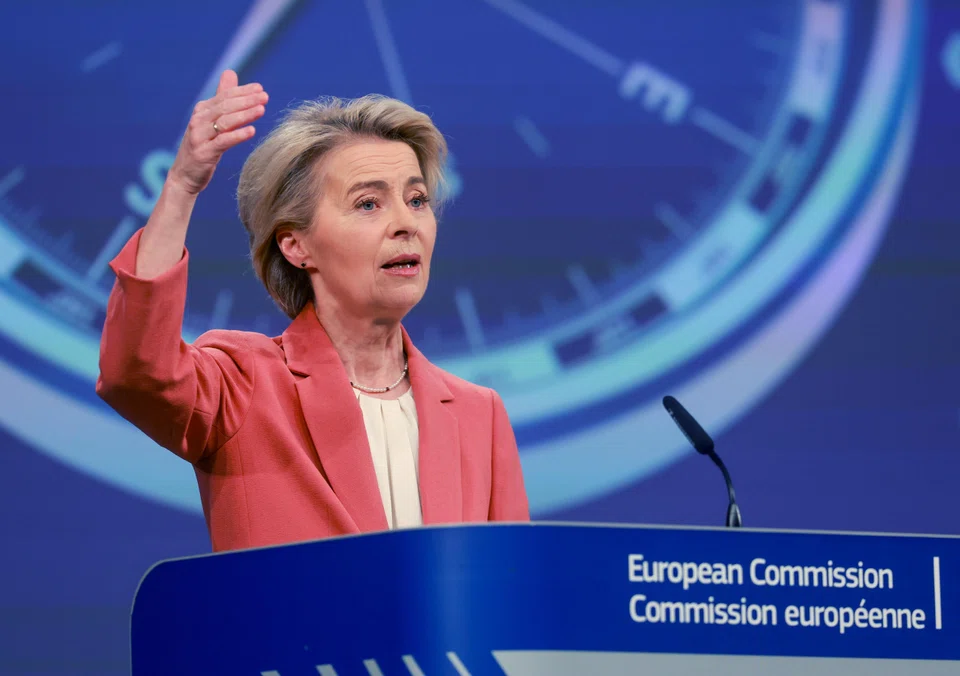
    • European Commission President Ursula von der Leyen has dubbed the “competitiveness compass” as Europe’s economic “North Star” for the next five years. PHOTO: EPA-EFE
    Published Tue, Feb 4, 2025 · 05:00 AM

    THE European Union “competitiveness compass”, launched last week, might be dismissed as a political gimmick. However, European Commission President Ursula von der Leyen has dubbed the tool as Europe’s economic “North Star” not just for her new team’s first 100 days in office, but also for the next five years.

    The reason is the growing recognition that the EU faces an increasing competitiveness challenge vis-a-vis other key world powers, especially the US, with growing pressure to be perceived to put deregulation before decarbonisation in a more business-friendly Brussels.

    Indeed, competitiveness is not only the No 1 economic problem facing the bloc, but may even be an existential threat, as former European Central Bank president Mario Draghi highlighted last year in his landmark report.

    So, the new compass is a strategy to enhance the bloc’s economic dynamism, which aims to streamline regulations, foster innovation and prioritise European enterprises in public procurement. It outlines key legislative initiatives, including the announcement of the Clean Industrial Deal which will be unveiled on Feb 26.

    The compass therefore provides a clearer view of the post-Green Deal regulatory environment from 2025 to 2029. The strategy’s measures, from regulatory simplification to industrial policy shifts, will directly impact investment conditions, supply chain dynamics and market access.

    Success with this agenda will require significant further investment, which will require greater collective political resolve from European national leaders, and very determined leadership from von der Leyen and her Commission team in Brussels.

    The compass is structured around three pillars: closing Europe’s innovation gap by advancing critical technologies and disseminating innovation across the economy; aligning decarbonisation with industrial competitiveness by ensuring access to clean, affordable energy, providing incentives for sustainable production and implementing circular economy strategies; and bolstering security by reducing dependencies, ensuring equitable competition and fortifying economic alliances.

    The new framework accentuates key enablers of this agenda. These include simplifying regulations, enhancing internal-EU coordination to deepen the single market, taking steps towards financial integration through a Savings and Investment Union, and promoting a skilled workforce while maintaining social cohesion and equity.

    The three pillars underpin the EU’s broader ambition to enhance competitiveness. This while navigating the twin challenges of sustainability and geopolitical resilience.

    In terms of innovation, the strategy acknowledges that the EU has lagged behind the US and China in bringing patented solutions to market, hindered by key barriers and insufficient support. To address this, the European Investment Bank (EIB) is spearheading the TechEU programme. This will fund advancements in artificial intelligence, clean technology, critical raw materials, semiconductors, energy storage, quantum computing and neurotechnology.

    To advance delivery of a decarbonised economy by 2050, the Commission will channel its efforts through the Clean Industrial Deal initiative. This will position the EU as a globally competitive hub for manufacturing and energy-intensive industries, while simultaneously fostering the development and deployment of clean technologies.

    However, high energy costs remain a persistent challenge, undermining household consumption and industrial competitiveness. Addressing this issue, the Commission plans to soon introduce an Affordable Energy Action Plan which will include measures such as deeper market integration, mechanisms to de-risk long-term power contracts, and other interventions aimed at stabilising energy prices.

    This plan will be accompanied by a road map for phasing out Russian fossil fuel imports, a politically popular objective but one with practical challenges. A recent report revealed that Germany’s national energy company purchased more than five times as much Russian liquified natural gas last year, despite the various wartime restrictions in place. Meanwhile, the decarbonisation of energy-intensive sectors such as steel, metals, chemicals and cement will be guided by sector-specific action plans to complement the Clean Industrial Deal.

    On the Carbon Border Adjustment Mechanism (CBAM), the compass reiterates the EU’s commitment to ensuring a level playing field for Europe’s energy-intensive industries.

    This includes a revision of CBAM, scheduled for 2025, with a possible extension of scope to further sectors and downstream products as well as potential measures to address impacts on exports of relevant goods. For the chemical industry, the revision of Reach (Registration, Evaluation, Authorisation and Restriction of Chemicals) regulation is highlighted as an opportunity to reduce burdens by focusing on the most important hazards, therefore increasing the sector’s competitiveness.

    As for economic security, the Commission aims to reduce dependencies and increase security by enhancing an extensive network of trade agreements. To diversify and strengthen supply chains further, the EU will establish Clean Trade and Investment Partnerships, securing access to essential resources.

    Domestically, a review of public procurement rules is underway to introduce a European preference in critical sectors and technologies. This would allow governments to favour EU-based companies when awarding contracts, thereby safeguarding critical sectors from foreign competition, particularly from China.

    A cornerstone of this strategy is the alleviation of administrative burdens, long decried by businesses as obstacles to efficiency and growth. The Commission heralds an “unprecedented simplification effort”, aiming to cultivate a more agile business environment.

    Central to this is the forthcoming “Simplification Omnibus” proposal which targets the streamlining of sustainability due diligence and taxonomy regulations, including the Corporate Sustainability Reporting Directive, the Corporate Sustainability Due Diligence Directive and the EU taxonomy.

    These frameworks mandate disclosures on environmental impacts and supply chain risks, encompassing aspects from emissions and water usage to human rights compliance.

    Critics, however, caution that this new simplification push could signal the unravelling of Green Deal legislation. The right-of-centre European People’s Party, having recently reiterated calls to pause the implementation of these regulations, may seize this opportunity to try and advance its objectives. Consequently, the political battle over these rules will intensify.

    Some stakeholders interpret simplification as meaning essential, limited regulatory relief, while others perceive it as having much bigger, underlying intent as part of broader deregulation.

    In terms of success, the degree to which the compass will deliver economic revitalisation will rest, in significant part, on whether substantial new investment is found. For instance, Draghi’s report highlights the need for around 800 billion euros (S$1.1 trillion) annually to enhance competitiveness.

    Yet, proposals for such funding, especially through joint EU borrowing, face resistance from wealthier member states, including Germany. The European Commission’s plan to repurpose unspent regional funds and engage institutions like the EIB is a step forward, but may fall short of the necessary scale.

    So, the compass risks becoming a well-intentioned initiative that lacks the resources to deliver its ambition, without further financial backing. Success with this agenda will therefore require not just very determined leadership from von der Leyen and her Commission, but also greater collective political resolve from European national leaders.

    The writer is an associate at LSE IDEAS at the London School of Economics