New fiscal era has challenges for Germany, not only opportunities
There is potential for significant political backlash for EU’s largest economy, especially if inflation is reignited
 Add BT as a preferred source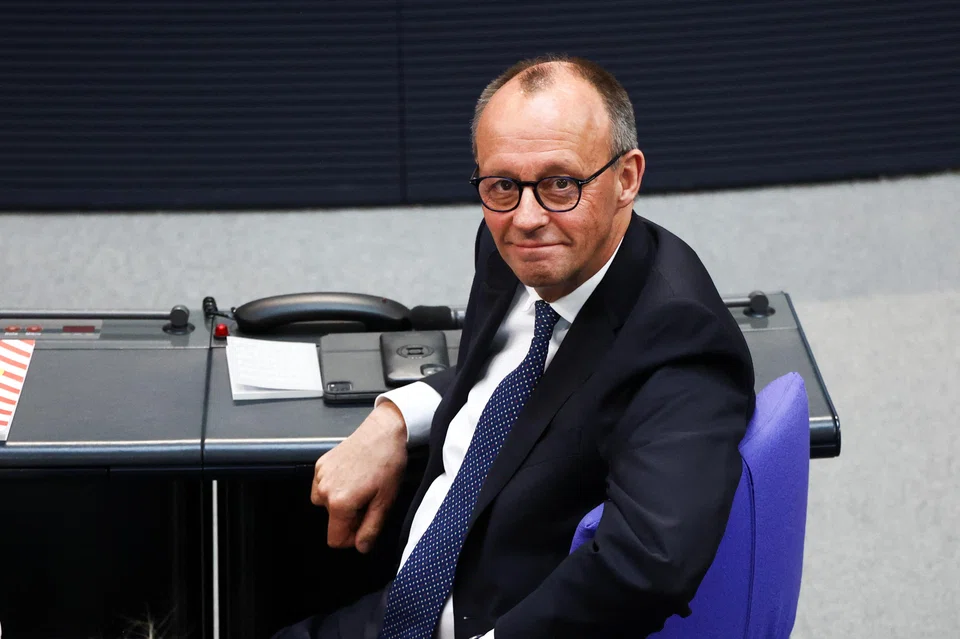
DeeperDive is a beta AI feature. Refer to full articles for the facts.
GERMANY has long been perceived as tied to fiscal orthodoxy that casts deficit spending in a negative light. However, the EU’s largest economy may now be on the verge of its biggest change potentially since reunification in 1990 which creates both big opportunities, but also challenges for probable incoming chancellor Friedrich Merz.
These risks and opportunities were discussed by German legislators, who reconvened on Tuesday (March 25) for the first formal day of the new Parliament. This after last week’s vote to approve a historic spending package on defence and infrastructure of up to one trillion euros (S$1.4 trillion) in the next decade, diluting the 2009 constitutional balanced budget amendment (the so-called “debt brake”).
The huge political win is all the more noteworthy for Merz given that, while his Christian Democratic Union (CDU)/Christian Social Union (CSU) emerged as the single largest party in last month’s election, it was the bloc’s second worst performance in the post-war era, winning less than 30 per cent of the vote. To put the performance in context, it is significantly less than the 42 per cent the bloc secured in 2013 under Angela Merkel’s leadership.
Decoding Asia newsletter: your guide to navigating Asia in a new global order. Sign up here to get Decoding Asia newsletter. Delivered to your inbox. Free.
Copyright SPH Media. All rights reserved.