

New initiatives for a ‘minus-two’ world
The mindset to take initiative and forge new paths with rules for cooperation is part of Singapore’s DNA
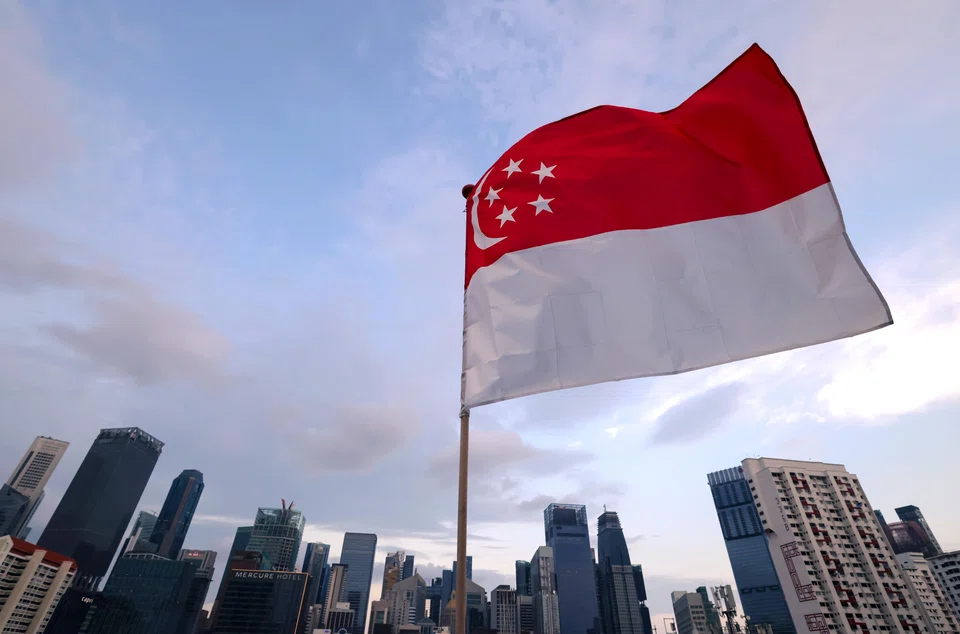
IN TODAY’S turbulent geopolitical landscape, much attention is focused on the US, and rightly so. By many measures, America remains the leading power with the capacity to change the global order, for better or worse. This was evident in President Donald Trump’s unilateral imposition of tariffs and most recent intervention in Venezuela.
China is the rising giant. Many court Chinese trade, investment and tourists, and vie for projects under the Belt and Road Initiative. As seen in the parade marking the 80th anniversary of the end of World War II, when Beijing calls, many leaders turn up.
Yet, in the current dynamics, there are more than just the two great powers.
In response to the shifting geopolitics and Sino-American rivalry, what may be called “minus-two” strategies are emerging. There is a flurry of initiatives by countries – not only the middle powers but also smaller states, such as Singapore.
Messy and incomplete
Minus-two strategies aim to find ways to work together and prosper when the great powers remain uncooperative.
The logic is both economic and political.
The US accounts for around a quarter of the world economy, while China accounts for under a fifth. Combined, they represent some 40 to 45 per cent.
Politically, a minus-two strategy resists a binary choice between the great powers. The emphasis is on multipolarity – recognising the wider distribution of power – and the agency of even small states.
The hope is to shape rules by bringing more states to cooperate multilaterally, especially in newer areas such as the digital economy, governance of artificial intelligence (AI), and climate action.

That will not come easy. Power has its own logic. A minus-two world with diffused leadership can be messy and incomplete.
Yet, given the Sino-American intransigence and the accepted wisdom that the existing world order is fragmenting, it is necessary to try.
In this context, efforts by Singapore over the last year bear notice. Each on its own may seem a mere continuation or a relatively small step. But taken together, they signal strategies for a minus-two world.
Old friends, upgrading ties
Consider Australia, one of Singapore’s oldest friends. The strong and close relationship has not only been maintained, but also upgraded. New fields for cooperation – in green energy, decarbonisation and digitalisation – will add to existing foundations in trade and security.
Singapore also has long-standing ties with India, another middle power. When Singapore Prime Minister Lawrence Wong met his Indian counterpart Narendra Modi, the latter’s concern over the tariffs imposed by Trump boosted the political will to grow the partnership. In addition to trade and investment, new areas such as skills training, healthcare and connectivity by air and sea are promising.
With South Korea, formal ties are long-standing, but substance is growing. There have been positive first meetings between PM Wong and President Lee Jae-myung – both relatively new in office.
The countries have upgraded their ties to a strategic partnership. There is also considerable room to grow cooperation in areas such as the digital and AI economies, and for South Korean companies to see Singapore as the main hub for Asean. One can imagine the partnership growing to the level that Singapore enjoys with Japan.
Each of these ties has its own history, dynamics and rationale. But the visible effort to upgrade and accelerate partnerships is boosted by geopolitical uncertainty.
Like Singapore, each of these countries – Australia, India, South Korea – wants to maintain good ties with both the US and China. But all are preparing for a minus-two world.
New initiatives and path-finding
Singapore is also re-emphasising work within Asean.
Diplomacy and broader trade cooperation with the group as a whole continue, but the Johor-Singapore Special Economic Zone (JS-SEZ) warrants attention. It promises integration that is deeper and more routine for many more businesses, including small and medium-sized enterprises.
If the JS-SEZ succeeds, it could serve as an example for other economic integration efforts. This could be with Vietnam, where there are already many Vietnam-Singapore industrial parks. Another opportunity is to work with Indonesia to deepen cooperation with islands closest to Singapore for industrial development and green energy.
Beyond the region, efforts are also visible on new frontiers. Consider Mexico and Ethiopia, where new embassies will be established. These are significant, given that the city-state has limited diplomatic presence across Latin America and Africa.
Mexico is a large economy and sizeable market in its own right, as well as a major trade and supply-chain partner of the US. As for Ethiopia, its significance is magnified because it hosts the headquarters of the African Union. In deciding to open the embassy in Addis Ababa, PM Wong expressed the hope of helping bridge Asean and Africa.
Two new and broader initiatives by Singapore also deserve mention.
One is the Green Economy Partnership Agreement with Chile and New Zealand. Given the pushback by the US and others against climate efforts, this can show that the economy can grow in tandem with environmental concerns.
The Future of Investment and Trade Partnership is also significant in bringing Singapore together with 15 other economies. While not a formal trade treaty, this gathering of smaller states will support and develop rules for the global economy.
Since the preferred option to reform the World Trade Organization is stymied by Sino-American rivalry, this platform can hopefully assist in a minus-two world.
Reaching out broadly to the world is part of Singapore’s DNA. So too is the mindset to take initiative and forge new paths with rules for cooperation. These initiatives aim to grow diplomatic and economic space for the Republic amid geopolitical turmoil, and enable the country to reach out to new markets.
These new efforts do not mean that Singapore will not work with the US and with China when opportunities arise. Nor should we give up hope for more stable Sino-American ties. But building ties with others both bilaterally and towards a minus-two world will be increasingly necessary, and efforts must step up.
Some remain sceptical. Compared with the ties with the US and China, these efforts currently lack scale and clear reward. Yet, like seeds and saplings, they are what must be planted and tended for future growth.
The thunder and storm of geopolitics will provide testing conditions, and not all these initiatives will flourish or even survive. But making the effort and rising to the challenge – that’s another aspect of Singapore’s DNA that should give us confidence.
The writer is chairman of the Singapore Institute of International Affairs and his newest book is Island in the World: Singapore’s Geopolitical DNA
Decoding Asia newsletter: your guide to navigating Asia in a new global order. Sign up here to get Decoding Asia newsletter. Delivered to your inbox. Free.
Share with us your feedback on BT's products and services






