A new logic of China-Asean economic integration emerges from the Middle East conflict
The global economy is moving from one driven by the gains of globalisation to one shaped by the pricing of security risks

THE escalating conflict in the Middle East is no longer a localised crisis; it has become a critical force reshaping the structure of the global economy. Unlike past energy shocks, its impact goes beyond supply disruptions or price volatility.
At its core is the politicisation of energy, finance and supply chain mechanisms. As the Strait of Hormuz – one of the world’s most vital energy chokepoints – becomes embedded in a geopolitical contest, energy prices are no longer determined purely by market forces, but increasingly anchored by security risks.
The global economy is thus entering a new phase dominated by geopolitics. This transformation carries three profound implications.
The logic of global supply chains is shifting from efficiency-first to security-first. Key resources, shipping routes and technological nodes are being redefined as strategic assets, while regionalisation and diversification become dominant trends.
Next, the weaponisation of energy is eroding the foundations of the dollar-based system, accelerating the emergence of more diversified currency settlement arrangements and signalling a gradual shift from a unipolar to a multipolar financial structure.
Finally, policy tensions between inflation control and growth have intensified, forcing central banks into more complex trade-offs, with global capital flows and growth expectations likely to face sustained constraints.
In essence, the global economy is moving from one driven by the gains of globalisation to one shaped by the pricing of security risks.
China: from ‘world’s factory’ to ‘system stabiliser’
Against this backdrop, China’s economic strategy is undergoing a significant shift.
High-quality development is no longer defined solely by efficiency and innovation; it is increasingly conditioned by geopolitical constraints, which are shaping a new development paradigm – one bound by security considerations and centred on technological and industrial capabilities.
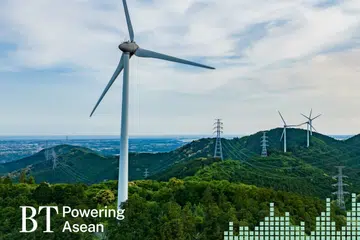
Pressures on energy security are likely to accelerate China’s green transition, reinforcing its global leadership in sectors such as solar, wind, and electric vehicles.
At the same time, growing uncertainty in the international financial system presents a strategic opening for the internationalisation of the renminbi. Through the restructuring of energy trade and regional settlement systems, China is well positioned to expand the use of its currency in cross-border transactions.
More importantly, China’s comprehensive industrial system and supply capacity are enabling it to evolve from the “world’s factory” into a “system stabiliser”.
In times of heightened external shocks, the ability to provide stable and reliable supply becomes a scarce global public good. This suggests that China’s role in the ongoing global reconfiguration is not merely that of a participant, but increasingly that of a provider of stability and, potentially, of rules.
Focusing more closely on China-Asean relations, the current crisis may drive a qualitative leap in their economic interaction: from a complementary model based on cost-driven division of labour toward a more symbiotic system orientated around economic security and resilience.
Rising energy prices and heightened uncertainties in transportation are exposing Asean economies to more immediate inflationary pressures and supply chain risks, prompting a stronger emphasis on regional stability and coordinated capacity.
Deepening China-Asean cooperation
In this context, China-Asean cooperation is likely to deepen along four structural dimensions.
First, energy cooperation will move from one-way supply towards system-building, including regional power grids, renewable energy investment, and technology transfer.
Second, monetary cooperation will evolve from a peripheral tool into a core mechanism, with the renminbi playing a growing role in trade and investment.
Third, industrial linkages will shift from relocation to integration, forming more tightly embedded regional production networks.
Fourth, infrastructure and logistics systems will become increasingly integrated, enhancing the region’s capacity to withstand external shocks.
This trajectory suggests that China and Asean are moving beyond a conventional free trade arrangement towards what may be described as a “shock-resistant community”.
The driving force behind this integration is no longer traditional comparative advantage, but a rational response to economic survival under conditions of systemic uncertainty. Under extreme conditions, the ability of the region to sustain basic production and supply cycles internally is emerging as a central concern.
Notably, this restructuring will also elevate Asean’s strategic significance. As global supply chains become more regionalised, Asean is set to evolve from a manufacturing node into a key hub linking China with the Global South.
The outward expansion of Chinese manufacturing and capital will accelerate Asean’s industrialisation while deepening mutual dependence within the value chain. This interdependence is not one-sided; rather, it reflects a structural alignment based on risk-sharing and complementary strengths.
Singapore’s role
Within this emerging regional architecture, Singapore occupies a particularly pivotal position.
In the short term, volatility in energy and shipping markets may disrupt its traditional roles in port and transhipment activities. However, over the medium to long term, its hub status is unlikely to diminish; instead, it will undergo functional upgrading.
Singapore is transitioning from an efficiency-driven transhipment hub to a risk-management hub, where its core value lies not merely in logistics, but in supply chain coordination, financial intermediation, and risk pricing.
In the financial domain, Singapore is well positioned to serve as a critical interface between the renminbi and the US dollar systems.
As the use of the renminbi expands within South-east Asia, Singapore’s strong legal framework and sophisticated financial markets enable it to function as a “dual-currency stabiliser”, facilitating renminbi transactions while maintaining deep connectivity with the dollar system. This dual role is likely to reinforce its standing as a leading international financial centre.
At the industrial level, Singapore’s robust intellectual property regime and extensive network of multilateral agreements provide an institutional buffer for Chinese firms entering Asean markets. This not only enhances its value-added role within regional production networks but also strengthens its position as a neutral and trusted platform amid intensifying great power competition.
The global economy: from efficiency to security
From a broader perspective, the deeper significance of the Middle East conflict lies in its acceleration of a long-term structural shift: the global economy is moving from a globalisation model centred on efficiency to a regionalisation model constrained by economic security.
In this transition, China and Asean have the potential to take the lead in building a regionally anchored economic system with endogenous stability – an “Asian internal circulation” characterised by deep coordination in energy, finance, industry and infrastructure.
Looking ahead, China’s role in the region is likely to evolve further into that of a risk hedger and system stabiliser; Asean, in turn, will shift from being a passive node in the global system to an active shaper of regional dynamics; and Singapore will serve as a functional hub – linking, coordinating and pricing within this evolving architecture.
Although the conflict is unfolding in the Middle East, its far-reaching consequences are reshaping the economic logic of Asia. For China and Asean, it represents not only an external shock but also a historic opportunity to reconfigure the region’s development model.
However, this regionally driven logic of integration, anchored in economic security, does not unfold in a vacuum. Rather, it remains deeply embedded in a complex geopolitical structure.
Asean is not only a key platform for economic integration, but also a frontline arena of major power competition. The persistence of disputes in the South China Sea, together with continued US engagement in the region, means that cooperation driven by economic rationality will inevitably be subject to political uncertainties.
How to sustain cooperative expectations and build strategic trust under conditions of competitive security will therefore become a decisive variable in determining whether China-Asean economic integration can fully materialise.
The current crisis may, however, offer a timely opportunity to turn regional economic integration into a catalyst for strengthening political trust among countries in the region.
There are, in fact, precedents. The Asian Financial Crisis of 1997, the Global Financial Crisis of 2008, and more recently the Covid-19 pandemic all contributed to deeper China-Asean economic integration alongside enhanced political trust. The present crisis may similarly provide another window for advancing regional cooperation.
The writer is associate professor at the Lee Kuan Yew School of Public Policy at the National University of Singapore
This essay is part of New Global Order, a series which explores how the changing world landscape is reshaping business, politics and beyond.