

New military ‘map’ bolsters Nato
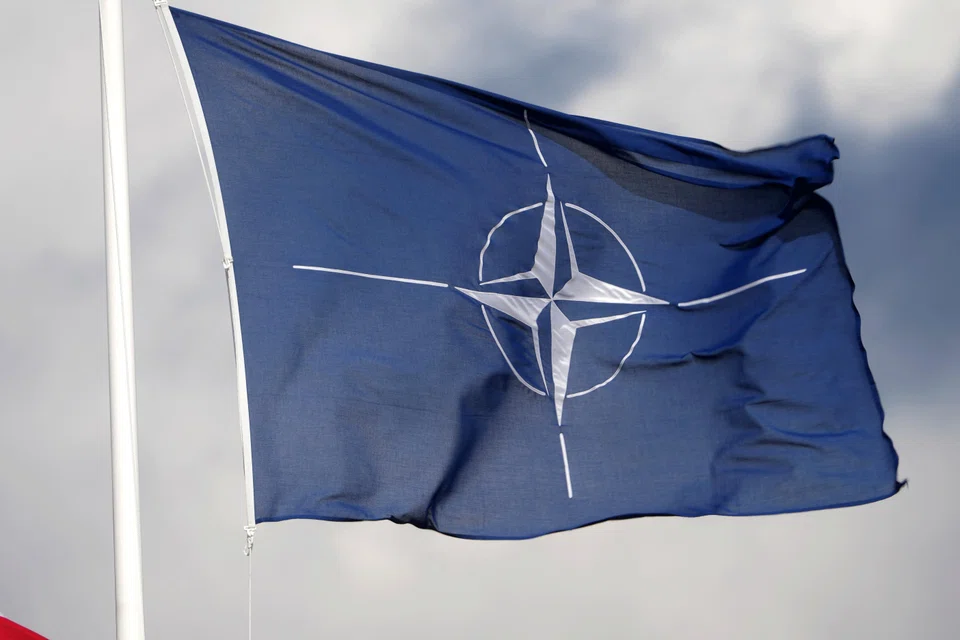
MUCH media time has been taken up in the last 16 months by the economic repercussions of Russia’s invasion of Ukraine. However, the conflict has also redrawn the military map of Europe and beyond, a pressing issue ahead of the Nato annual leadership summit on July 11-12 which will be attended by key non-members, including Japanese Prime Minister Fumio Kishida, reflecting the growing calls for the alliance to be extended to the Asia Pacific.
The changing security map of recent times has included Finland’s incorporation into the North Atlantic alliance, and also the pending accession of Sweden. Moreover, Denmark (already a Nato member) also voted last year to end the three decade-old opt-out clause that previously kept it away from the EU common defence policy. These are huge changes for nations with a history of either wartime neutrality and/or staying out of military alliances.
In Northern Europe, Russia’s invasion has shattered a long-standing sense of stability, leaving not just Denmark, Sweden and Finland feeling vulnerable. The irony is that, rather than getting less Nato, President Vladimir Putin now has more Nato on his doorstep, including the 1,340-kilometre (830-mile) Finnish border with Russia.
While the Finnish, Swedish and Danish examples are particularly striking, there has been a much wider rethinking of the security landscape. This includes debate in other countries with non-Nato, ‘neutral’ status, including Switzerland, Ireland, Austria and Malta.
These four nations have joined European sanctions against Russia, including non-EU member Switzerland, and this has had consequences. Russia’s ambassador to Switzerland Sergei Garmonin has said, for instance, that Moscow will not accept any Swiss-hosted peace summit on Ukraine’s future as proposed by President Volodymyr Zelensky, as, according to Garmonin, Switzerland has lost its reputation for neutrality.
More fundamentally, there has been a significant increase in military spending across Europe and much of the rest of the world too. Take the example of Germany which has announced big new investment in its military, and reversed its post-war policy that prevented sending lethal weapons to conflict zones.
This transformation has been encouraged by European Commission President Ursula von der Leyen, a former German defence minister, who has advocated for a European army. She wants the bloc to become a more muscular global actor and has emphasised how much the Ukraine conflict is “fundamentally challenging” Europe’s peace architecture.
It is not just Ukraine driving this, however, but also a wider threat landscape, including China. Moreover, Brexit has eliminated a longstanding obstacle to greater European cooperation in the security sphere given that successive UK governments have long been opposed to deeper defence integration at the EU level.
Add to this too the uncertainty in transatlantic ties by the US presidency of Donald Trump. It’s a concern that has not gone away across the continent given a fear that the 2016 result might be repeated as he runs again in 2024.
To be sure, the EU still has a long way to becoming the strategically autonomous goliath championed by some. But the tide is turning and this landscape is the context for the upcoming summit of Nato, whose own fortunes have also shifted significantly in the last year and a half after coming under the most strain in its seven-decade history during Trump’s US presidency.
Former US officials, including ex-National Security Adviser John Bolton, have confirmed that Trump came close to announcing US withdrawal from the alliance, co-created by Washington in the post-war era, which would have been a body blow to its future credibility. The nadir of this era came in the extraordinary scenes in 2018 when, with Trump throwing the alliance’s annual summit into disarray by threatening to pull the United States out, there were a series of cancellations of key announcements and press conferences.
To make matters worse, Trump not only criticised Nato colleagues but then went on in the days that followed to have a cordial meeting with Putin in Helsinki. This erratic behaviour not only alarmed Canada and Western European allies but also put a chill down the spine of Eastern European states, many of which were formerly part of the Soviet Union.
Yet, the challenges within Nato during the Trump era were by no means only of his own making. One of his critiques of the alliance – that more than half of members at the time did not spend the prescribed 2 per cent of GDP on defence – is a longstanding sore point that other US presidents have highlighted too.
Moreover, Trump was not the only alliance leader in recent years to criticise Nato. Take the example of French President Emmanuel Macron’s astonishing assertion in 2019 that the organisation was experiencing “brain death”.
Macron’s remarkable outburst was driven by what he saw as a rapidly changing geopolitical landscape, including the diminished commitment of the United States, under the Trump presidency, to Nato. This includes the-then White House’s failure to consult Western allies before pulling US forces out of Syria.
Macron also declared that he “didn’t know”, under Trump, if the United States could still be relied on to defend the alliance. This is under the terms of its founding charter which states that an attack on any one member will trigger a collective response.
Fast forward to 2023, however, and the Ukraine crisis, plus also concerns about China, have underlined the continuing relevance of the Western alliance of countries with a collective population of around 1 billion. For all its remaining weaknesses, Nato remains one of the world’s most successful-ever military organisations, and has helped underpin the longest period of sustained peace in the West’s modern history.
The key now will be to keep Nato fit-for-purpose, including responding to shifts in the non-European security environment such as the Asia Pacific where there are mounting calls for an “Asian Nato”’. China’s growing global assertiveness is often cited here, and the perceived threat from Beijing has been formally discussed at recent Nato summits for the first time.
One other bonus issue for intra-alliance harmony is that the longstanding burden sharing issue, which was perhaps Trump’s chief gripe given that the United States accounts for around two thirds of total Nato defence spending, may be moving closer to resolution. Many Nato states are pushing ahead with increases in defence spending, including much of the EU.
Taken together, the NATO summit will seek to bring solidarity across the alliance. Yet, much as a significant show of unity will be put on, the alliance faces major challenges in its eighth decade, including with the possibility of extending its reach to the Asia Pacific.
Andrew Hammond is an associate at LSE IDEAS at the London School of Economics
TRENDING NOW

Indonesia begins cutting natural gas exports to Singapore from Oct 24: reports

Singapore’s central gas buyer affirms Indonesia’s role as ‘important partner’ amid export review warning

KKR founders among investors buying 42% of Peter Lim’s Valencia; club valued at US$1.4 billion

NEA issues notices to 10 Singapore-based companies, including Wilmar and APP, over haze

