

New signature scheme for second von der Leyen European Commission
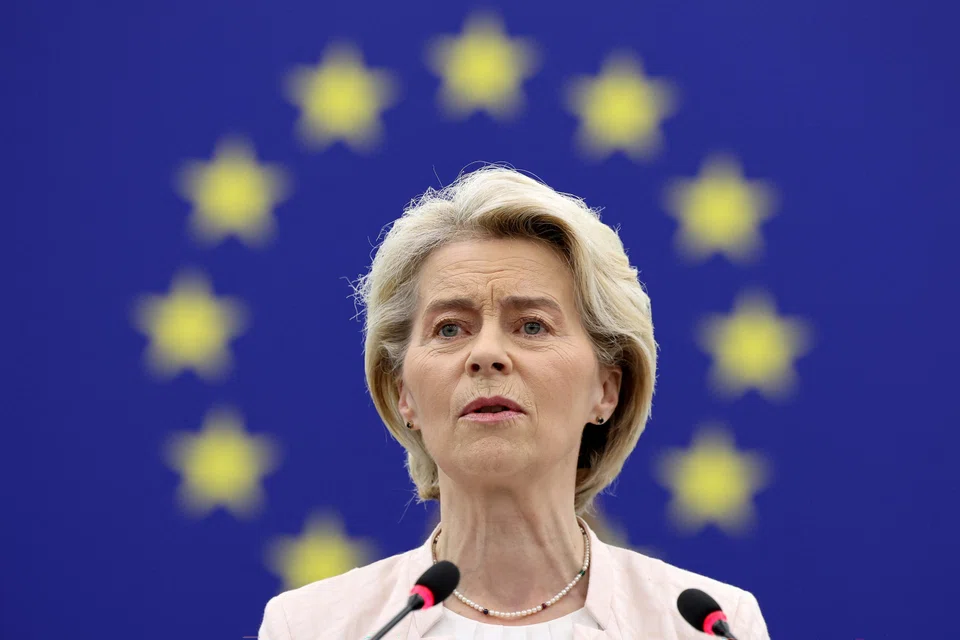
IN 2019, European Commission President Ursula von der Leyen made the Green Deal the signature issue of her first term of office. However, with controversy now surrounding that initiative, a new European Clean Industrial Deal will be key to her next term at the Commission in the half decade period to 2029.
This shows the political pivot that is currently underway in Brussels. Von der Leyen is determined not to lose the Green Deal legacy of her first five years in office, but knows the economic competitiveness context for her second term starting in late 2024, following the pandemic and Russia’s invasion of Ukraine, is significantly different from the first.
The new Clean Industrial Deal represents a potentially bold vision for the European Union’s sustainable industrial growth. As von der Leyen has asserted, “From wind to steel, from batteries to electric vehicles, our ambition is unmistakable: the future of our cleantech industry has to be made in Europe.”
The new scheme is designed to strengthen Europe’s industrial sector while addressing environmental concerns. Critical elements include financial support; regulatory streamlining; competitive energy pricing; infrastructure development; and raw materials security, but it faces significant challenges and inherent contradictions.
The initiative has emerged amid geopolitical and economic upheavals, which have highlighted vulnerabilities in Europe’s energy and industrial sectors. It aims to continue the decarbonisation of industries, lower energy prices, and create more quality jobs.
However, the path to achieving these objectives is challenging. The Commission has allocated three months to developing it upon taking office, so potentially starting in November, but this is a short time frame for tackling problems that have persisted for decades.
One of the drivers of the new initiative are the calls by various economic groups for a new European industrial deal.
In October 2023, the European Steel Association (Eurofer) and tech industries advocated for an “European Clean Industrial Deal”. In February 2024, 73 European business leaders presented von der Leyen with the so-called “Antwerp Declaration”, proposing a European industrial deal to complement the Green Deal that von der Leyen championed during her first term of office.
At the core of these proposals is growing demand of European industry for a more pro-business landscape to compete better, globally. The list of asks include cheaper energy; more straightforward rules; enhancing connectivity infrastructure; and greater protection from unfair competition, domestically and abroad.
At the same time, von der Leyen is clear that this new industrial deal must not jeopardise delivery of the 90-per-cent emission-reduction target by 2040. Many view a dual focus on competitiveness and climate as competing EU priorities, and it remains unclear whether achieving both goals is possible.
Von der Leyen thinks reducing energy prices is a key part of the solution. The 27 member states have provided the political support for deepening the single European energy market, around a decade after the original idea for an energy union was first introduced.
Since then, there has been closer cooperation on energy policy. However, member states tend to maintain tight control over energy markets, making decisions based on national considerations about preferred energy sources, grids and other infrastructure.
Von der Leyen’s next steps with this agenda include a framework for “ambitious electrification using all net-zero and low-carbon solutions”, emphasising investment in grids, storage and interconnections. One other significant pledge is investing in renewable energy – last year, renewables accounted for 50 per cent of EU electricity generation.
There will also be greater flexibility regarding energy definitions, using terms like “clean” rather than “green” or “renewable” energy. Plus, more emphasis on low-carbon solutions, with the Commission working on defining the methodology for “low carbon fuels”. Similarly, there will be a targeted review of the 2035 ban on CO2-emitting cars by allowing e-fuels.
To lower energy costs further, there will be extension of joint fuel procurement. The strategy will likely leverage the EU’s market power to secure hydrogen and critical raw materials, through an extended aggregate demand mechanism previously applied to gas and liquefied natural gas.
The agenda also includes proposals to simplify legal frameworks. Bureaucratic inertia has delayed numerous renewable energy projects. By enforcing faster national permitting, the EU aims to accelerate deployment of new and upgraded infrastructure. However, achieving this will require not only significant policy changes, but also a shift in governance culture.
The Clean Industrial Deal will likely also include measures to support cleantech and energy-intensive industries. Drawing lessons from the US Inflation Reduction Act, the EU has been asked to streamline financial tools and bureaucratic barriers. For instance, the Antwerp Declaration calls for a cleantech deployment fund and simplified state aid framework.
To this end, von der Leyen will push a so-called “Industrial Decarbonisation Accelerator Act”. This will encompass several non-financial measures and facilitate investment. This may involve a repackaging of existing monies, such as the Innovation Fund.
Looking beyond 2027, and the current EU Multiannual Financial Framework, there are plans to establish a European Competitiveness Fund to support strategic technologies. This will involve enhancing instruments like the important Projects of Common Interest, so it may, too, not be an entirely new stream of finance.
The international dimension will be addressed, in part, via new clean trade and investment partnerships. These extend beyond traditional trade deals incorporating digital and green transformation for partner countries, particularly relevant for developing nations where the EU aims to add value.
This approach also allows the EU to offer a more competitive proposition when vying for critical raw materials globally, given that securing a stable supply of raw materials is crucial for the future success of European industry.
Beyond the Clean Industrial Deal, one of the Commission’s new mottos is turbocharging investment in the EU.
Achieving this centres around completing the Capital Markets Union, an initiative that has received mixed reactions from member states. The package will also draw lessons from former Italian prime minister Enrico Letta’s recent report on competitiveness. The EU hopes these measures will help unlock the private capital needed annually, estimated at around 500 billion euros (S$723.5 billion).
Taken together, it is uncertain whether Europe can rise to the challenge on this key agenda. The success of the signature new initiative will depend on the EU’s ability to implement its ambitious plan efficiently and cohesively.
The next few years will be critical in determining whether Europe can truly lead in clean technology and industrial innovation, or fall further behind in the global race for competitiveness.
The writer is an associate at LSE IDEAS at the London School of Economics
TRENDING NOW

Motoring tycoon Peter Kwee is back in court: Here are his previous legal battles

Demand, tech capabilities position Apac and AI as Skyscanner’s next growth frontiers: CEO Bryan Batista

Beyond the greenback, Vietnam’s big borrowers turn to Asian-currency bonds
Nvidia’s outlook cut to stable by Moody’s on governance concerns

