New tech may help fashion meet its green goals, but consumer behaviour must also change
Technology and sustainability are coming together to shape the future of what we wear, how it is made, and what happens after we are done with it. The other side of the sustainability solution, however, could entail changes to how we consume. Singaporean fashion brands may be part of the answer.
Russell Marino Soh

THE Spring/Summer 2023 show of French fashion brand Coperni is coming to a close. Model Bella Hadid steps onto the runway wearing a nude thong and white heels. Her arms are wrapped around her body to cover her breasts. Three men, each carrying an aerosol can, artfully spray a delicate coat of white on her. A slip dress begins to form.
That seemingly magical sprayable textile is an aerosolised cloth fibre called Fabrican. And one of the three men is its inventor, Dr Manel Torres. His product has been available for some years now, but Coperni’s show may be what launches it into the mainstream.
Fabrican boasts many of the attributes the fashion industry is looking for. According to the company’s website, it “primarily uses fibres recycled from discarded clothes and other fabrics”. The sprayed-on textile can also be dissolved and reused.
Not everyone is sold on Fabrican’s sustainability credentials. But the industry is alight with talk about its potential, as fashion confronts the question of how to produce greener growth.
The fashion industry is a major polluter, contributing up to 10 per cent of carbon dioxide emissions worldwide, noted the United Nations Environment Programme. Boston Consulting Group named fashion as the third-largest producer of greenhouse gases overall in 2021, coming in behind food and construction.
At last year’s 27th edition of the United Nations’ Conference of the Parties (COP27), top executives of several large labels confessed that the fashion industry is still far from its sustainability goals. While more than 100 industry players have committed to a net-zero pledge, it is unclear how they will fulfil it.
New tech, new mindset
Finding solutions to fashion’s sustainability problem could be big business, though. Respondents in a survey by Business of Fashion and McKinsey listed sustainability as the “biggest opportunity” for the industry this year.
Technology – such as what Fabrican offers – is one popular option. And investors are lining up to support potential winners.
Recover, a cotton recycler headquartered in Spain, last year raised US$100 million in a funding round led by Goldman Sachs. The company estimated that the new capital would raise its annual production capacity to over 350,000 tonnes of recycled cotton fibre by 2026.
LanzaTech, which created the carbon recycling technology behind Zara’s sustainable fashion line, is supposed to be on its way towards a listing via a combination with Nasdaq-listed special purpose acquisition company AMCI II.
Circe Henestrosa, head of Lasalle College of the Arts’ School of Fashion, said technology is likely to be a key driver of fashion in 2023. Besides its potential to solve the industry’s sustainability woes, it is an important means by which brands can connect with their customers.

“This is a good time to engage with technology, and for companies to invest and understand what young consumers want,” she said.
Companies will also need to rethink how they source and produce their goods, she added: “The industry will have to be very flexible and smart to… become more sustainable across the supply chain.”
The fashion industry has a particularly long supply chain. It begins with the farmers who grow raw materials such as cotton or rear the livestock to produce pelts that are turned into leather, through to the weavers and tanners who process those materials, then to craftsmen making garments and accessories, and finally to logisticians and sellers who market them around the world.
Sustainability across the supply chain, therefore, can range from using better farming techniques to renewable energy in manufacturing, to dealing with chemical by-products and waste.
Any changes to the supply chain will, however, be expensive. And the fashion industry is facing other challenges.
“Certainly, geopolitical tensions have affected the European and American markets,” said Leonard Choo, director of industry development at the Singapore Fashion Council (SFC). For instance, the Covid-19 pandemic’s spread in north-east Asia “has impacted – and still is impacting – supply chains throughout the world”.

In a November post on Instagram, Raf Simons announced the closure of his eponymous label after 27 years. No reason was offered, but there has been some speculation that the brand was struggling to keep up amid rising competition from other youth-oriented, streetwear-infused houses.
Over at fast-fashion conglomerate H&M, some 1,500 jobs were cut on the back of declining sales and rising competition.
With global inflation closing in on 10 per cent, and with consumer spending looking shaky, it seems unlikely that fashion brands will be able to pass on very much of sustainability’s higher costs to consumers.
Consumers can change too
As industry players work out how best to meet growing consumer demands for green fashion, some customers are making conscious choices to reduce their carbon footprint in their own way.
Demand for second-hand apparel has risen as younger consumers begin to favour circularity. The US$15 billion market is set to more than treble to US$47 billion by 2025, said McKinsey.
Other signs of this trend: Canadian e-commerce platform Shopify said it was expecting full-year growth of 24 per cent in the second-hand apparel market in 2022 – outpacing the rest of the industry. And a Credit Suisse survey found that consumers were looking to drop their expenditure on fast fashion and luxury in favour of second-hand items.
Another way to reduce waste is to shop locally, suggested the SFC’s Choo. “Because so many of our businesses are small, inherently they are quite high up in terms of sustainability because they produce so little,” he said.
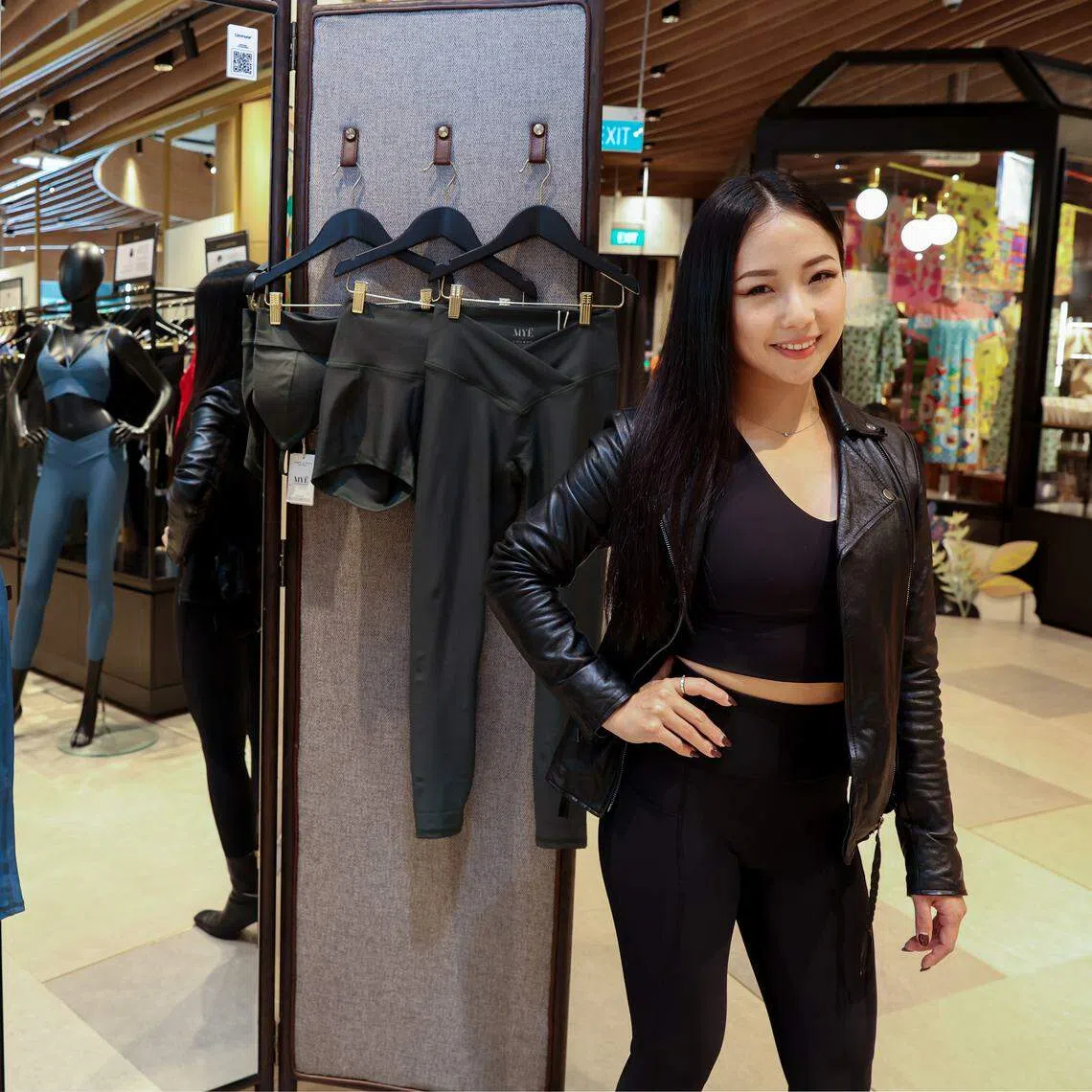
Going beyond scale and focusing on greener products, the number of homegrown brands emphasising sustainability is growing. Activewear label MYE makes its leggings and sports bras from recycled plastic bottles. Another brand, Lily & Lou, embraces “slow fashion” through a made-to-order model.
Choo said the “affordable luxury” prices of the local brands may also make shoppers more thoughtful about their spending.
He noted that there is sentimental value attached to things made at home: “So you keep it for longer, you treasure it more, and you pay more for it. And you don’t throw it away, or buy and rebuy.”
Still, with the local industry so deeply intertwined with global supply chains, it is difficult to remove Singaporean creations from a wider network that remains highly pollutive.
“It is not easy to make anything entirely sustainable in a consumer economy,” said Choo. “If your main outlook is to drive consumption and growth, it is very difficult to balance the needs of the planet with the needs of the people who work in the industry.”