THE BROAD VIEW

New York’s election reflects a global shift in trust

A pivot from institutional hierarchy to emotional proximity could reshape politics in global cities such as New York and Singapore
Summarise
    • New York City mayor-elect Zohran Mamdani's support was highest among voters under the age of 45, the same group that expressed the strongest sense of being priced out and most openness to rewriting the rules.
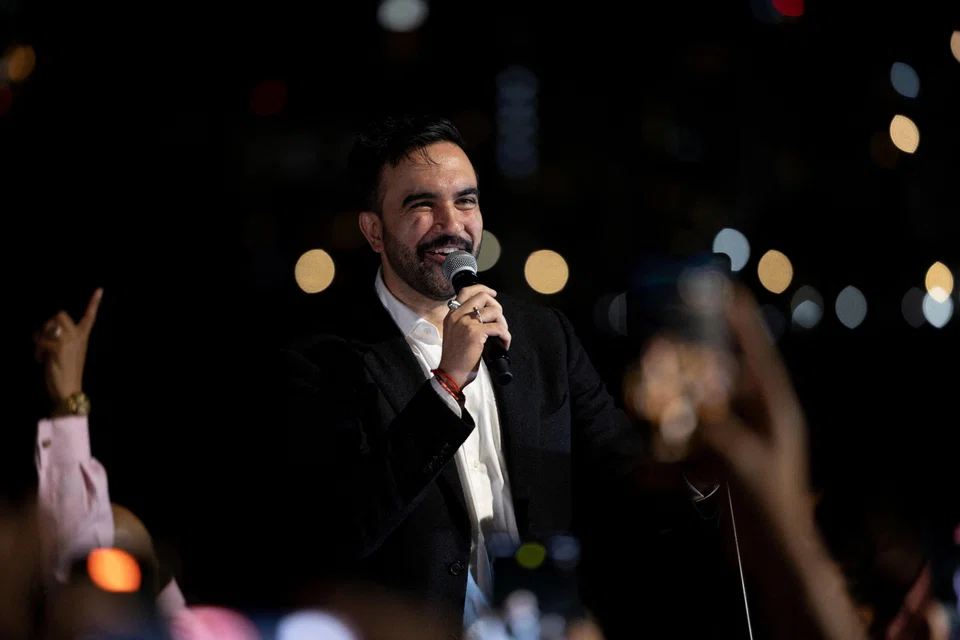
    • New York City mayor-elect Zohran Mamdani's support was highest among voters under the age of 45, the same group that expressed the strongest sense of being priced out and most openness to rewriting the rules. PHOTO: REUTERS
    Published Fri, Nov 7, 2025 · 05:06 PM

    ZOHRAN Mamdani, a progressive Democrat, community organiser and former state assemblyman representing Queens, is now mayor-elect. His rise offers lessons that reach far beyond the Big Apple.

    Regardless of where one falls on the political spectrum, his campaign offered an early look at how modern influence works in a shared “marketplace of trust”, where people are moved less by ideology and more by participation that feels personal, visible and emotionally grounded.

    Despite their vastly different political systems, New York and Singapore share strikingly similar emotional undercurrents when it comes to trust in institutions and leadership. Around the world, and increasingly here in Singapore, people are responding to leaders, movements, and brands that make belief feel like belonging.

    Campaigns that turn shared emotion into credibility – that make participation feel personal – are the ones that break through.

    Here are three insights from Mamdani’s campaign that illustrate how communities, organisations, and cities like Singapore can nurture and sustain trust amid a rapidly evolving cultural landscape.

    Reform was not a selling point – it was the baseline

    The 2025 mayoral election showed that New Yorkers are no longer rewarding moderation or incrementalism. Candidates who failed to offer substantive reform agendas, particularly around housing and affordability, were eclipsed by those who did.

    In a poll conducted by Penta, a global stakeholder solutions firm, just weeks before the election, 73 per cent of voters said housing affordability was headed in the wrong direction, and 59 per cent were considering leaving the city due to cost-of-living pressures. That frustration became a demand for clarity, empathy and system-level change – not just technocratic management.

    Mamdani’s rent-freeze proposal, initially seen as radical, evolved into a symbol of authenticity in a city where affordability tools had lost credibility.

    As one commentator noted in The New York Times, Mamdani’s campaign “made housing a moral question rather than a mathematical one”. The debate shifted away from technical fixes such as zoning or incentives towards questions of fairness, belonging and shared values.

    In Singapore, we have seen a similar evolution in how people perceive reform. Public conversations around affordability, cost of living and inclusivity have become less about policy detail and more about lived experience, whether it involves home ownership, mobility or access to opportunity.

    What people want today is clarity of purpose – confidence that systems work and that they are changing in step with society.

    Voters chose proximity over ideology

    The election cut across traditional ideological lines. Voters responded to those who felt attuned to their everyday realities, with emotional connection and cultural familiarity proving stronger predictors of support than policy positions.

    Younger, and working-class New Yorkers responded most to candidates who described the city’s dysfunction in moral or narrative terms. Mamdani’s campaign language, as referenced in The Guardian, referred to “a system that cannot solve itself” and “a city that says no” – and resonated because it articulated the emotions people felt rather than just the facts they knew.

    His support was highest among voters under the age of 45, the same group that expressed the strongest sense of being priced out and most openness to rewriting the rules.

    Singapore, too, reflects this shift. In an era of greater information access and generational change, influence now depends on how close leaders and institutions feel to daily experience. Trust increasingly stems from proximity – the sense of being seen, heard and understood – rather than from hierarchy.

    Locally, this shift has been visible in how leaders communicate. The Forward Singapore exercise launched in 2022 – a series of national dialogues led by then-Deputy Prime Minister Lawrence Wong – invited Singaporeans to discuss issues such as caregiving, workplace mental health, and inclusivity. These sessions revealed that people respond most to leaders who speak to practical, lived realities instead of abstract policy aims.

    For communicators and decision-makers, the lesson is clear: Be present where conversations happen, show empathy through action, and speak a language that bridges lived experience with institutional goals.

    The winning narratives came from outside the establishment

    In New York, institutional voices, such as the press, the mayor, and the policy class, did not lead the conversation; they reacted to it. Grassroots organisers, tenant coalitions and progressive groups set the tone, framing the race around fairness, frustration and ownership of the city’s future.

    The discussion moved from statistics to sentiment. Housing policies became less about spreadsheets and more about whose side you were on.

    The narratives that stuck came from small, highly connected communities that shaped how issues moved through culture long before they reached policy.

    Singapore is seeing a similar decentralisation of influence. Ground-up movements, from climate advocates to youth-led social initiatives, are shaping how national issues are framed. Online spaces, workplaces and creative communities are defining what authenticity looks like and how credibility is earned.

    At the 2025 Singapore elections, we also saw how political parties publicised walkabouts on social media and utilised livestreams and hyperlocal content to bypass traditional media and engage directly with younger voters, proving that cultural proximity can rival institutional reach.

    For organisations, the lesson is to listen early, widely and with humility. Conversations at the margins often forecast tomorrow’s mainstream.

    A shared marketplace of trust

    New York’s affordability crisis was the accelerant, but the larger momentum was cultural, a move towards conversational proximity, where people expect engagement, not just management.

    The same holds true in Singapore, where the challenge is to build systems that function well and also feel responsive and participatory across generations and social groups.

    We live in a time when trust is distributed, not decreed. Influence no longer sits neatly within institutions but circulates through networks of people who trade in credibility and shared experience. Be it in politics, business or public life, the leaders who thrive will be those who listen early, adapt visibly, and participate sincerely.

    Singapore has long excelled at building systems that work. The next challenge, much like New York’s, is to build systems that people feel truly belong to them – where policy is effective, but also emotionally resonant.

    Modern leadership, in any context, requires cultural fluency: the ability to translate institutional goals into human meaning.

    As New York’s election reminds us, belonging has become the most powerful form of belief.

    The writer is managing director, Singapore, at Penta Group