No, Europe won't be ready for Trump 2.0 either
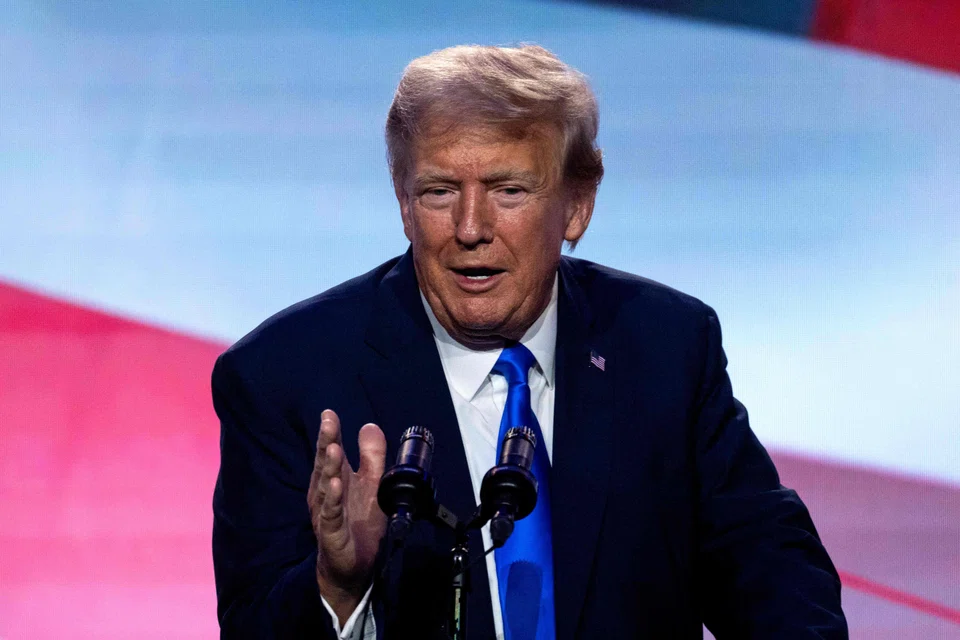
GERMAN Foreign Minister Annalena Baerbock says Europe is better prepared for a second Donald Trump presidency than it was for the “total shock” of the first. If only that were true. The reality is that nobody except the former US president and his supporters will be ready for round two, if it comes.
Baerbock is from Germany’s Green Party and a liberal by any standard, so she had exactly the right instincts on her US visit. Rather than stay in her comfort zone, visiting more or less like-minded Democrats and Biden administration officials, she entered the lion’s den of MAGA – Make America Great Again, Trump’s former slogan – in Texas, meeting Governor Greg Abbott, among others.
It’s hard to picture that conversation. Abbott has supported the banning of abortion and same-sex marriage, opposed any gun control, and promoted investment in fossil fuels over renewables. He’s also against the Biden administration’s “blank cheque” policy of funding Ukraine’s defence, which Abbott says is coming at the expense of domestic needs.
So Baerbock deserves a lot of credit for trying to understand what she’d be up against. As she rightly pointed out in Sunday’s Bloomberg TV interview, foreign diplomats don’t get to pick US presidents.
A greater shock than 2016
Trump right now looks like a good bet to win at least the Republican primary, and if he does make it all the way to the White House again, it’s very likely that a revolution in US domestic and foreign policy would follow.
The shock would be greater than in 2016, though, because Team Trump will be able to hit the ground running. And the impact would be greater – in Europe as in the US.
Back in 2016, Trump had no team and few policies ready for office, because nobody expected him to win. It took three years of a four-year term for him to purge the last of the so-called “adults in the room” – think former executives such as Gary Cohn and Rex Tillerson, or military commanders like James “Mad Dog” Mattis – who, as cabinet members, frustrated the implementation of some of Trump’s worst ideas.
Even his attempt at stealing the 2020 election didn’t work out. So while Baerbock is right that seven years ago, no European had even imagined sitting across the table from a US president who didn’t support the North Atlantic Treaty Organization (Nato), the alliance also survived.
For every Trump outburst at a Nato summit, there was a US general on hand to offer reassurance. US military spending in Europe actually peaked at US$6.5 billion under Trump in 2019, up from US$3.4 billion in 2017, the final year of the Obama administration.
This time, MAGA Republican think tanks and former Trump officials would have had four years to prepare detailed staff lists and policy papers. That includes legislation enabling them to start the term with a purge of off-message civil servants, and this time a cabinet unlikely to include any interfering “adults”.
Trump, for whom his personal interests and those of the US are indistinguishable, would be bent on retribution against perceived enemies at home and abroad. Germany stands out. Vladimir Putin does not.
Baerbock, not surprisingly, focused during her US trip on the importance of continuing Nato’s “life insurance” policy for Europe, and on Ukraine’s defence. Germany, she said, had completely revamped its foreign policy after last February to do “the right thing”, by defending the “victims” of Putin’s invasion of Ukraine.
She talked, too, about how the crisis had proved just how essential the transatlantic alliance remains for both sides, in opposing an offensive whose success would destroy the so-called rules-based international order.
That’s all true, and traditional US Republicans would agree with much of it. But every word is a trigger for Trump and his supporters.
Ukraine, in Europe as in the US, is increasingly becoming a division point for domestic politics, with far-right parties arguing that the expense is detracting from domestic priorities. Right-wing party Alternative for Germany is now polling second-highest in Baerbock’s country.
The complaints on which these parties feed are only likely to get louder between now and the US presidential vote in November 2024, as the impact of rising interest rates and living costs bite down on growth and employment.
Russia’s invasion of Ukraine will reshape European security for the longer term. A second Trump administration also would test – to destruction – the fundamental proposition of shared democratic values that underpins the US-Europe alliance; assumptions that are already being strained and would struggle to survive another four years of MAGA policymaking in the White House.
An isolationist and deeply conservative US White House will likely come, if not in 2024, and if not under Trump. To truly prepare for that eventuality, Europe will have to do the hard things it has talked about but largely failed to achieve for years, if not decades.
It will have to develop a real capacity to conduct a strategic, common foreign policy; pool defence procurement to avoid waste on multiple versions of the same weapons systems; and rationalise US$345 billion a year of collective defence spending to make its forces deployable at scale.
Not only would Europe then be able to provide its own life insurance policy, it would become a more attractive ally even to sceptical Americans. BLOOMBERG