

No let-up in Singapore’s battle against dirty money
AS AN international financial hub, Singapore, not unlike other major financial centres, is relatively more vulnerable to being misused as a conduit to transfer or recycle money linked to illegal activities.
The city state’s multi-pronged battle against dirty money – chiefly strict regulatory supervision and internal controls by financial institutions – is also set to intensify as financial crimes become more sophisticated owing in large part to technological advancements.
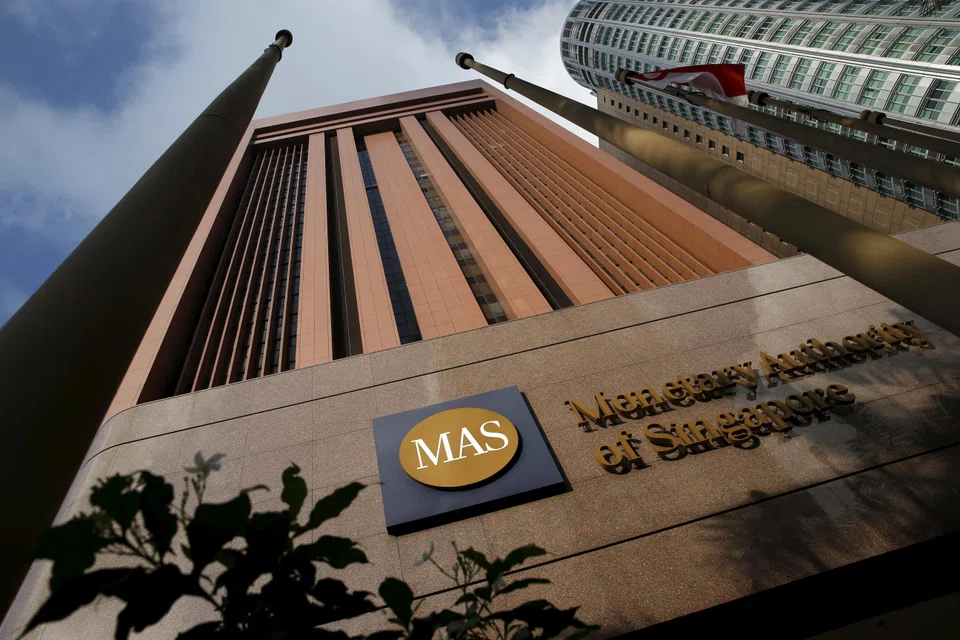
Underscoring such challenges is the recent move by the Monetary Authority of Singapore (MAS) to penalise key financial institutions here – DBS, OCBC and Citibank, as well as insurer Swiss Life (Singapore) – for breaching anti-money laundering (AML) and countering terrorism financing rules.
The MAS said it discovered inadequate controls when looking into the alleged involvement of Singapore-based individuals in the fraud case of Wirecard – a German payment company, once regarded as a fintech champion, that collapsed in spectacular fashion three years ago. The regulator, however, stopped short of saying that its investigation revealed illicit fund flows.
Collectively, the central bank imposed S$3.8 million in fines. DBS, which took the largest hit with a composition penalty of S$2.6 million, pointed out that the transactions in question involving corporate customers were part of an “elaborately orchestrated scheme”.
Recall that Singapore’s financial sector suffered a reputational fall-out more than six years ago as a result of the mammoth scandal involving Malaysia’s state-owned investment company 1Malaysia Development Berhad (1MDB).
In 2017, MAS slapped eight banks with nearly S$30 million in fines for various breaches of AML requirements connected to funds flows from 1MDB. The worst blow was dealt to Swiss private banks BSI and Falcon, which were ordered to ship out of the city state. MAS also issued lifetime bans for the first time against errant individuals, and prohibition orders against several others.
Since the 1MDB fallout, banks have tightened internal controls. MAS has meticulously stepped up supervision and enforcement to stem the flow of illicit funds. The tough and unprecedented enforcement action served as a clear signal the regulator will not tolerate the criminal abuse of Singapore’s financial system.
The latest episode on fund flows linked to the Wirecard scandal in Singapore’s financial system highlights the market reality that the fight against financial crimes will demand more from the regulator as well as the players in an ever-changing landscape.
A significant move towards this end is a legislative framework that was greenlit by Parliament in May this year for the first centralised digital platform called Collaborative Sharing of Money Laundering/Terrorism Financing Information and Cases, or Cosmic.
The platform will enable financial institutions to share information on suspicious customers or transactions in order to detect and deter activities in areas such as scams, money laundering and terrorism financing. Cosmic is set to be rolled out in the second half of next year and will be initially opened to six banks.
Such efforts are in line with pushing financial institutions to be more proactive, as opposed to being incident-driven or reactive, when it comes to enhancing internal processes from transaction monitoring and due diligence to the all-important know-your-customer principle.
Money laundering is a global scourge: it not only threatens the stability of financial systems, but also undermines the credibility of financial institutions. For Singapore, this is an ongoing and multi-faceted challenge as it seeks to safeguard its well-earned status as an attractive private banking hub.
TRENDING NOW

First Resources blames El Nino, outside fires for Kalimantan hotspots amid haze scrutiny

High Court rules against Julius Baer’s Singapore trust arm in US$50 million family trust dispute

Singapore key exports jump by higher-than-expected 68.4% in September, led by non-electronics

MSCI proposes downgrading Indonesia to standalone market status

