Norway’s US$2 trillion wealth fund is sounding a warning on Iran

It is now planning for all sorts of potentially bleak scenarios as global economic resilience is tested
Summarise
    • While Norges Bank Investment Management CEO Nicolai Tangen is a “huge” believer in the power of AI, he worries about rampant corporate valuations and the uncertain profit outlook for it.
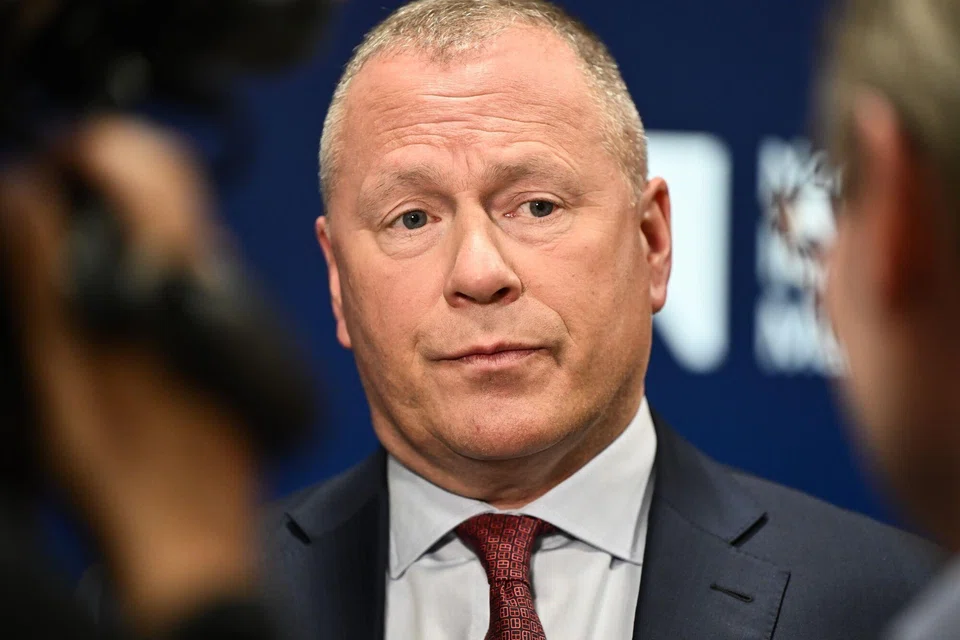
    • While Norges Bank Investment Management CEO Nicolai Tangen is a “huge” believer in the power of AI, he worries about rampant corporate valuations and the uncertain profit outlook for it. PHOTO: BLOOMBERG
    Published Thu, Mar 19, 2026 · 06:00 PM

    ON THE last Friday of February, Nicolai Tangen, CEO of Norway’s US$2.2 trillion sovereign wealth fund, wrapped up his first visit to the Middle East, taking in the vibrant expat magnets of Dubai and Saudi Arabia’s pharaonic infrastructure ambitions.

    “We were just struck by how dynamic the area was,” Tangen said in an interview in Paris this week. Hours after his departure, the region erupted in a war that has killed thousands, displaced millions and is stoking a global energy crisis.

    The 59-year-old former hedge fund manager isn’t ready to write off the Gulf’s oil-wealth clout just yet – “it’s too early to say” – but the general sense of market complacency about what’s happening in the region has left a mark.


    Norges Bank Investment Management is now planning for all sorts of potentially bleak scenarios as global economic resilience is tested. And as the world’s largest sovereign fund, it’s worth a hearing. It has about 1.5 per cent of all listed shares in its portfolio; top holdings include Nvidia and Apple.

    While financial markets remain placid overall and are secondary to the human tragedy that’s playing out, Tangen’s mind keeps drifting back to economist Hyman Minsky’s thesis of how prolonged calm fosters misplaced confidence and risk-taking, ultimately leading to panic. The Norges boss boiled it down to three words that might apply to his Middle East trip: “Stability is unstable.”

    Two scenarios dominate that are on balance negative, said Tangen. One is the return of inflation, with the effective closure of the Strait of Hormuz pushing the price of oil past US$100 per barrel and adding to risks of supply-chain disruption.

    Another is geopolitical fragmentation, with trade ties already eroded by US President Donald Trump’s tariffs and the war driving a deeper wedge between America and allies who feel railroaded into a conflict they didn’t want. 

    These are risks with direct consequences for Norway’s fund, and carry implications that extend to the stock market as a whole. Disintegrating trade ties, lower growth and lower profitability would knock an estimated 49 per cent off the fund’s equity portfolio and 37 per cent off its total value, according to an end-2025 stress test.

    Norway may see a windfall from higher oil and gas prices, but wider economic trouble would weigh on a fund whose transfers have accounted for 20 to 25 per cent of its nation’s yearly budget.

    The tech sector is another source of dangerous complacency. While Tangen is a “huge” believer in the power of artificial intelligence, with Norges ratcheting up an estimated 20 per cent productivity boost from AI tools, he says he worries about rampant corporate valuations and the uncertain profit outlook for AI. According to internal stress tests, a tech-market correction could wipe out more than half the fund’s equity portfolio.

    Despite raising the spectre of the war’s economic costs, the fund boss held back from saying how leaders would or should respond. Norges is principally an index-tracking investor, but it is having to become more attuned to geopolitics.

    Tangen used his Paris visit to encourage bankers, investors and officials to strengthen Europe’s single market along former European Central Bank president Mario Draghi’s suggested lines: A more integrated economy, unified capital markets and less red tape. “We love Europe… But its true growth is lower and innovation is lower (than the US).”

    Policymakers would do well to heed the message, which speaks to a post-Trump global reordering that was already under way without the added impetus of the White House’s reckless war.

    Europe, a net importer of 60 per cent of its energy, looks vulnerable. Bloomberg Economics reckons March inflation could hit 2.6 per cent in the euro area. That’s lower than the estimated 3.3 per cent in the US, but the growth hit from pricier oil could, in a worst-case scenario, tip France into recession.

    This will ratchet up pressure on central bankers as they meet to decide interest rates. Likewise, it will drive the thinking of governments with memories of the 2022 post-Covid inflation shock. Belgium’s leader has even proposed repairing ties with Russia to ease energy costs, a move that drew condemnation but speaks to the brutal politics of protecting voter wallets.

    One hopes cooler heads will prevail – especially as continental leaders start to find their voice by saying “no” to Trump. It would help if the guidelines governing Norway’s sovereign fund, which are currently being revised, push it to invest more in Europe eventually, as part of a broader de-dollarisation that was gathering pace before the Americans and Israelis started bombing Iran.

    The fund last year drew criticism in the US for “virtue-signalling” ethical rules that saw it divest Caterpillar stock because of bulldozers used in Gaza. Some Norwegian politicians are calling for less exposure to a wayward America. Billionaire Elon Musk also lashed out against Tangen over the sovereign fund’s opposition to re-ratifying his massive Tesla pay package in 2024.

    Ultimately, this is all about preparing for the worst rather than hoping for the best, like many investors right now. If the geopolitical complacency and tech complacency in the market do implode together, we can’t say we weren’t warned. BLOOMBERG