Not the Best World for shareholders

Its executive directors receive generous pay even as the company has not declared dividends in recent years
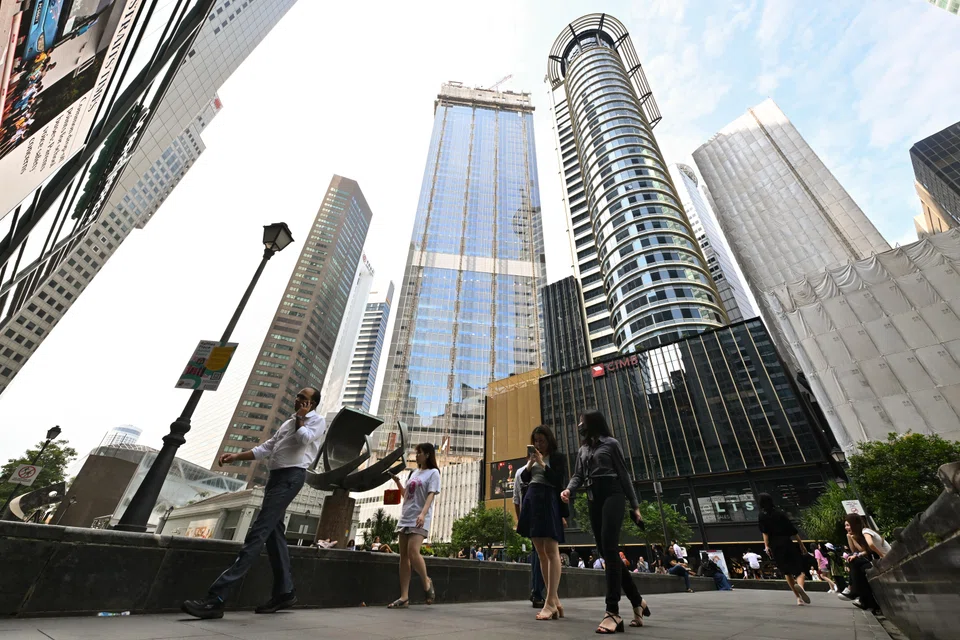
    • Nearly all companies practise pay for performance, but the hurdles for achieving this or the profit-sharing percentages may differ vastly.
    • Nearly all companies practise pay for performance, but the hurdles for achieving this or the profit-sharing percentages may differ vastly. PHOTO: BT file
    Published Tue, Aug 1, 2023 · 05:00 AM

    ON JUN 22, UOB Kay Hian released a note on the pay of chief executive officers (CEOs) of issuers on the Singapore Exchange (SGX). It listed the top 20 highest-paid CEOs in Singapore, with the top five being those of DBS (S$15.4 million), UOB (S$14.2 million), Wilmar (S$13.2 million), OCBC (S$11.2 million) and Keppel Corp (S$8.1 million).

    A glaring omission was Best World’s co-founder, co-chairman, group CEO and managing director Dora Hoan, who netted S$12.5 million to S$12.75 million in FY2022. Perhaps UOB Kay Hian did not include Best World because it is not covered by analysts like them.

    Hoan’s pay would put her ahead of the CEO of OCBC. Better yet, her remuneration is all short-term, in the form of cash or benefits: 7 per cent from annual salary, 92 per cent from an annual incentive bonus, and 1 per cent from benefits.


    In contrast, many CEOs in the top 20 would have part of their remuneration in the form of long-term share-based incentives. The amounts would include accounting fair values for these incentives – which may not necessarily be realised, depending on future share price performance and vesting conditions.

    Best World’s other founder, Doreen Tan, is the co-chairman and president of the company. In FY2022, she was paid in the same remuneration range, with the same breakdown. In fact, based on Best World’s annual reports from FY2014 to FY2022, Hoan’s and Tan’s remuneration are identical every year in range and breakdown.

    Best World has another executive director (ED), chief operating officer Huang Ban Chin, whose pay is not too shabby either. In FY2022, he was paid in the range of S$7.5 million to S$7.75 million. His remuneration since FY2014 is lower than that of the founders but closely tracks theirs, with his bonus percentage moving in the same direction.

    Pay for what performance?

    Best World’s corporate governance report states: “The RC (remuneration committee) believes that fair performance-related pay should motivate good corporate and individual performance and that rewards should be closely linked to and commensurate with it.”

    It is true that performance-related pay for the three EDs is linked to corporate performance – albeit measured solely by profit before tax – as it has generally increased and decreased with profit over the years.

    For Hoan and Tan, the bonus percentage has increased from 27 per cent in FY2014 to 92 per cent in FY2022; for Huang, from 22 per cent to 91 per cent. For FY2022, each of their pay is about 10 times or more what they were paid in FY2014.

    Best World’s profit increased every year from FY2014 to FY2021. But in FY2022, profit before tax fell by 11.14 per cent and profit after tax by 11.49 per cent.

    The remuneration of Hoan and Tan fell from an earlier range of S$12.75 to S$13 million, to that of S$12.5 to S$12.75 million, but their bonus percentage held steady at 92 per cent. For Huang, remuneration fell from the range of S$7.75 to S$8 million to that of $7.5 to $7.75 million, with the bonus percentage still at 91 per cent.

    However, if one were to consider corporate performance from the perspective of relative profitability using a measure such as return on equity (ROE), or share price performance, a very different picture emerges.

    Best World’s ROE has been on a general downward trend from FY2018. Its share price at the end of FY2022 was about 55 per cent of its peak share price over the period from FY2014 to FY2022; it is now about 53 per cent of that peak.

    Given that Hoan and Tan were paid identically since at least FY2014, and that the EDs’ incentive bonus is based on profit before tax, it is difficult to see how their remuneration is linked to individual performance, or that there is an attempt to differentiate their individual performances.

    In my opinion, Best World’s remuneration policies for its EDs are questionable and the remuneration excessive. Compared to profit before or after tax, remuneration has declined from the early years – when profits were significantly lower – but remains high. In FY2022, it was more than 17 per cent of profit before tax and 23 per cent of profit after tax.

    Nearly all companies practise pay for performance, but the hurdles for achieving this or the profit-sharing percentages may differ vastly.

    If we compare Hoan’s remuneration with that of the world’s 10 largest cosmetics companies, her pay is about S$3 million below that of the fourth-highest paid CEO, of French company L’Oreal.

    L’Oreal is the world’s largest cosmetics company by market capitalisation, at around US$250 billion, or some 428 times that of Best World’s. Japan’s Kose has the smallest market capitalisation in the top 10, at more than nine times that of Best World.

    From the standpoint of minority shareholders, what makes it worse is that Best World stopped paying dividends in FY2019.

    In FY2022, it said it was not declaring dividends “in view of the group’s short and medium term commitments which include but are not limited to, working capital requirements and corporate actions’ capital needs, as well as taking into consideration the uncertain business climate”.

    It would have been nice to consider these factors before paying out such large amounts of remuneration to the EDs.

    Questions of benchmarking

    In 2022, investor rights advocate Securities Investors Association (Singapore) questioned Best World on the remuneration of the three EDs. The company said that their incentives “are directly linked to the group’s profitability (i.e. profit before tax excluding any exceptional items) in accordance with their service contracts”.

    Asked whether the RC benchmarked the remuneration to comparable companies listed on SGX or other exchanges, Best World said a benchmarking exercise was conducted in 2019 with 22 SGX-listed companies of the same size where EDs were controlling shareholders.

    “From the study, the current pay for the three executive directors were comparable to the benchmarks,” it said.

    Best World’s RC comprises the company’s three independent directors: chairman Adrian Chan, Lee Sen Choon and Chester Fong. Chan is a lawyer, while the other two have accounting/finance backgrounds.

    In the company’s annual reports from FY2014, the last time the company said it engaged an external remuneration consultant was FY2015. In FY2019 to FY2022, the company specifically disclosed that no independent consultant was engaged with regard to the remuneration of directors and key management personnel.

    How was the benchmarking exercise done without such consultants? Was the benchmarking information provided by management? How was the peer group selected? Why only select companies where EDs are controlling shareholders?

    Even if one were to accept the peer group, it is hard to imagine that the EDs’ remuneration would be comparable to the benchmarks. While remuneration of EDs in such companies is often high and arguably excessive, I do not recall figures such as S$12 million for a CEO or more than S$32 million for three EDs.

    Given that none of the RC members appears to have deep expertise in executive remuneration matters, and that no independent consultant was engaged, how did the RC satisfy itself that the benchmarking exercise was objective and sound, and the remuneration of the EDs was reasonable?

    Best World’s problems

    It should not be forgotten that Best World’s shares were suspended for a long time, following attacks by two short sellers. Questions were raised about its business model, practices and accounts relating to China.

    Coming back from what is akin to a near-death experience, and paying such generous remuneration while giving nothing to minority shareholders, just does not seem right.

    There is nothing much that Best World shareholders can do, except try to sell their shares. Unfortunately, that is all that minority shareholders of many SGX-listed companies can do – and many are doing it.

    The writer is Professor (Practice) of Accounting at NUS Business School, where he specialises in corporate governance. The views in this article are his personal views.