

Now that the party’s over
After a better-than-expected 2025, greater sobriety might be in order for 2026

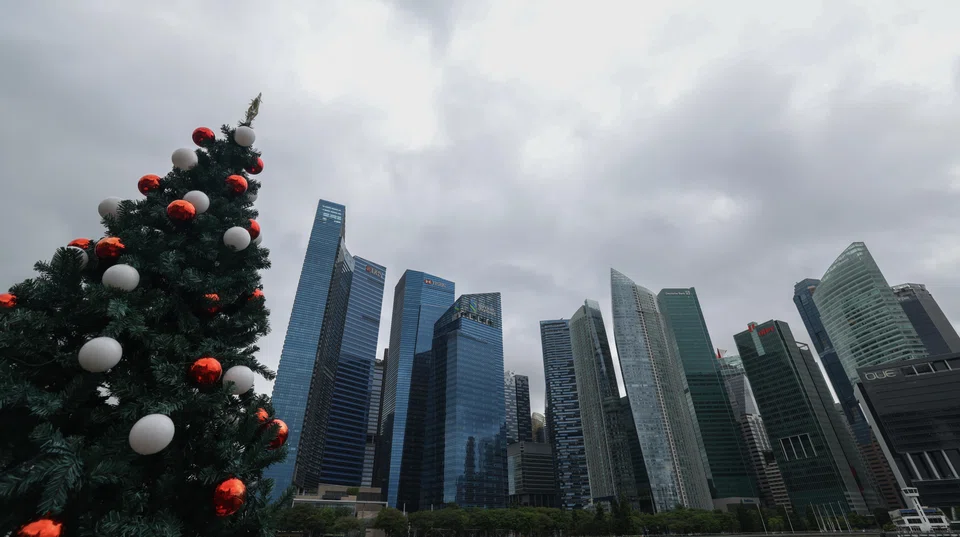
[SINGAPORE] A year ago, the world was bracing itself for the inauguration of US President Donald Trump. Ensuing tariff proclamations in April seemed to confirm doomsayers’ worries – yet in Singapore, at least, the impact has proved weaker than feared.
A year on, Singapore enters 2026 in better-than-expected economic condition. Full-year gross domestic product growth for 2025 is forecast at “around 4 per cent” – a far cry from the gloomiest forecast, made mid-April at the height of Trump tariff fears, of 0 to 2 per cent.
If this year’s booked-out festive parties are anything to go by, consumers are feeling upbeat enough to celebrate.
Yet, 2026 does not exactly start on the kindest note. This New Year’s Day, those of us not fortunate enough to be on leave will be shrugging off the effects of last night’s revels and steeling ourselves for a lone Friday of work before the weekend’s brief reprieve.
This demand for sobriety – in contrast to the luxury of a long weekend – can perhaps be taken as a preview of the year ahead.
Whether on the global or domestic front, 2026 may require some coming back down to earth, after the relative highs of 2025.
Tariff trouble
First of all, the economy’s outperformance in 2025 was due in no small part to front-loading of trade ahead of further tariff fears.
The unwinding of this effect, previously expected to happen significantly from mid-2025, has been delayed – and should therefore show up more strongly in 2026.
Furthermore, two major engines of Singapore’s manufacturing sector – semiconductors and pharmaceuticals – have been spared US tariffs only because Trump’s threatened sectoral tariffs are still under negotiation. Even as talks continue, the spectre of this potential blow to manufacturing will likely haunt the economy well into 2026.
At home, Singapore will be leaving behind the celebratory SG60 year and welcoming the first Budget of a new government term.
The conventional wisdom – at least from the coffee shop commentariat – is that this is a good time for tougher decisions, so that the pain may ebb by the time the next general election rolls around.
Whatever the case, Prime Minister Lawrence Wong has already foreshadowed moves that may bring wide benefits but hurt the privileged few, by noting that tackling wealth inequality is one priority of his government.
If nothing else, Budget 2026 is unlikely to be as generous as its predecessor. Not only will it lack the SG60 one-off goodies, it may finally scale back cost-of-living support that began during Covid-19 and has been extended at length.
And just as any wild celebration exerts its rightful toll the morning after, another form of exuberance may prove to have a grim aftermath.
The widespread adoption of generative artificial intelligence (AI) tools continued apace in 2025, acknowledged by universities and encouraged by the government.
The world’s unconstrained demand for thought-free text and instant graphics, however, has put pressure on the hardware upon which these power-guzzling models run: memory chips.
In December, semiconductor giant Micron stunned PC enthusiasts when it announced that it would exit the consumer chip business amid a global memory chip shortage.
But computer geeks who build their own machines are not the only ones who will suffer. With AI-driven demand pushing up chip prices, consumer electronics are only set to get pricier. Perhaps a good reason to pause before generating a digital New Year’s greeting card.






