

Nuclear power debate heats up in South-east Asia
This clean but controversial energy source could be part of the region’s future

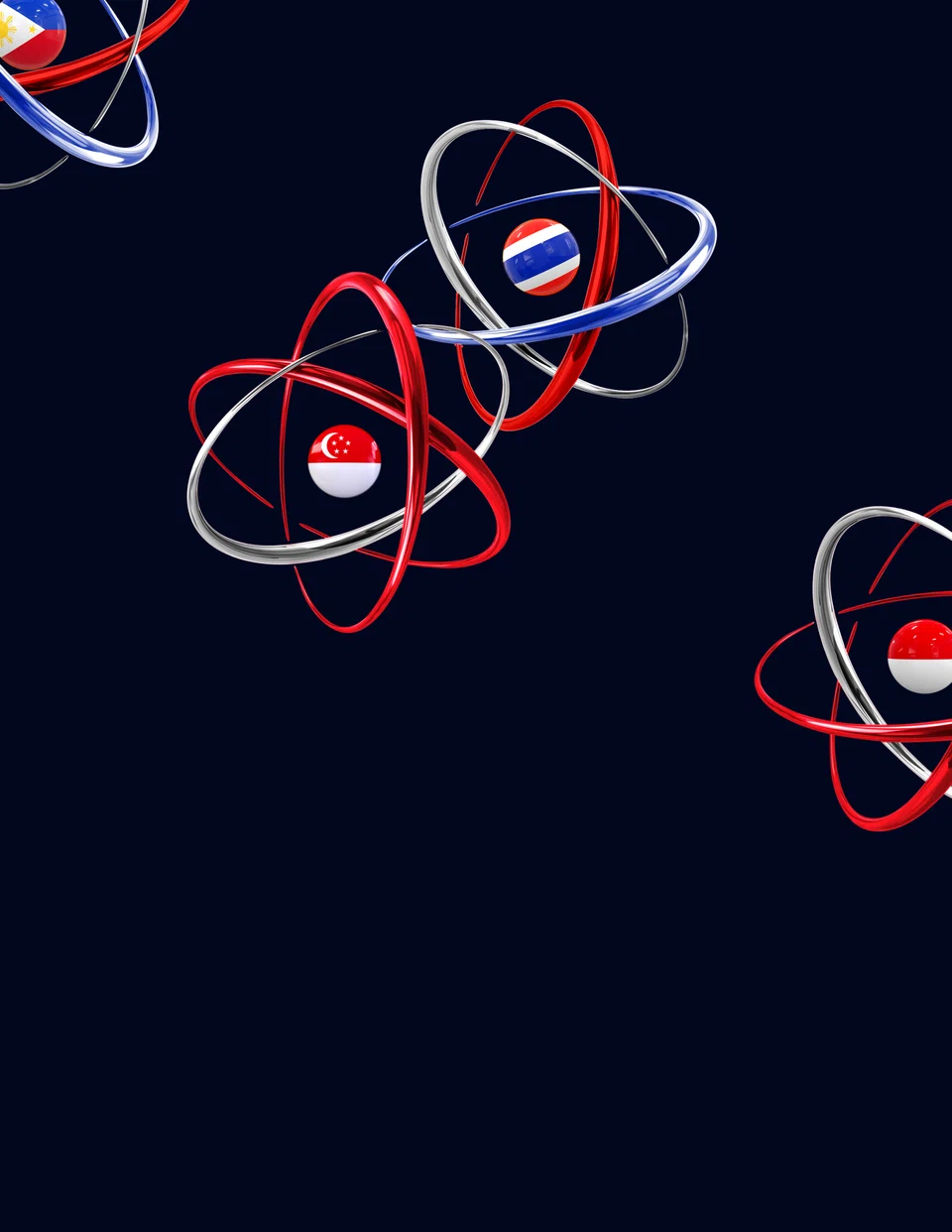
COULD nuclear energy power South-east Asia? This question has been reignited in the wake of energy security fears, climate change and scientific progress.
Globally, countries are going in opposite directions on nuclear power. The likes of France and Slovakia rely on it for more than half of their energy mix. China is doubling down on it, having added 37 new reactors in the past decade.
And yet Germany, once a nuclear powerhouse, has phased out the energy source completely in the wake of the 2011 Fukushima disaster.
Amid this mixed sentiment, interest in nuclear energy has picked up noticeably in South-east Asia.
Indonesia, which previously considered nuclear power as a “last resort”, is planning a regulatory change that would allow small-scale nuclear power projects, The Jakarta Post reported in December 2023.
Last year, the Philippines signed a landmark deal to import nuclear technology and material from the US, and harbours hopes for a commercial nuclear station in the early-2030s.
Meanwhile, Thailand’s upcoming national energy plan – set to be unveiled in September – is expected to include small modular reactors (SMRs), a type of advanced nuclear reactor.
Even land-scarce Singapore is tracking nuclear technologies and learning from experts abroad. Nuclear power could supply about 10 per cent of Singapore’s needs by 2050, based on a report commissioned by the Energy Market Authority (EMA). The country now plans to train at least 100 nuclear safety experts.
“(There) is a need to continue to build capabilities to better understand the safety, security and environmental implications of advanced nuclear energy technologies for Singapore’s context,” EMA and the National Environment Agency (NEA) told The Business Times.
Proponents of nuclear power see a clear case. With shifting geopolitics, energy security is vital. And with climate change, South-east Asia urgently needs to wean itself off coal and gas. Unlike solar and wind power, nuclear energy is not weather-dependent and could be a stable source of baseload power.
But the obstacles are plenty. Nuclear technology is costly. Managing waste and instilling regulations is challenging. And the memory of nuclear disasters – Three Mile Island, Chernobyl and Fukushima – is still alive among the public. All of these create tough choices for policymakers.
Which way will South-east Asia go on nuclear power? The region has a complicated history with it, and there are reasons for both optimism and caution.
Past U-turns
Mulling nuclear energy is hardly new to South-east Asia. Indonesia started its nuclear research programme in the 1960s and has three research reactors; Vietnam and Malaysia have one each.
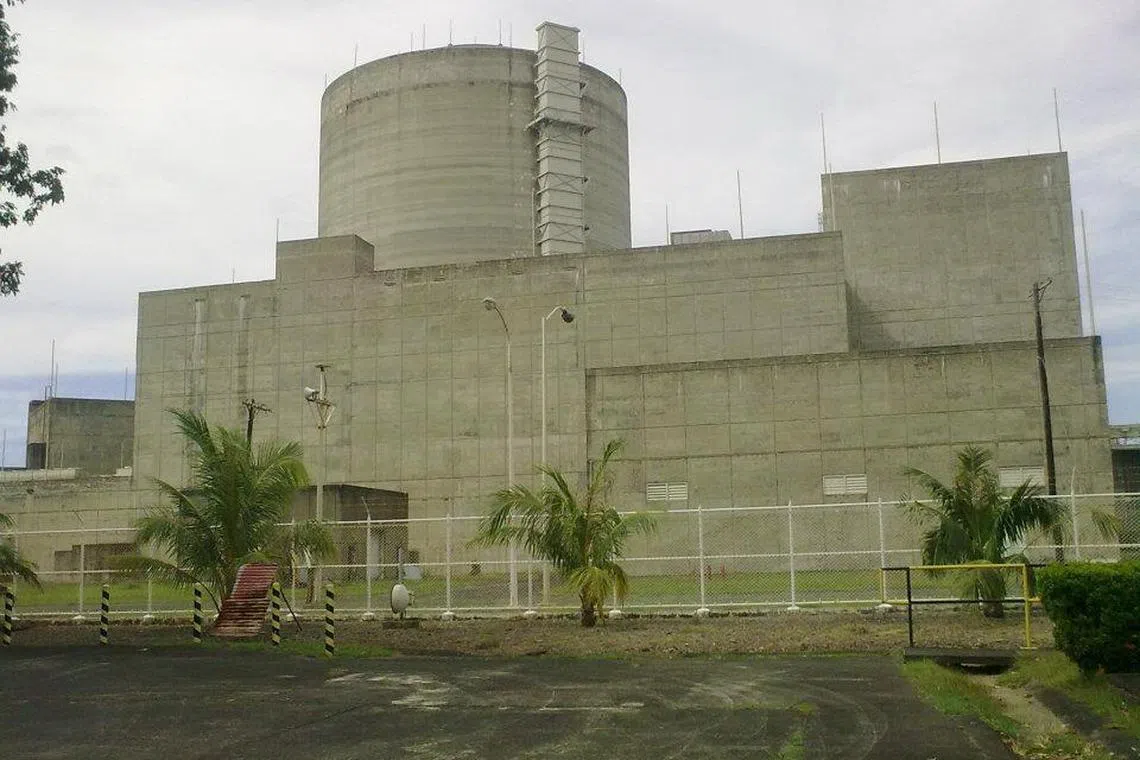
The Philippines has gone even further: it built a US$2.3 billion nuclear power plant in 1984. Scarred by the 1973 oil shock, then president Ferdinand Marcos commissioned the US power company Westinghouse to build two nuclear reactors. They were constructed in the coastal province of Bataan, 100 km west of Manila.
But the nuclear power plant never went into operation and lies unused to this day. Shortly after its completion, Marcos was ousted in a popular uprising. The plant also faced cost overruns and allegations of corruption. Public concerns escalated after the 1986 Chernobyl disaster, and the Bataan plant was mothballed later that year.
Decades later, Vietnam waded into nuclear power as well, only to retreat. In 2009, the government approved plans for two nuclear power plants, to be built by Russian state corporation Rosatom and a consortium of Japanese companies. But these plans were axed in 2016, due to concerns about the high costs and safety.
New, clear proposition
With all of that backpedalling, what has changed now? Experts point to a simple reason: nuclear power has become a lot safer since Fukushima.
“Safety has greatly improved, even without considering the advanced reactors,” says Associate Professor Chung Keng Yeow, director of the Singapore Nuclear Research and Safety Initiative, under the National University of Singapore.
The current generation of nuclear power reactors, known as Generation III reactors, comes with more layers of safety systems. These can deal with problems such as the generation of explosive hydrogen during core-melt accidents – as opposed to Gen II reactors built in the 70s.
“All the major accidents that we heard about – Three Mile Island, Chernobyl and Fukushima – occurred in the Gen II reactors,” Prof Chung says.
Gen III reactors have been built in recent years in China, the US, Pakistan, Turkey and Bangladesh. “These are more economically viable and can produce a huge amount of electrical power – more than 1,000 megawatts (MW) per reactor – at a reasonable cost,” he adds.
There is also a new generation of nuclear reactors – Gen IV – being developed. These are designed to be more advanced in terms of sustainability, economics, safety and reliability.
Another reason for optimism is the promise of a new type of nuclear reactor known as SMRs. These have a power capacity of up to 300 MW per unit, about a third of the capacity of traditional reactors.
More importantly, such a reactor could occupy as little as a quarter of a football pitch, based on one industry estimate. This could be a game changer for land-constrained countries and rural communities.
The rise of SMRs comes as the nuclear power industry has shifted from pursuing economies of scale – by building large reactors – towards “economies of multiples”, or the production of multiple smaller units, says Dr Victor Nian, chief executive of the Centre for Strategic Energy and Resources, a Singapore-based think tank.
If SMRs take off, it could mean that nuclear reactors can be sold as a product, instead of having to be commissioned via the traditional EPC (engineering, procurement and construction) approach. “SMRs and microreactors are also poised to significantly lower the upfront cost, which is a significant barrier to nuclear adoption,” adds Dr Nian.
Another moonshot is the possibility of nuclear fusion – where energy is generated not from the splitting of uranium, but from the fusion of two variants of hydrogen: deuterium and tritium.
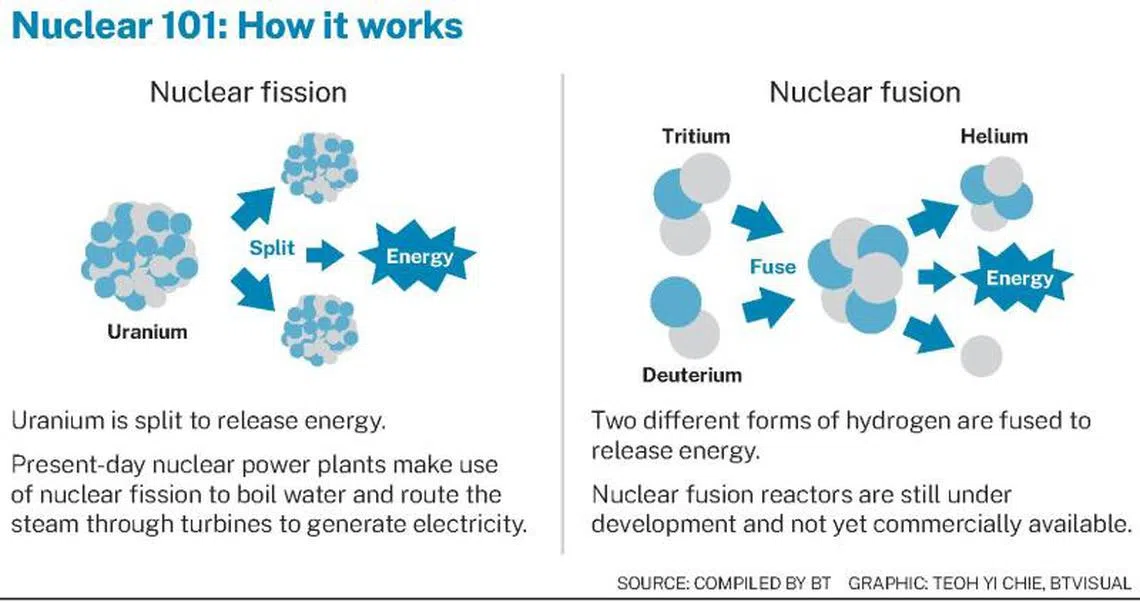
Nuclear fusion is, however, still in a nascent stage of development and could be much further away from commercialisation than SMRs.
Big barriers
While reactors are now safer and could get smaller, there are still significant barriers to nuclear energy for South-east Asia.
Technology is one constraint. For instance, while SMRs are promising, it is still early days for the technology. While Russia has two 35 MW SMRs, many other such reactors around the world are still in the design or construction stages.
“SMRs might seem to (be) a more cost-friendly alternative, but countries are still somewhat sceptical about if and when SMRs could become commercially available,” says Dr Nian.
Also, the economics of SMRs have yet to be proven, with potentially steep costs. Last year, US-based NuScale cancelled a project to build SMRs in Utah, on fears there may not be enough buyers for the electricity.
SMR designs also have not been standardised, notes Mike Lim, a partner at Trirec, a Singapore venture investor focused on sustainable technology. This creates questions about how their use will be governed.
“How do you regulate something that’s not standardised? These are things that will still need to be resolved. It’s not as simple as: ‘Let’s build an SMR and move ahead’,” he says.
The other big barriers to nuclear energy adoption are on the financial and political fronts.
Nuclear power financing is complicated, says Marissa Lee, associate director at policy advisory firm Global Counsel. The process is relatively simpler for wind, hydropower and solar projects, as governments just need to lay out supporting policies – such as a preferential tariff framework or bidding programme – and investments will flow in.
“On the other hand, nuclear projects need to be state-led, because of the much higher upfront capital outlays and bureaucratic processes involved in ensuring that safety standards are met and that nuclear waste is properly dealt with,” she says.
Setting up a nuclear power programme also takes a long planning horizon, says Claude Guet, a visiting professor at Nanyang Technological University who has also worked with the French Alternative Energies and Atomic Energy Commission.
“It takes time, maybe something like 10 years,” he says.
“You need competencies. You need to have very good engineers, technicians, people who are well-trained. You need a culture of safety.”
And since nuclear power is a long-term commitment, “you don’t want to have any political instability; it’s important that there is a shared vision between the different political parties”, he adds.
Going regional
Within South-east Asia, Singapore is viewed as one of the most promising markets for nuclear energy to take off, particularly for SMRs.
“The case for SMRs is strongest in Singapore, where our lack of land severely limits our renewable energy capacity, and there won’t be many domestic renewable energy projects to compete with nuclear,” says Lee of Global Counsel.
But even if Singapore adopts nuclear power before others, the reality is that some level of regional cooperation will still be needed. Setting baseline standards across the region for operating nuclear facilities will be important for safety, says Melvyn Yeo, founder of venture firm Trirec.
He explains: “If it’s left to individual governments to set standards, you run the (risk) that one country has a much higher standard than another, but they are in close proximity to each other... We’re all connected. If one country is going to place its nuclear reactor just at the border of another country, imagine how (the other country) will feel – especially if standards are different.”
There are some ongoing efforts on the regional front. For instance, the NEA is a member of the Asean Network of Regulatory Bodies on Atomic Energy, which aims to strengthen nuclear safeguards in the region.
If nuclear power comes to South-east Asia, more will need to be done. Dr Nian is optimistic that such collaboration could bring spillover benefits for the region.
“The strategic partnership brought about by nuclear energy cooperation can introduce a whole suite of economic and trade activities to South-east Asia, including technology transfer... supply chain diversification (and) infrastructure investment,” he says.
TRENDING NOW
High Court rules against Julius Baer’s Singapore trust arm in US$50 million family trust dispute

MSCI proposes standalone status for Indonesia; Jakarta stocks plunge 8%

Once staunchly pro-China, Malaysian Chinese businesses are now distancing themselves from Beijing
No chicken feed: How Malayan Flour Mills built an empire from flour to fowl

