Nuclear threat still hangs over our world, 80 years on
While many fear the use of nuclear weapons by choice, as in 1945, a growing number worry about their deployment by error
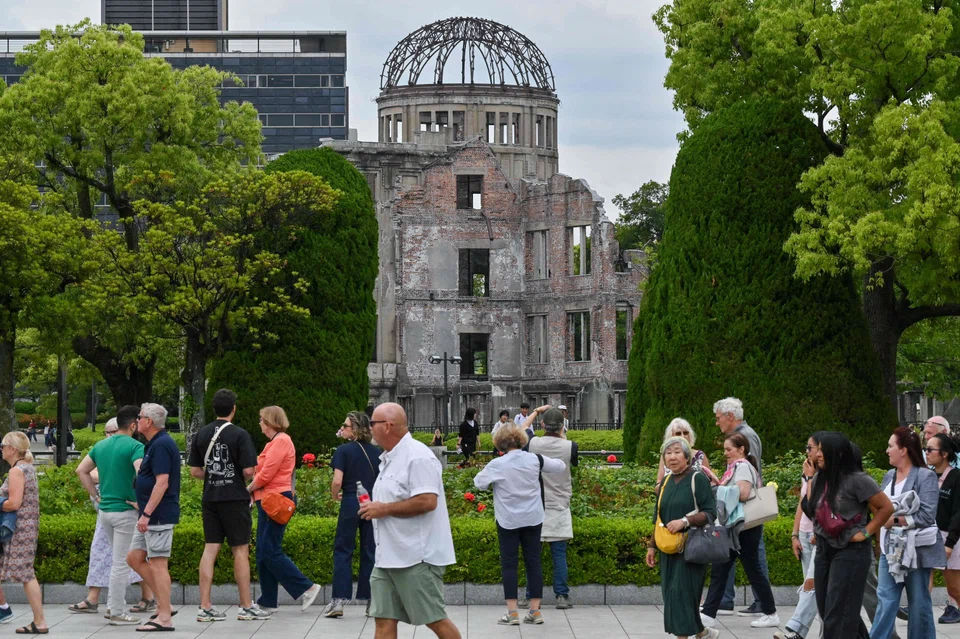
THIS week marks the 80th anniversary of the US atomic bombings in Hiroshima and Nagasaki. Yet, despite a subsequent so-called “nuclear taboo” over future use of such weapons, the threat to human life and the global economy may be greater now than it has been in recent decades.
The danger is at least twice as great: first, a growing possibility that a country could use nuclear weapons again, perhaps by accident or miscalculation as much as design; and second, the risk of a bomb being stolen and used by terrorists.
While the risks are hard to quantify, the Bulletin of the Atomic Scientists set its so-called Doomsday Clock one second closer to midnight this January, signalling that the world is the closest it has ever been to a nuclear holocaust.
On the first threat from states, there are still more than 12,000 atomic weapons in the world, each individually more powerful than the two devices used eight decades ago by the US in Japan. This is a chilling fact given that the Hiroshima bomb, alone, destroyed around 10 square kilometres of the city and is estimated to have killed over 140,000 people.
Today, there are growing tensions between the US and Russia. Both countries possess more than 5,000 nuclear weapons each, or around 90 per cent of the global total collectively.
Only last Friday (Aug 1), US President Donald Trump engaged in a war of words with former Russian president Dmitry Medvedev over atomic weapons. Medvedev invoked the “Dead Hand”, the Russian nuclear retaliation system, in a threat to the US. In response, Trump claimed that he had ordered two US nuclear submarines closer to Russia. The risk of miscalculation in a volatile environment is starkly highlighted by this exchange.
Such rhetoric is particularly alarming amid growing global investment in nuclear weaponry. The US government, for instance, is building a new generation of nuclear weapons and planning to resume nuclear testing. China, too, is rapidly increasing its nuclear arsenal, which is estimated to have trebled to around 600 weapons. While still relatively small compared to the US and Russia, the direction of travel is clear.
These actions are slowing disarmament and non-proliferation efforts such as the Advancing the Treaty on the Prohibition of Nuclear Weapons (TPNW), the first international accord to comprehensively ban nuclear arms. The TPNW entered into force in 2021, but has been ignored by nuclear-armed states so far and key others, too, including Japan.
The origins of this disarmament and non-proliferation campaign go back decades, with the US, former Soviet Union and the UK signing the Limited Nuclear Test Ban Treaty in 1963, around the 18th anniversary of the atomic bombing of Hiroshima. Other landmark accords include the 1970 Treaty on the Non-Proliferation of Nuclear Weapons.
With global momentum shifting towards rearmament rather than abolition, a growing list of nations, including South Korea, Japan, Ukraine, Turkey and Saudi Arabia, have expressed interest in acquiring atomic weapons. Iran, too, is likely to further develop its nuclear capabilities, fuelled by the recent attacks by Israel and the US on its development facilities.
While many fear the use of nuclear weapons by choice, as in 1945, a growing number are alarmed, too, of their deployment by error. This includes the possibility of cyberattacks, especially in systems in which artificial intelligence is utilised.
Beyond state use of nuclear weapons, there remains a threat of atomic terrorism. While some assert the probability of a major nuclear terrorism event is very low, former US defence secretary Robert Gates noted in office that “every senior leader, when you’re asked what keeps you awake at night, it’s the thought of a terrorist ending up with a weapon of mass destruction, especially nuclear”.
This nuclear terror agenda first came prominently on the international radar screen following the collapse of the Soviet Union in the early 1990s, and growing concerns about safeguarding the former communist state’s extensive nuclear weaponry.
More than two dozen states from Europe to Asia, including Pakistan, had at least 1 kg of highly enriched uranium (HEU) in civilian stocks. Since the 1990s, there have been over 4,000 confirmed incidents of illicit trafficking, unauthorised possession, or loss of nuclear and radioactive material reported to the International Atomic Energy Agency.
It is the US, which dropped the nuclear bombs on Hiroshima and Nagasaki, that has historically been at the forefront of international efforts to protect against the spread of nuclear weapons and materials in the post-Cold War era.
This included the Obama administration holding four Nuclear Security Summits (NSS) with more than 50 countries to focus on minimising the use of HEU, securing vulnerable materials, countering nuclear smuggling as well as deterring, detecting and disrupting attempts at nuclear terrorism.
The NSS process, which fell into abeyance during Trump’s first presidency from 2017 to 2021, did reduce the amount of dangerous nuclear material and improved security of much of this. For instance, enough HEU for some 3,000 nuclear weapons was downblended – a process that renders the material useless as a weapon – in Russia and the US. Around a dozen countries have returned their previous stockpiles of HEU back to the country of origin (mostly to the US and Russia).
However, not only is this agenda no longer a top priority for the US under Trump, but recent years have seen an erosion of congressional expertise and experience on preventing nuclear terrorism.
While the international capability to tackle nuclear terrorism may be eroding, the paradox is that the threat could be growing. According to some experts, detonation of even a small handful-sized amount of plutonium could kill or wound hundreds of thousands of people in a densely populated area.
Moreover, the ensuing chaos would probably spiral outwards, overwhelming medical facilities, and causing major domestic and international travel problems. A significant macroeconomic shock could also be triggered, undermining consumer confidence.
Given the hurdles to terrorist networks obtaining weapons-grade material, perhaps the bigger danger is a small nuclear weapon or a radiological dispersal device (a so-called dirty bomb). The latter is far less complex, as it uses conventional explosives to spread radiation from a radioactive source.
The world is therefore facing a growing combined threat of nuclear weapons use. It is not only the potentially growing danger of use of such arsenal by states, but also nuclear terrorism, with a major global effort now needed to counteract these grim challenges.
The writer is an associate at LSE IDEAS at the London School of Economics