

Nurturing US-Indo-Pacific commerce through digital trade
Patience and compromise are key to harvesting long-term benefits in the region
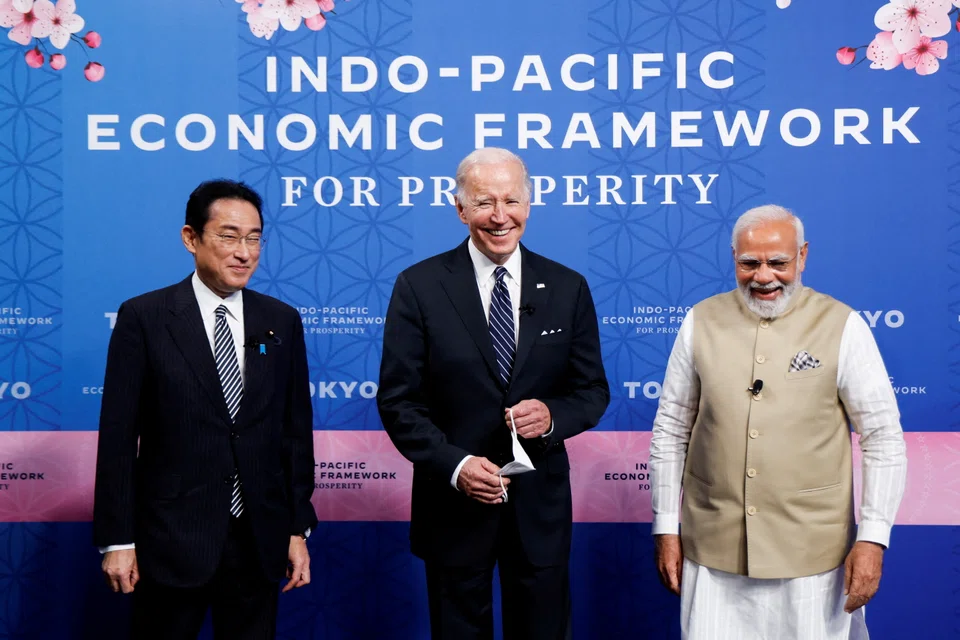
TRADE negotiators face an inflection point when they meet this week in Singapore for the next round of talks regarding the Indo-Pacific Economic Framework (IPEF).
While US businesses have remained steadfast in their engagement and investment with the Indo-Pacific, those same businesses are looking to this round of talks for clear signals that the United States will actively support greater trade and economic liberalisation in the future, while minimising the influence of unhelpful and uninformed political rhetoric that suggests the US may be abandoning its traditional role as a champion of trade.
The IPEF can and must be ambitious. It must deliver near-term positive trade outcomes and establish commitments and policy certainty for US businesses and trading partners alike.
One clear opportunity for consensus within IPEF involves digital trade. Businesses and consumers worldwide rely on electronic transactions, digital solutions, and software-enabled services to do business and live their lives. The ability to transfer data seamlessly and securely is crucial for generating commercial opportunities and facilitating economic growth.
The IPEF framework should build upon existing digital trade agreements between IPEF parties. The US-Japan Digital Trade Agreement and the Singapore-Australia Digital Economy Agreement are two examples where common ground can be found. Other trade pacts like the US-Mexico-Canada Agreement and the Comprehensive and Progressive Agreement for Trans-Pacific Partnership both contain forward-looking rules on digital trade from which negotiators can draw.
Negotiations can also create mechanisms to ensure that the IPEF remains relevant in an ever-changing global economy by providing a means for its parties to regularly review the agreement and collaborate on emerging issues. The IPEF should also be open to new members. This will create a dynamic and responsive framework that can address new technological and economic circumstances.
By contrast, the alternative to securing progressive and modern digital trade provisions in IPEF opens up the risk of data localisation and mandates forcing innovative companies to disclose source codes. These policies prevent businesses from accessing global supply chains and new markets, which means lower productivity and worsened job creation.
The nations of the Indo-Pacific understand the value of regional and global economic cooperation. This is precisely why Asean economies, as well as Australia, New Zealand, Japan, Korea, and India, continue to upgrade their existing trade agreements and seek out new ones, and want the IPEF to deliver a firm commitment to further trade liberalisation.
The stakes are high. Collectively, IPEF economies represent 40 per cent of global gross domestic product (GDP), and the Indo-Pacific is projected to be the largest contributor to global growth over the next 30 years. American businesses are prepared to mobilise private finance to help make the IPEF a success, including through economic, environmental, and social initiatives. Indeed, they have been a cornerstone of trade and investment in the region – US foreign direct investment in the Indo-Pacific totalled more than US$969 billion in 2020. But to effectively recruit this support, IPEF member governments must create an environment that promotes business confidence and encourages investment. The rules in the IPEF must provide the foundation.
An outcome during this week’s IPEF negotiations that builds certainty and enhances confidence in the long-term commitment of all IPEF members to regional economic integration and trade liberalisation is of critical importance.
Dr Hsien-Hsien Lei is chief executive officer of the American Chamber of Commerce in Singapore. Jared Ragland is senior director, policy – Asia-Pacific, of BSA | The Software Alliance.
Jackson Cox, interim president of the American Association of the Indo-Pacific, and Ambassador Michael Michalak, senior vice-president and regional managing director of the US-Asean Business Council, are also co-writers.
TRENDING NOW

Once staunchly pro-China, Malaysian Chinese businesses are now distancing themselves from Beijing

Stocks to watch: HPL, Aims Apac Reit, Zico, Advanced Systems Automation, ComfortDelGro

‘How many will survive?’: Bubble fears arise as China’s humanoid robotics face reality check

Smaller board lots can’t fix a market run by three banks

